Li Zhe, Ho Chiu Kar, Shahid Ashraf Raja, Fearn Sarah, Dattani Rajeev, Cheng Wong Him, Tan Ching-Hong, Wu Jiaying, Cabral João T, Durrant James R
Department of Chemistry, Centre for Plastic Electronics, Imperial College London, London SW7 2AZ.
SPECIFIC, College of Engineering, Swansea University, Baglan Bay Innovation, Knowledge Centre, Central Avenue, Baglan SA12 7AX.
Sci Rep. 2015 Oct 15;5:15149. doi: 10.1038/srep15149.
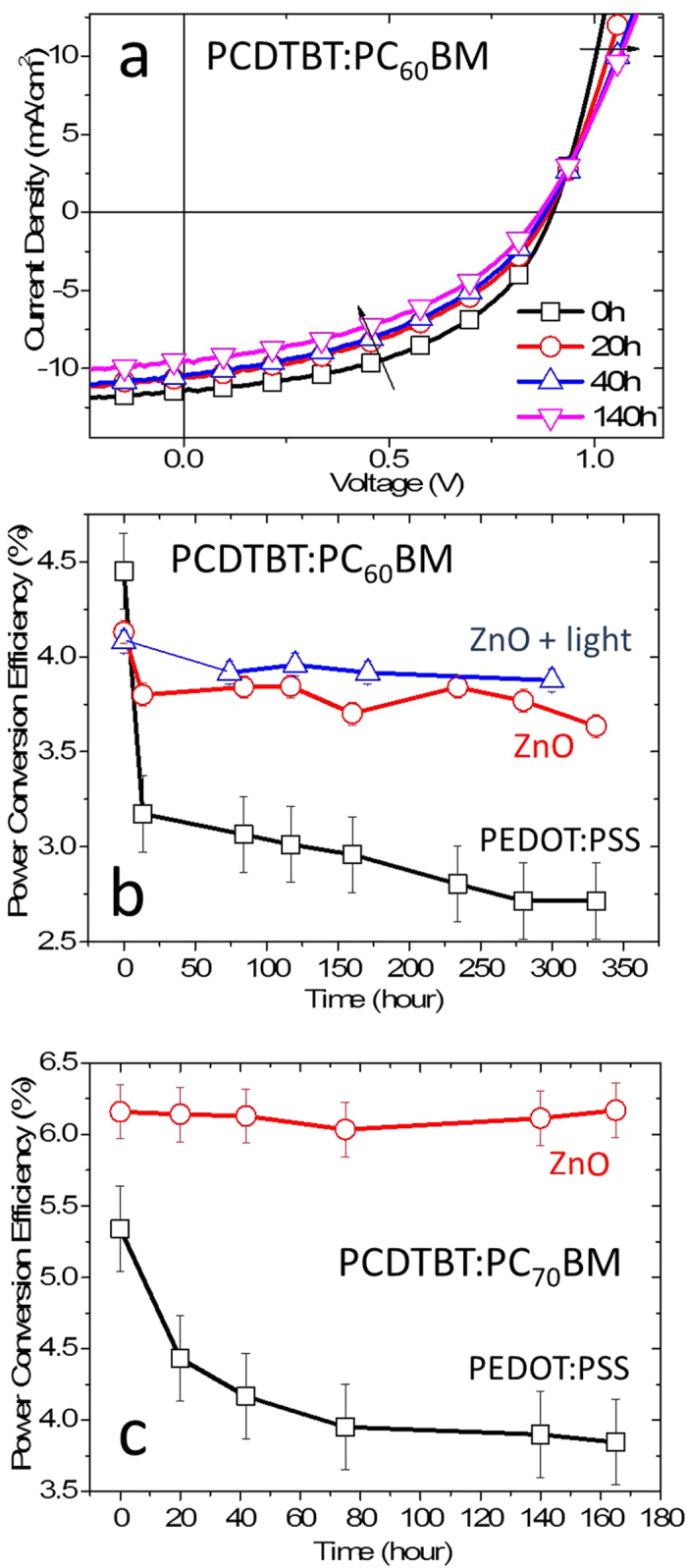
Morphological stability is a key requirement for outdoor operation of organic solar cells. We demonstrate that morphological stability and lifetime of polymer/fullerene based solar cells under thermal stress depend strongly on the substrate interface on which the active layer is deposited. In particular, we find that the stability of benchmark PCDTBT/PCBM solar cells under modest thermal stress is substantially increased in inverted solar cells employing a ZnO substrate compared to conventional devices employing a
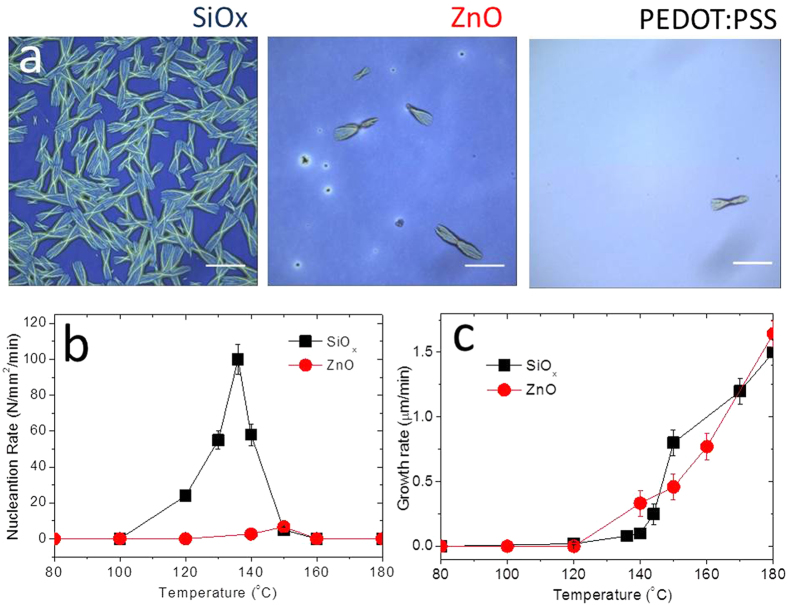
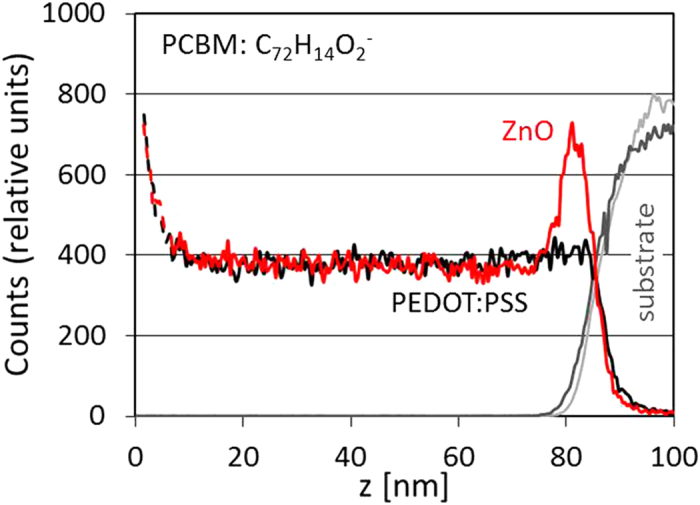
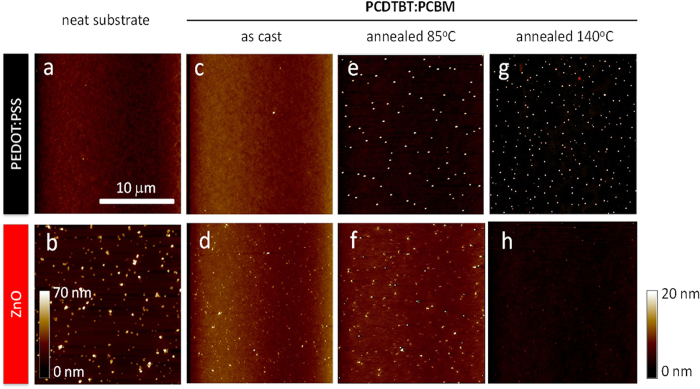
PSS substrate. This improved stability is observed to correlate with PCBM nucleation at the 50 nm scale, which is shown to be strongly influenced by different substrate interfaces. Employing this approach, we demonstrate remarkable thermal stability for inverted PCDTBT:PC70BM devices on ZnO substrates, with negligible (<2%) loss of power conversion efficiency over 160 h under 85 °C thermal stress and minimal thermally induced "burn-in" effect. We thus conclude that inverted organic solar cells, in addition to showing improved environmental stability against ambient humidity exposure as widely reported previously, can also demonstrate enhanced morphological stability. As such we show that the choice of suitable substrate interfaces may be a key factor in achieving prolonged lifetimes for organic solar cells under thermal stress conditions.
形态稳定性是有机太阳能电池户外运行的关键要求。我们证明,基于聚合物/富勒烯的太阳能电池在热应力下的形态稳定性和寿命在很大程度上取决于沉积有源层的衬底界面。特别是,我们发现,与采用PEDOT:PSS衬底的传统器件相比,在采用ZnO衬底的倒置太阳能电池中,基准PCDTBT/PCBM太阳能电池在适度热应力下的稳定性显著提高。观察到这种改进的稳定性与50纳米尺度上的PCBM成核相关,这表明其受到不同衬底界面的强烈影响。采用这种方法,我们展示了ZnO衬底上倒置PCDTBT:PC70BM器件具有显著的热稳定性,在85°C热应力下160小时内功率转换效率损失可忽略不计(<2%),且热诱导“老化”效应最小。因此我们得出结论,倒置有机太阳能电池除了如先前广泛报道的那样在环境湿度暴露下表现出改善的稳定性外,还可以展示出增强的形态稳定性。因此我们表明,选择合适的衬底界面可能是在热应力条件下实现有机太阳能电池长寿命的关键因素。