Webby Richard J, Weaver Eric A
Department of Infectious Diseases, St. Jude Children's Research Hospital, Memphis, TN, United States of America.
School of Biological Sciences and the Nebraska Center for Virology, University of Nebraska, Lincoln, United States of America.
PLoS One. 2015 Oct 15;10(10):e0140702. doi: 10.1371/journal.pone.0140702. eCollection 2015.
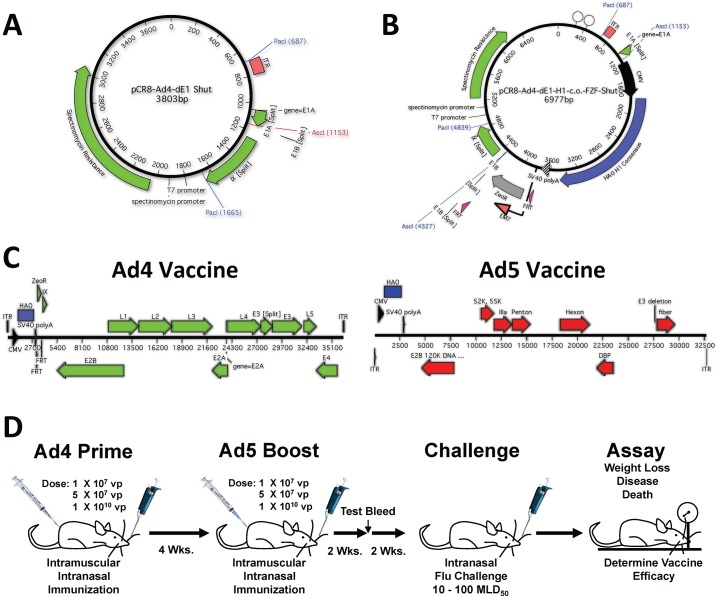
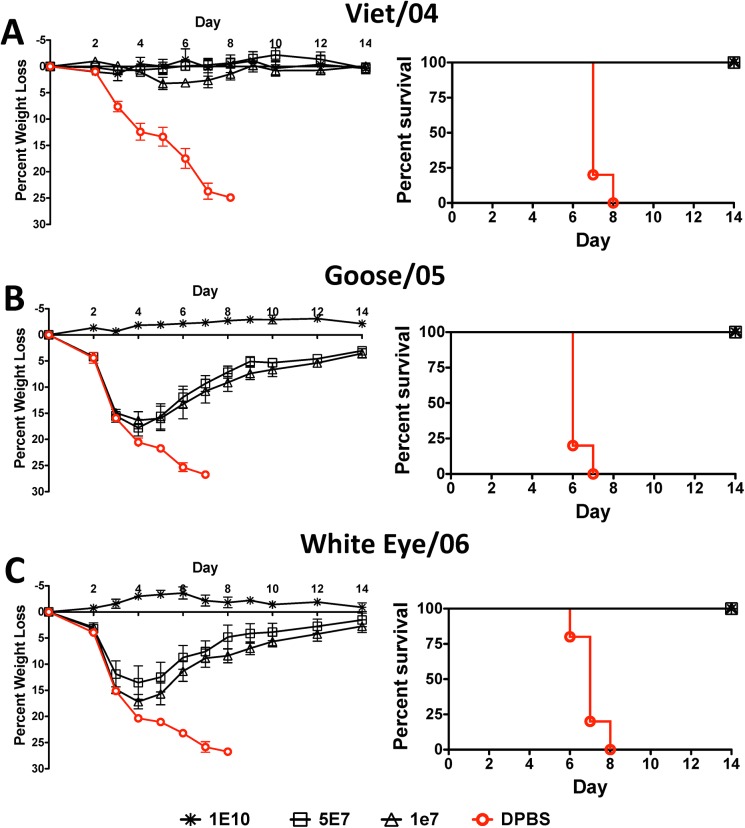
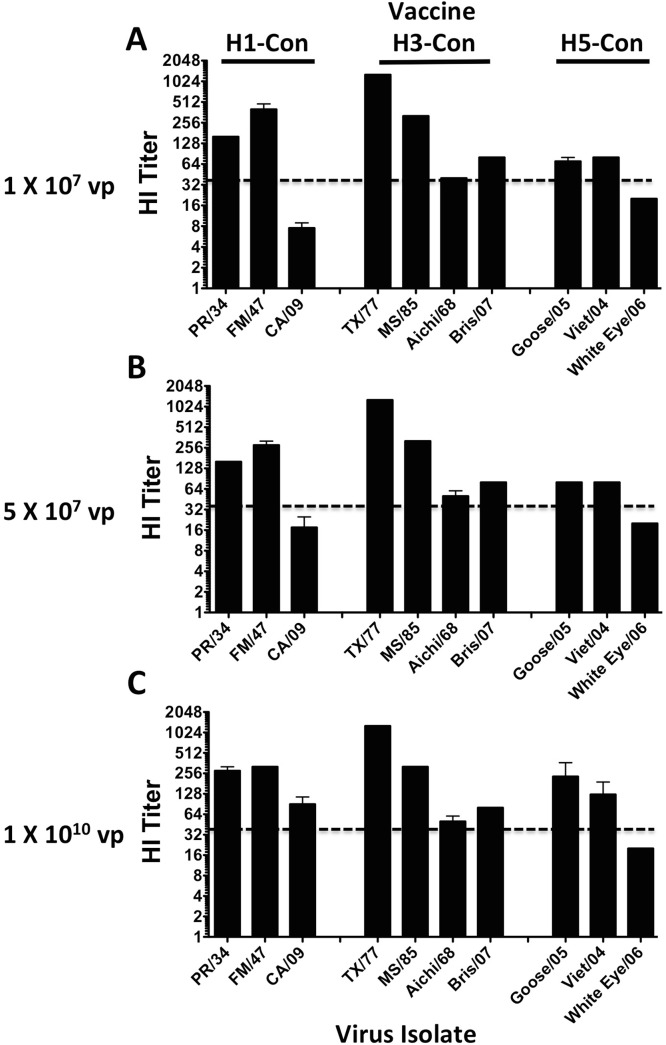
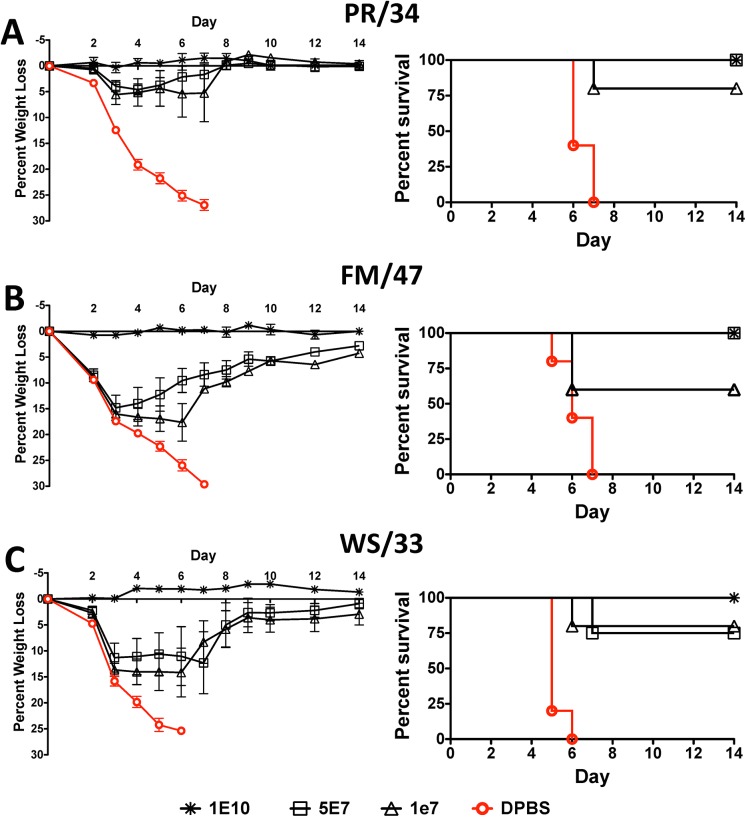
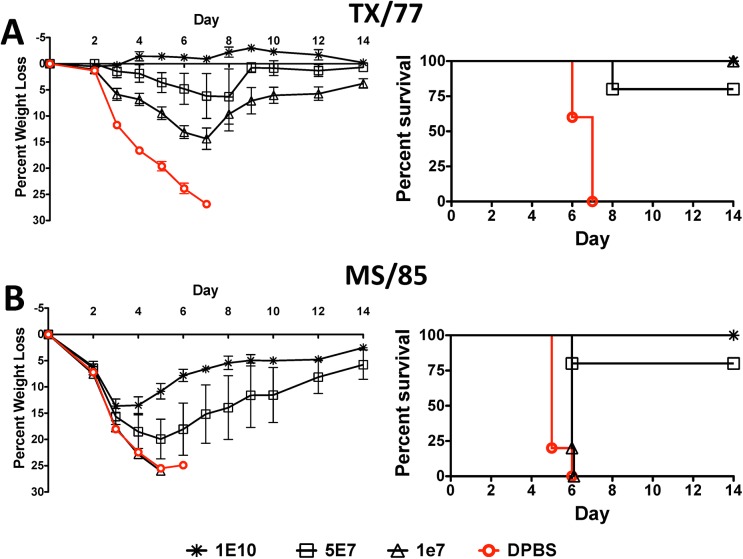
With the exception of the live attenuated influenza vaccine there have been no substantial changes in influenza vaccine strategies since the 1940's. Here we report an alternative vaccine approach that uses Adenovirus-vectored centralized hemagglutinin (HA) genes as vaccine antigens. Consensus H1-Con, H3-Con and H5-Con HA genes were computationally derived. Mice were immunized with Ad vaccines expressing the centralized genes individually. Groups of mice were vaccinated with 1 X 10¹⁰, 5 X 10⁷ and 1 X 10⁷ virus particles per mouse to represent high, intermediate and low doses, respectively. 100% of the mice that were vaccinated with the high dose vaccine were protected from heterologous lethal challenges within each subtype. In addition to 100% survival, there were no signs of weight loss and disease in 7 out of 8 groups of high dose vaccinated mice. Lower doses of vaccine showed a reduction of protection in a dose-dependent manner. However, even the lowest dose of vaccine provided significant levels of protection against the divergent influenza strains, especially considering the stringency of the challenge virus. In addition, we found that all doses of H5-Con vaccine were capable of providing complete protection against mortality when challenged with lethal doses of all 3 H5N1 influenza strains. This data demonstrates that centralized H1-Con, H3-Con and H5-Con genes can be effectively used to completely protect mice against many diverse strains of influenza. Therefore, we believe that these Ad-vectored centralized genes could be easily translated into new human vaccines.
自20世纪40年代以来,除了减毒活流感疫苗外,流感疫苗策略没有实质性变化。在此,我们报告一种替代疫苗方法,该方法使用腺病毒载体的集中血凝素(HA)基因作为疫苗抗原。通过计算得出了H1-Con、H3-Con和H5-Con HA基因的共识序列。用分别表达集中基因的腺病毒疫苗对小鼠进行免疫。每组小鼠分别接种每只1×10¹⁰、5×10⁷和1×10⁷个病毒颗粒,分别代表高、中、低剂量。接种高剂量疫苗的小鼠中有100%在各亚型内免受异源致死性攻击。除了100%存活外,8组接种高剂量疫苗的小鼠中有7组没有体重减轻和疾病迹象。较低剂量的疫苗显示出保护作用呈剂量依赖性降低。然而,即使是最低剂量的疫苗也能提供显著水平的针对不同流感毒株的保护,尤其是考虑到攻击病毒的严格性。此外,我们发现,当用所有3种H5N1流感毒株的致死剂量进行攻击时,所有剂量的H5-Con疫苗都能够提供完全的死亡率保护。这些数据表明,集中的H1-Con、H3-Con和H5-Con基因可以有效地用于完全保护小鼠免受多种不同流感毒株的侵害。因此,我们相信这些腺病毒载体的集中基因可以很容易地转化为新的人类疫苗。