Kim Kyu Kwang, Abelman Sarah, Yano Naohiro, Ribeiro Jennifer R, Singh Rakesh K, Tipping Marla, Moore Richard G
Molecular Therapeutics Laboratory, Program in Women's Oncology, Departments of Obstetrics and Gynecology, Women and Infants Hospital, Alpert Medical School of Brown University, Providence, RI, USA.
Department of Biology, Providence College, Providence, RI, USA.
Sci Rep. 2015 Oct 15;5:14296. doi: 10.1038/srep14296.
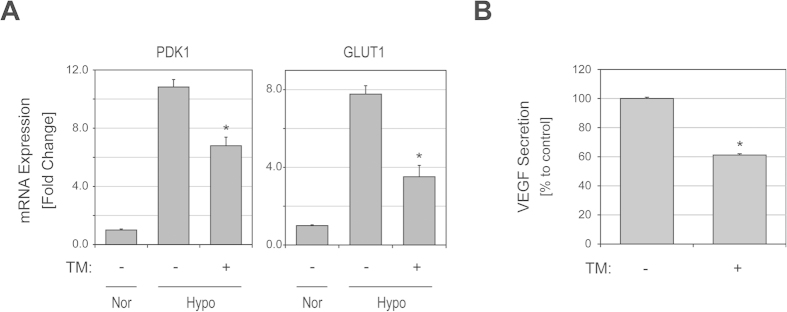
Hypoxia-inducible factor-1α (HIF-1α) is a transcription factor that triggers adaptive responses upon low oxygen conditions and plays a crucial role in cancer metabolism and therapy resistance. Tetrathiomolybdate (TM), a therapy option for copper overload disorder, has also been shown to be capable of limiting tumor angiogenesis, although its underlying mechanism remains unclear. Using ovarian and endometrial cancer cell lines, we observed that TM downregulates HIF-1α protein levels and HIF-transcriptional targets involved in tumor angiogenesis and glycolysis, but did not affect HIF-1α protein synthesis. TM-mediated HIF-1α downregulation was suppressed when HIF-prolyl hydroxylase activity was pharmacologically inhibited using deferoxamine or dimethyloxaloylglycine, and also when the oxygen-dependent degradation domains of HIF-1α, which are responsible for the interaction with HIF-prolyl hydroxylase, were deleted. These findings suggest that TM causes HIF-1α downregulation in a HIF-prolyl hydroxylase-dependent manner. Our studies showed that TM inhibits the activity of the copper-dependent mitochondrial complex IV and reduces mitochondrial respiration, thereby possibly increasing oxygen availability, which is crucial for HIF-prolyl hydroxylase activity. Pimonidazole staining also showed that TM elevates oxygen tension in hypoxic cells. Our studies provide mechanistic evidence for TM-mediated HIF-1α regulation and suggest its therapeutic potential as a method of blocking angiogenesis in ovarian and endometrial tumors.
缺氧诱导因子-1α(HIF-1α)是一种转录因子,在低氧条件下触发适应性反应,在癌症代谢和治疗抗性中起关键作用。四硫代钼酸盐(TM)是一种治疗铜过载疾病的药物,也已被证明能够限制肿瘤血管生成,但其潜在机制尚不清楚。使用卵巢和子宫内膜癌细胞系,我们观察到TM下调参与肿瘤血管生成和糖酵解的HIF-1α蛋白水平和HIF转录靶点,但不影响HIF-1α蛋白合成。当使用去铁胺或二甲基草酰甘氨酸药理学抑制HIF-脯氨酰羟化酶活性时,以及当负责与HIF-脯氨酰羟化酶相互作用的HIF-1α的氧依赖性降解结构域被删除时,TM介导的HIF-1α下调被抑制。这些发现表明,TM以HIF-脯氨酰羟化酶依赖性方式导致HIF-1α下调。我们的研究表明,TM抑制铜依赖性线粒体复合物IV的活性并降低线粒体呼吸,从而可能增加对HIF-脯氨酰羟化酶活性至关重要的氧可用性。匹莫硝唑染色还表明,TM提高了缺氧细胞中的氧张力。我们的研究为TM介导的HIF-1α调节提供了机制证据,并表明其作为阻断卵巢和子宫内膜肿瘤血管生成方法的治疗潜力。