Lu Huaguang, Tang Yi, Dunn Patricia A, Wallner-Pendleton Eva A, Lin Lin, Knoll Eric A
Animal Diagnostic Laboratory, Department of Veterinary and Biomedical Sciences, The Pennsylvania State University, University Park, PA 16802.
Sci Rep. 2015 Oct 15;5:14727. doi: 10.1038/srep14727.
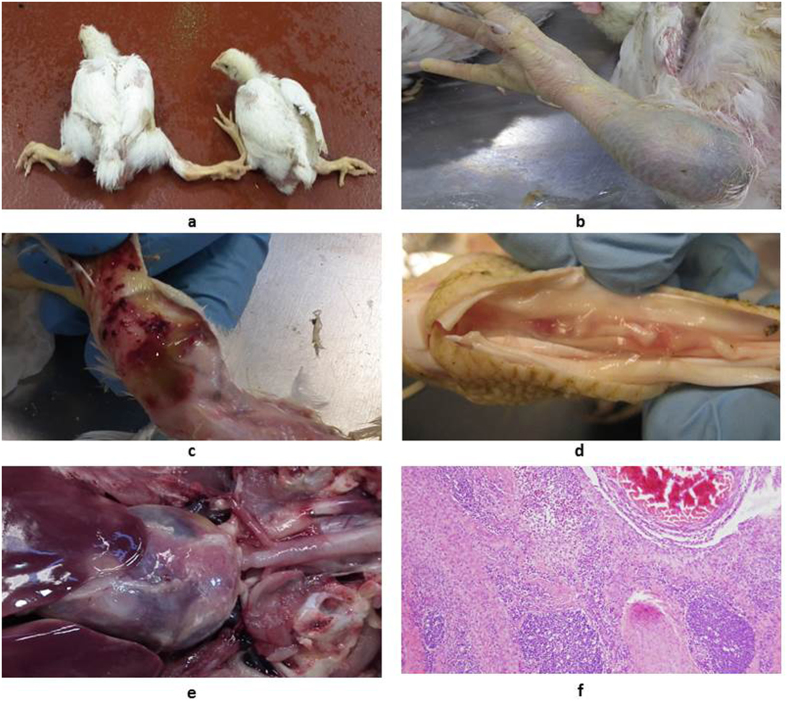
Avian reovirus (ARV) infections of broiler and turkey flocks have caused significant clinical disease and economic losses in Pennsylvania (PA) since 2011. Most of the ARV-infected birds suffered from severe arthritis, tenosynovitis, pericarditis and depressed growth or runting-stunting syndrome (RSS). A high morbidity (up to 20% to 40%) was observed in ARV-affected flocks, and the flock mortality was occasionally as high as 10%. ARV infections in turkeys were diagnosed for the first time in PA in 2011. From 2011 to 2014, a total of 301 ARV isolations were made from affected PA poultry. The molecular characterization of the Sigma C gene of 114 field isolates, representing most ARV outbreaks, revealed that only 21.93% of the 114 sequenced ARV isolates were in the same genotyping cluster (cluster 1) as the ARV vaccine strains (S1133, 1733, and 2048), whereas 78.07% of the sequenced isolates were in genotyping clusters 2, 3, 4, 5, and 6 (which were distinct from the vaccine strains) and represented newly emerging ARV variants. In particular, genotyping cluster 6 was a new ARV genotype that was identified for the first time in 10 novel PA ARV variants of field isolates.
自2011年以来,肉鸡和火鸡群感染禽呼肠孤病毒(ARV)已在宾夕法尼亚州(PA)引发了严重的临床疾病和经济损失。大多数感染ARV的禽类患有严重的关节炎、腱鞘炎、心包炎以及生长发育迟缓或矮小综合征(RSS)。在受ARV影响的鸡群中观察到高发病率(高达20%至40%),并且鸡群死亡率偶尔高达10%。2011年,PA首次诊断出火鸡感染ARV。从2011年到2014年,共从受影响的PA家禽中分离出301株ARV。对代表大多数ARV疫情的114株田间分离株的Sigma C基因进行分子特征分析,结果显示,在114株测序的ARV分离株中,只有21.93%与ARV疫苗株(S1133、1733和2048)属于同一基因分型簇(簇1),而78.07%的测序分离株属于基因分型簇2、3、4、5和6(与疫苗株不同),代表新出现的ARV变异株。特别是,基因分型簇6是一种新的ARV基因型,在10株新的PA田间分离株ARV变异株中首次被鉴定出来。