Zhou Junmin, Chen Xianghong, Gilvary Danielle L, Tejera Melba M, Eksioglu Erika A, Wei Sheng, Djeu Julie Y
Immunology Program, Moffitt Cancer Center, Tampa, FL 33612.
Sci Rep. 2015 Oct 15;5:15085. doi: 10.1038/srep15085.
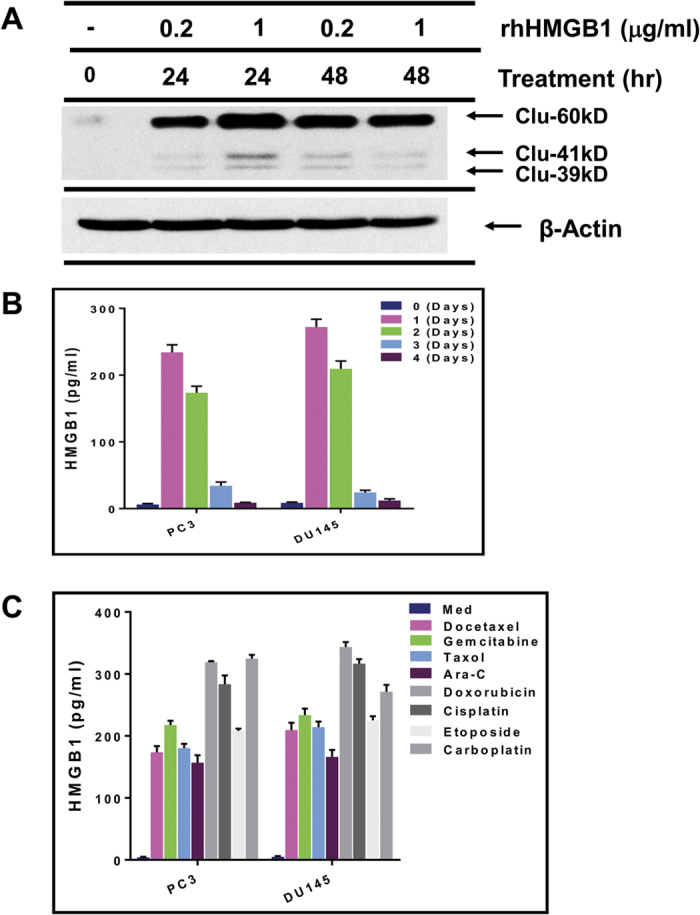
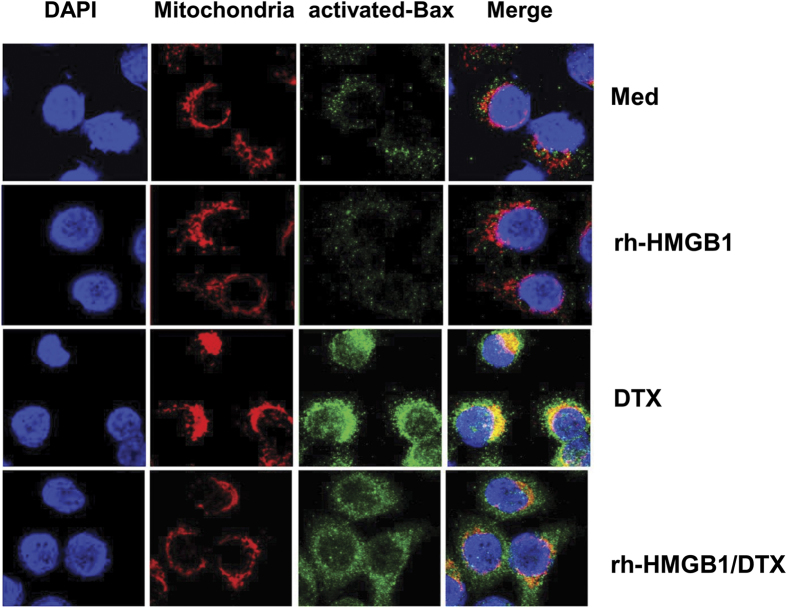
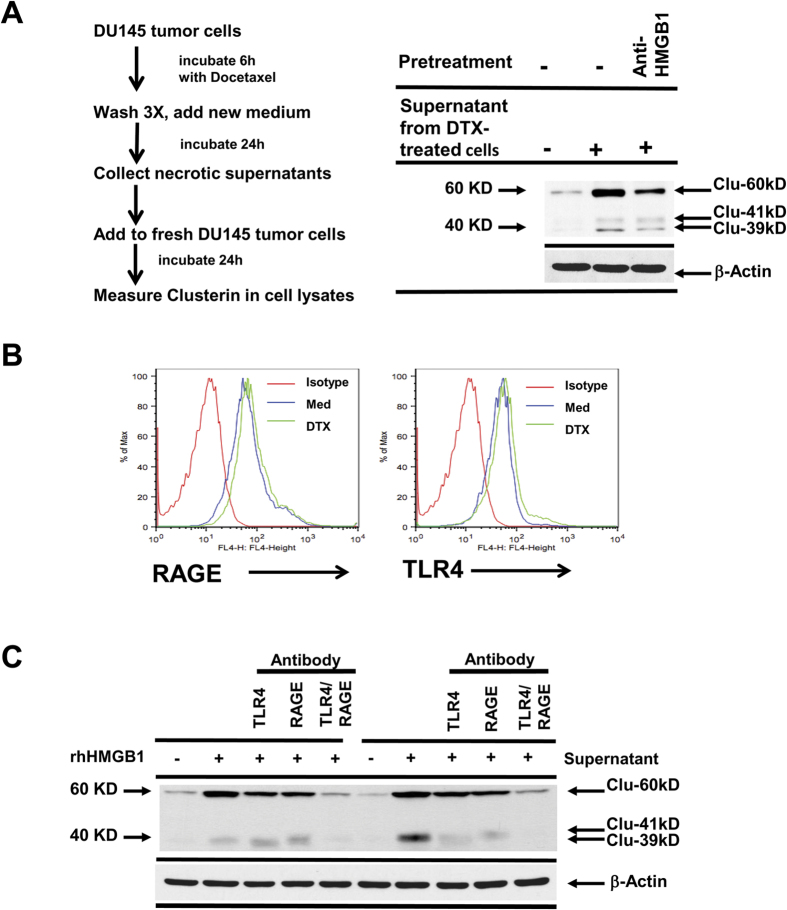
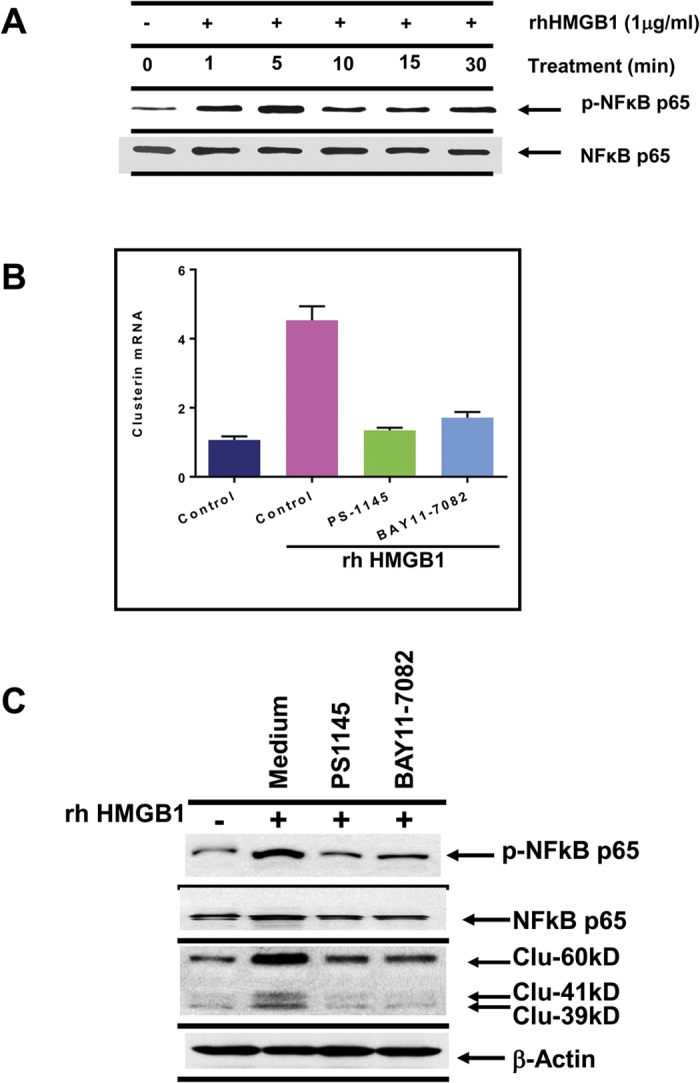
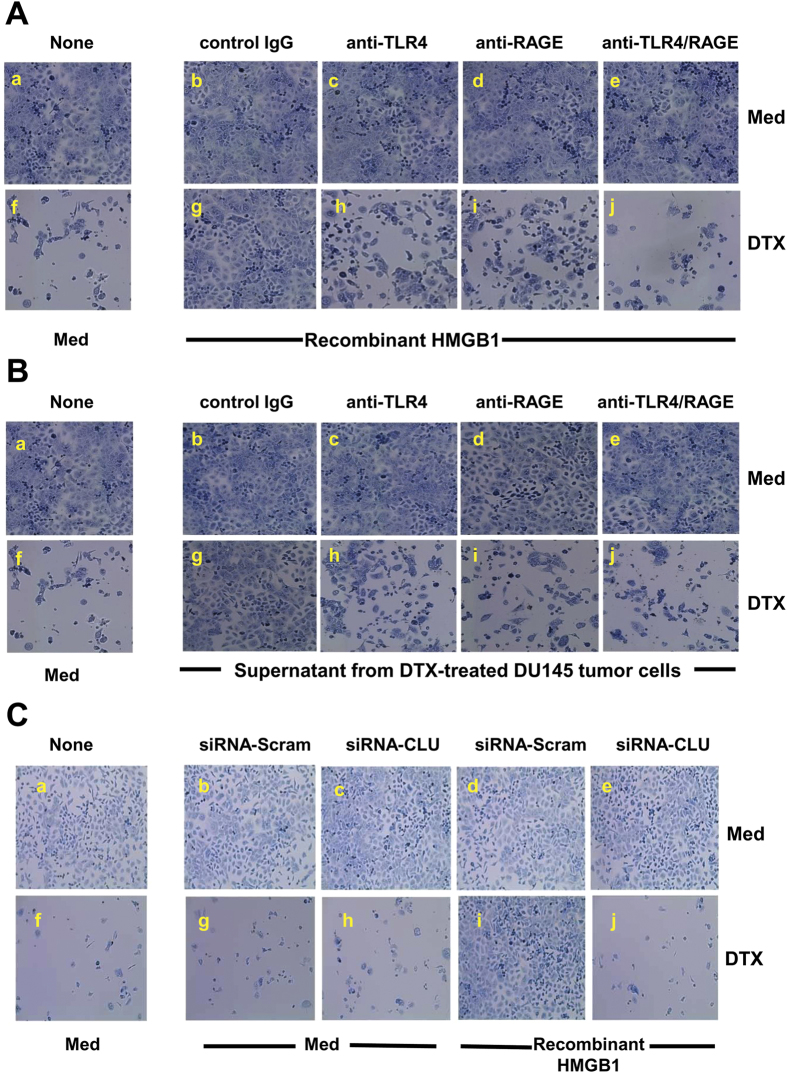
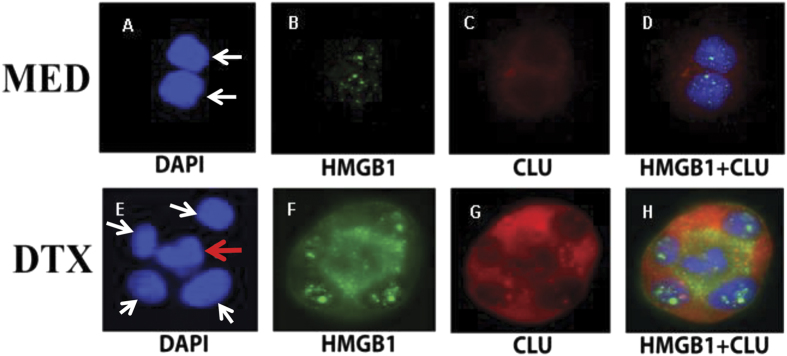
Development of chemoresistance, especially to docetaxel (DTX), is the primary barrier to the cure of castration-resistant prostate cancer but its mechanism is obscure. Here, we report a seminal crosstalk between dying and residual live tumor cells during treatment with DTX that can result in outgrowth of a chemoresistant population. Survival was due to the induction of secretory/cytoplasmic clusterin (sCLU), which is a potent anti-apoptotic protein known to bind and sequester Bax from mitochondria, to prevent caspase 3 activation. sCLU induction in live cells depended on HMGB1 release from dying cells. Supernatants from DTX-treated DU145 tumor cells, which were shown to contain HMGB1, effectively induced sCLU from newly-plated DU145 tumor cells and protected them from DTX toxicity. Addition of anti-HMBG1 to the supernatant or pretreatment of newly-plated DU145 tumor cells with anti-TLR4 or anti-RAGE markedly abrogated sCLU induction and protective effect of the supernatant. Mechanistically, HMGB1 activated NFκB to promote sCLU gene expression and prevented the translocation of activated Bax to mitochondria to block cell death. Importantly, multiple currently-used chemotherapeutic drugs could release HMGB1 from tumor cells. These results suggest that acquisition of chemoresistance may involve the HMGB1/TLR4-RAGE/sCLU pathway triggered by dying cells to provide survival advantage to remnant live tumor cells.
化疗耐药性的产生,尤其是对多西他赛(DTX)的耐药性,是去势抵抗性前列腺癌治愈的主要障碍,但其机制尚不清楚。在此,我们报道了在DTX治疗期间死亡的肿瘤细胞与残留的存活肿瘤细胞之间存在一种重要的相互作用,这种相互作用可导致化疗耐药群体的生长。存活是由于分泌型/细胞质簇集素(sCLU)的诱导,sCLU是一种有效的抗凋亡蛋白,已知其可结合并将Bax从线粒体中隔离出来,以防止半胱天冬酶3激活。存活细胞中sCLU的诱导依赖于死亡细胞释放的高迁移率族蛋白B1(HMGB1)。经DTX处理的DU145肿瘤细胞的上清液(已证明含有HMGB1)可有效诱导新接种的DU145肿瘤细胞产生sCLU,并保护它们免受DTX毒性的影响。向上清液中添加抗HMGB1或用抗TLR4或抗RAGE对新接种的DU145肿瘤细胞进行预处理,可显著消除上清液对sCLU的诱导作用和保护作用。从机制上讲,HMGB1激活核因子κB以促进sCLU基因表达,并阻止活化的Bax转位至线粒体以阻断细胞死亡。重要的是,多种目前使用的化疗药物可使肿瘤细胞释放HMGB1。这些结果表明,获得化疗耐药性可能涉及死亡细胞触发的HMGB1/TLR4-RAGE/sCLU途径,从而为残余的存活肿瘤细胞提供生存优势。