Liu Yong-Qiang, Wang Xiao-Lu, Cheng Xin, Lu Yong-Zhi, Wang Gui-Zhen, Li Xin-Chun, Zhang Jian, Wen Zhe-Sheng, Huang Zhi-Liang, Gao Qin-Lei, Yang Li-Na, Cheng Yong-Xian, Tao Sheng-Ce, Liu Jinsong, Zhou Guang-Biao
State Key Laboratory of Membrane Biology, Institute of Zoology, Chinese Academy of Sciences & University of Chinese Academy of Sciences, Beijing 100101, China.
State Key Laboratory of Respiratory Disease, Guangzhou Institute of Biomedicine and Health, Chinese Academy of Sciences, Guangzhou 510530, China.
Oncotarget. 2015 Oct 27;6(33):34953-67. doi: 10.18632/oncotarget.5547.
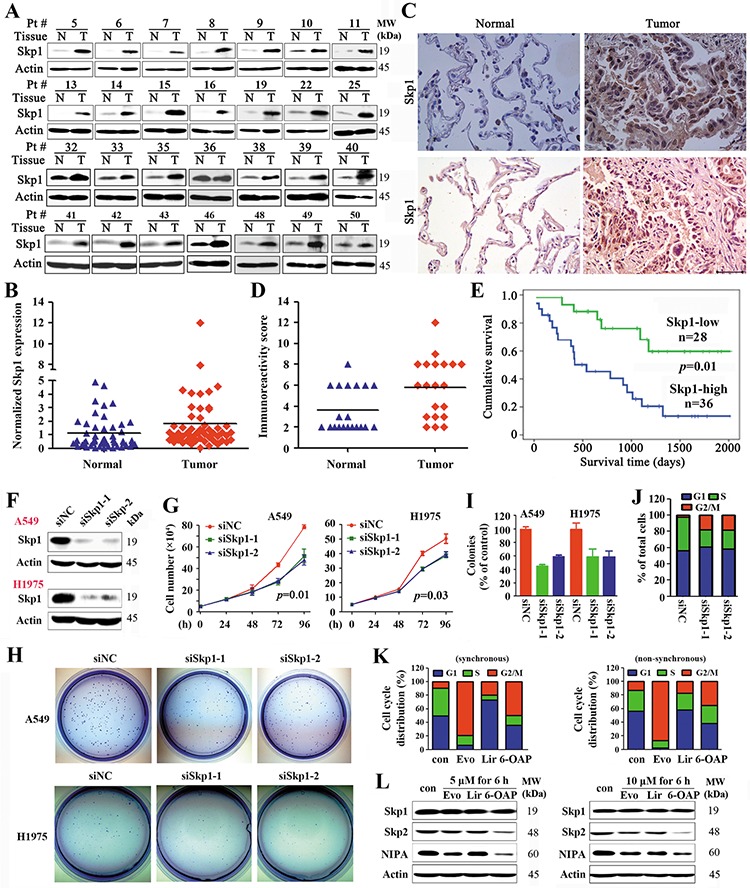
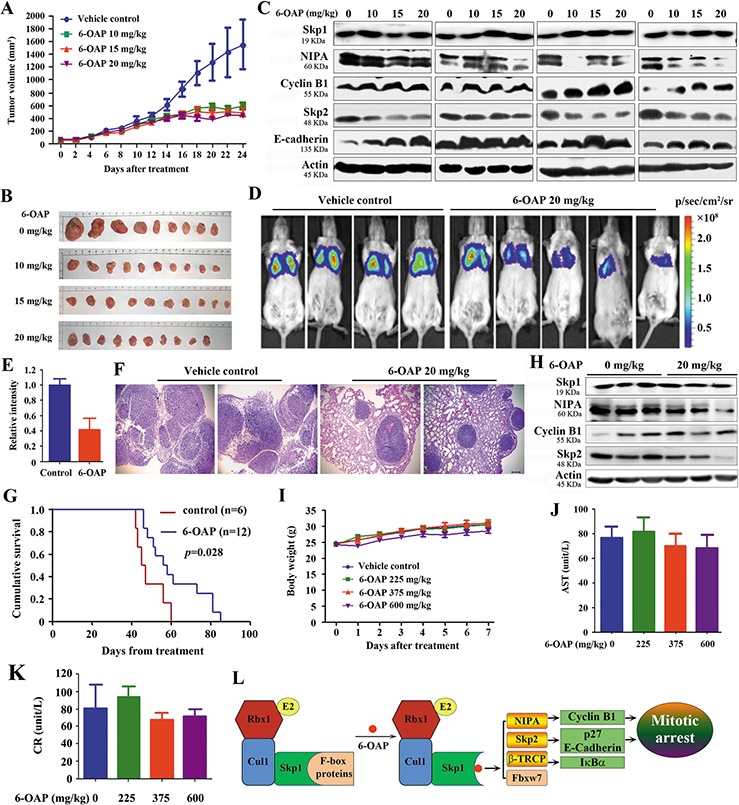
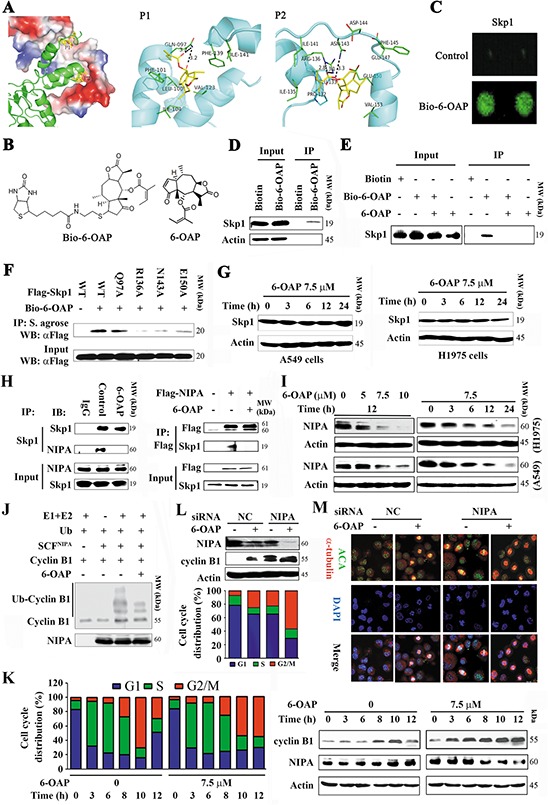
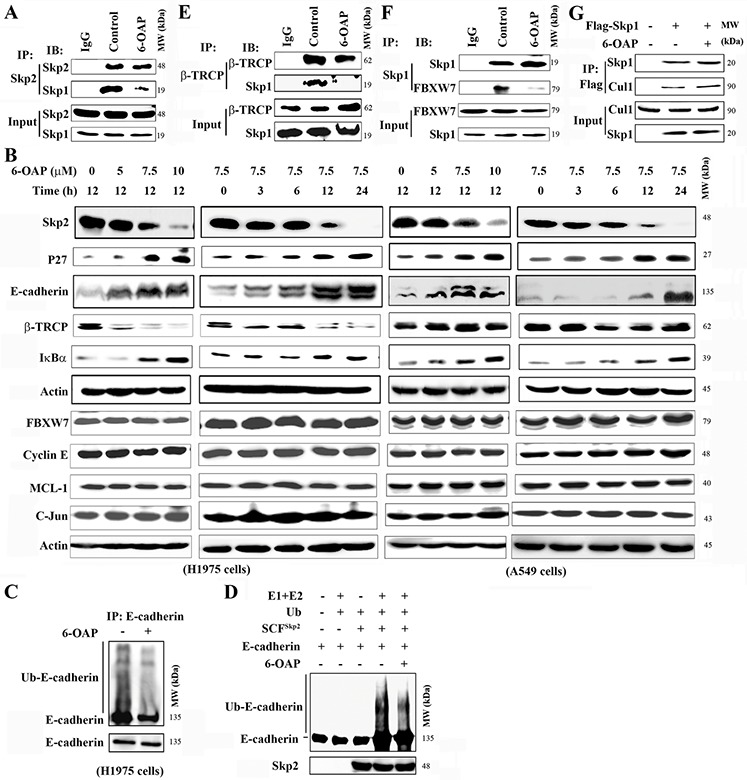
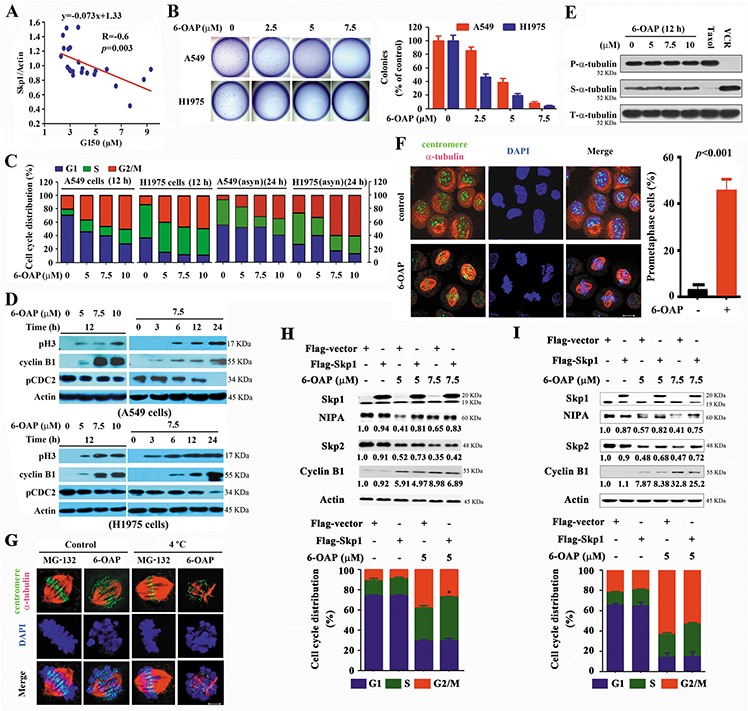
Skp1 is an essential adaptor protein of the Skp1-Cul1-F-box protein complex and is able to stabilize the conformation of some ubiquitin E3 ligases. However, the role Skp1 plays during tumorigenesis remains unclear and Skp1-targeting agent is lacking. Here we showed that Skp1 was overexpressed in 36/64 (56.3%) of non-small cell lung cancers, and elevated Skp1 was associated with poor prognosis. By structure-based high-throughput virtual screening, we found some Skp1-targeting molecules including a natural compound 6-O-angeloylplenolin (6-OAP). 6-OAP bound Skp1 at sites critical to Skp1-Skp2 interaction, leading to dissociation and proteolysis of oncogenic E3 ligases NIPA, Skp2, and β-TRCP, and accumulation of their substrates Cyclin B1, P27 and E-Cadherin. 6-OAP induced prometaphase arrest and exerted potent anti-lung cancer activity in two murine models and showed low adverse effect. These results indicate that Skp1 is critical to lung cancer pathogenesis, and Skp1 inhibitor inactivates crucial oncogenic E3 ligases and exhibits significant therapeutic potentials.
Skp1是Skp1-Cul1-F盒蛋白复合物的一种重要衔接蛋白,能够稳定某些泛素E3连接酶的构象。然而,Skp1在肿瘤发生过程中所起的作用仍不清楚,且缺乏针对Skp1的靶向药物。在此,我们发现Skp1在64例非小细胞肺癌中的36例(56.3%)中过表达,Skp1水平升高与预后不良相关。通过基于结构的高通量虚拟筛选,我们发现了一些靶向Skp1的分子,包括一种天然化合物6-O-当归酰蛇麻脂醇(6-OAP)。6-OAP在对Skp1-Skp2相互作用至关重要的位点与Skp1结合,导致致癌E3连接酶NIPA、Skp2和β-TRCP解离并发生蛋白水解,及其底物细胞周期蛋白B1、P27和E-钙黏蛋白的积累。6-OAP诱导前中期阻滞,并在两种小鼠模型中发挥强大的抗肺癌活性,且不良反应较低。这些结果表明,Skp1对肺癌发病机制至关重要,Skp1抑制剂可使关键致癌E3连接酶失活,并具有显著的治疗潜力。