Xie Dong-Xing, Zeng Chao, Wang Yi-Lun, Li Yu-Sheng, Wei Jie, Li Hui, Yang Tuo, Yang Tu-Bao, Lei Guang-Hua
Department of Orthopaedics, Xiangya Hospital, Central South University, Changsha, Hunan Province, China.
Department of epidemiology and health statistics, School of Public Health, Central South University, Changsha, Hunan Province, China.
PLoS One. 2015 Oct 16;10(10):e0140512. doi: 10.1371/journal.pone.0140512. eCollection 2015.
The purpose of this study was to compare the efficacy and safety of a single-dose intra-articular morphine plus bupivacaine versus morphine alone in patients undergoing arthroscopic knee surgery.
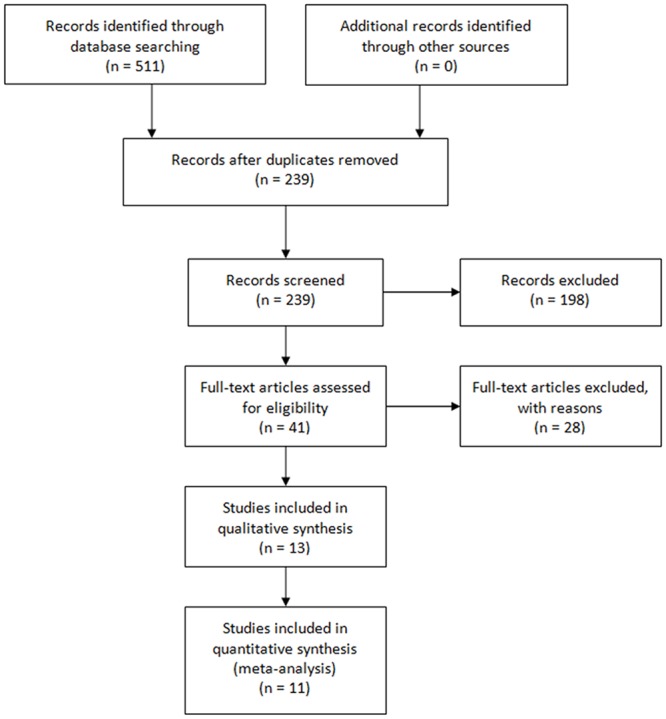
Randomized controlled trials comparing a combination of morphine and bupivacaine with morphine alone injected intra-articularly in the management of pain after knee arthrocopic surgery were retrieved (up to August 10, 2014) from MEDLINE, the Cochrane Library and Embase databases. The weighted mean difference (WMD), relative risk (RR) and their corresponding 95% confidence intervals (CIs) were calculated using RevMan statistical software.
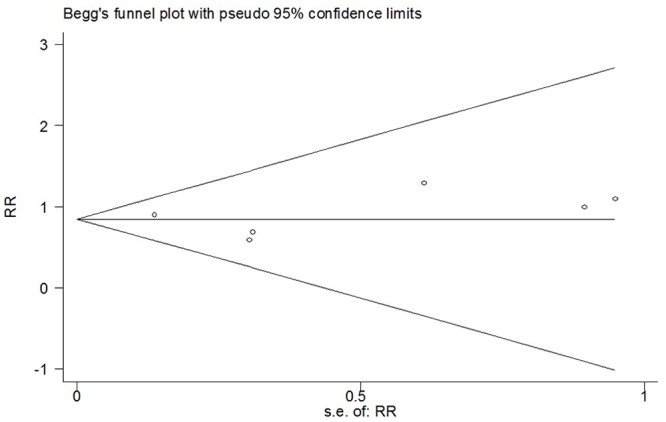
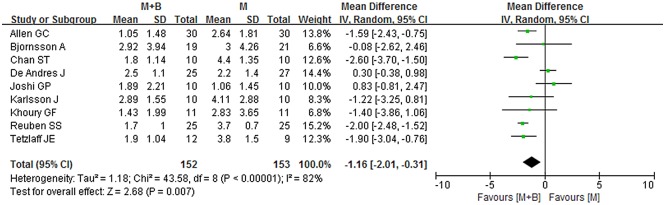
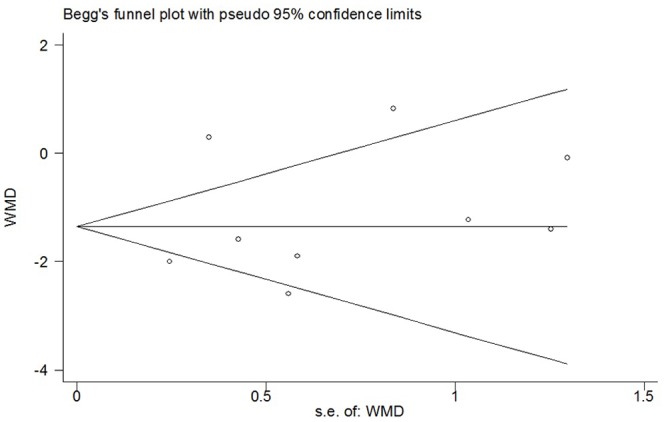
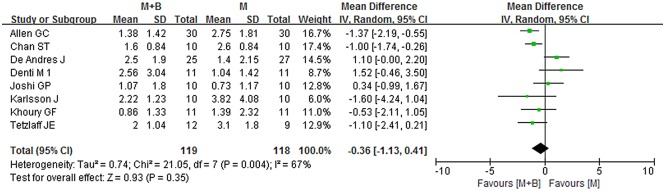
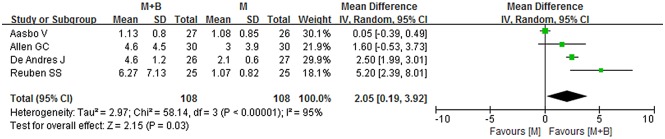
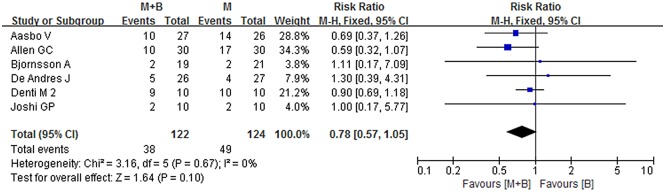
Thirteen randomized controlled trials were included. Statistically significant differences were observed with regard to the VAS values during the immediate period (0-2h) (WMD -1.16; 95% CI -2.01 to -0.31; p = 0.007) and the time to first request for rescue analgesia (WMD = 2.05; 95% CI 0.19 to 3.92; p = 0.03). However, there was no significant difference in the VAS pain score during the early period (2-6h) (WMD -0.36; 95% CI -1.13 to 0.41; p = 0.35), the late period (6-48h) (WMD 0.11; 95% CI -0.40 to 0.63; p = 0.67), and the number of patients requiring supplementary analgesia (RR = 0.78; 95% CI 0.57 to 1.05; p = 0.10). In addition, systematic review showed that intra-articular morphine plus bupivacaine would not increase the incidence of adverse effects compared with morphine alone.
The present study suggested that the administration of single-dose intra-articular morphine plus bupivacaine provided better pain relief during the immediate period (0-2h), and lengthened the time interval before the first request for analgesic rescue without increasing the short-term side effects when compared with morphine alone.
Level I, meta-analysis of Level I studies.
本研究旨在比较单剂量关节腔内注射吗啡联合布比卡因与单纯注射吗啡用于膝关节镜手术患者的疗效和安全性。
从MEDLINE、Cochrane图书馆和Embase数据库中检索截至2014年8月10日的随机对照试验,这些试验比较了关节腔内注射吗啡联合布比卡因与单纯注射吗啡用于膝关节镜手术后疼痛管理的效果。使用RevMan统计软件计算加权平均差(WMD)、相对危险度(RR)及其相应的95%置信区间(CI)。
纳入13项随机对照试验。在即刻期(0 - 2小时)的视觉模拟评分(VAS)值(WMD -1.16;95%CI -2.01至 -0.31;p = 0.007)和首次要求使用解救镇痛药的时间(WMD = 2.05;95%CI 0.19至3.92;p = 0.03)方面观察到统计学显著差异。然而,在早期(2 - 6小时)(WMD -0.36;95%CI -1.13至0.41;p = 0.35)、晚期(6 - 48小时)(WMD 0.11;95%CI -0.40至0.63;p = 0.67)的VAS疼痛评分以及需要补充镇痛的患者数量(RR = 0.78;95%CI 0.57至1.05;p = 0.10)方面没有显著差异。此外,系统评价表明,与单纯吗啡相比,关节腔内注射吗啡联合布比卡因不会增加不良反应的发生率。
本研究表明,与单纯注射吗啡相比,单剂量关节腔内注射吗啡联合布比卡因在即刻期(0 - 2小时)能提供更好的疼痛缓解,延长首次要求镇痛解救的时间间隔,且不增加短期副作用。
I级,I级研究的荟萃分析。