Choukrallah Mohamed-Amin, Song Shuang, Rolink Antonius G, Burger Lukas, Matthias Patrick
Friedrich Miescher Institute for Biomedical Research, Maulbeerstrasse 66, 4058 Basel, Switzerland.
Department of Biomedicine, University of Basel, Mattenstrasse 28, 4058 Basel, Switzerland.
Nat Commun. 2015 Oct 19;6:8324. doi: 10.1038/ncomms9324.
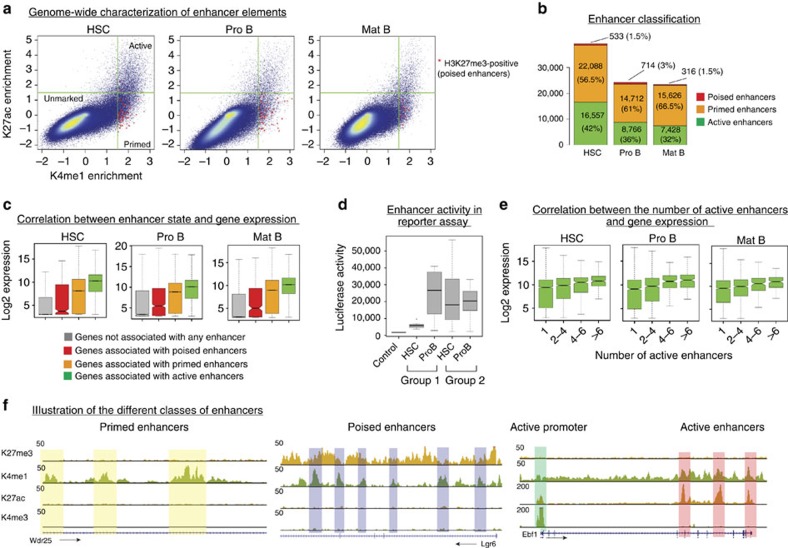
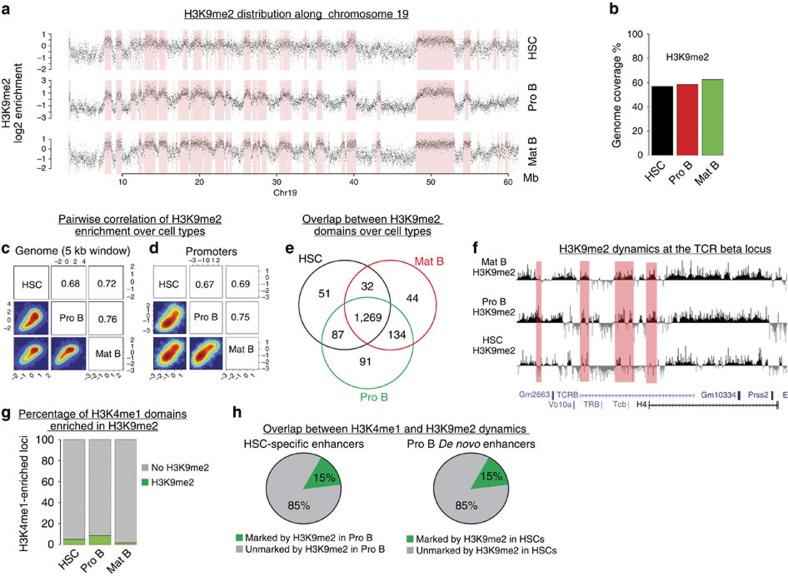
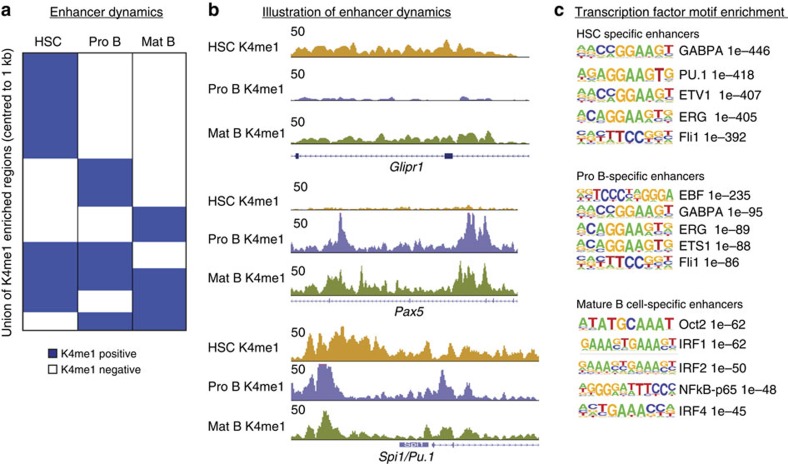
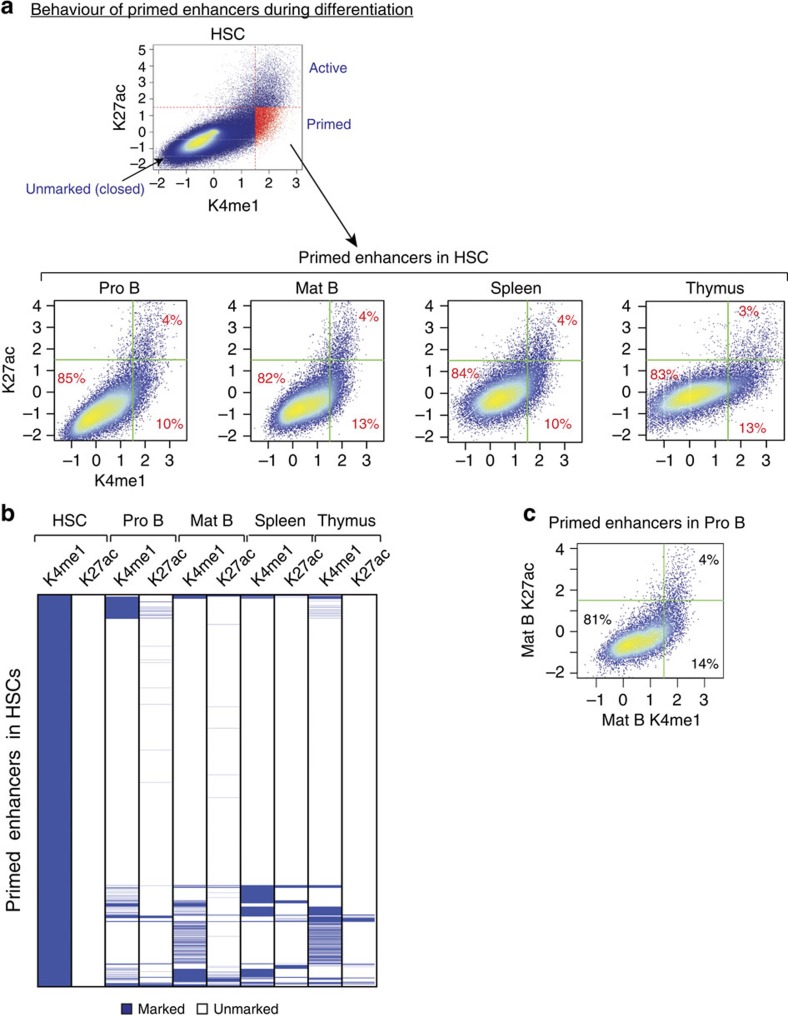
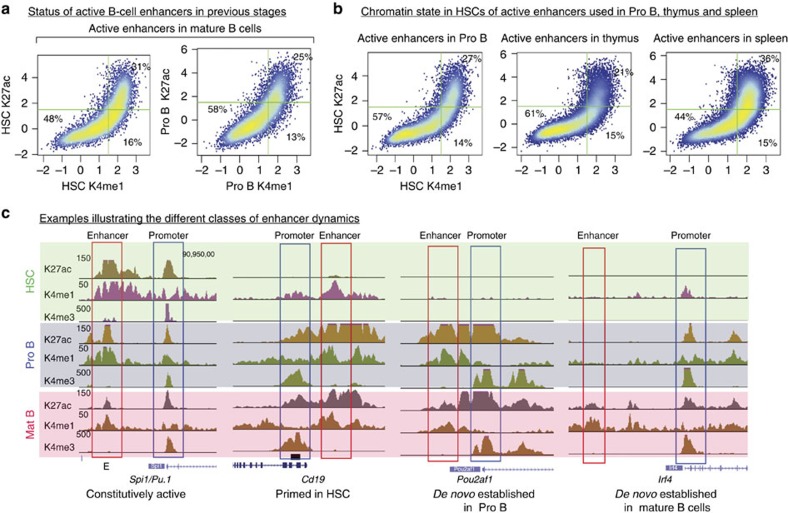
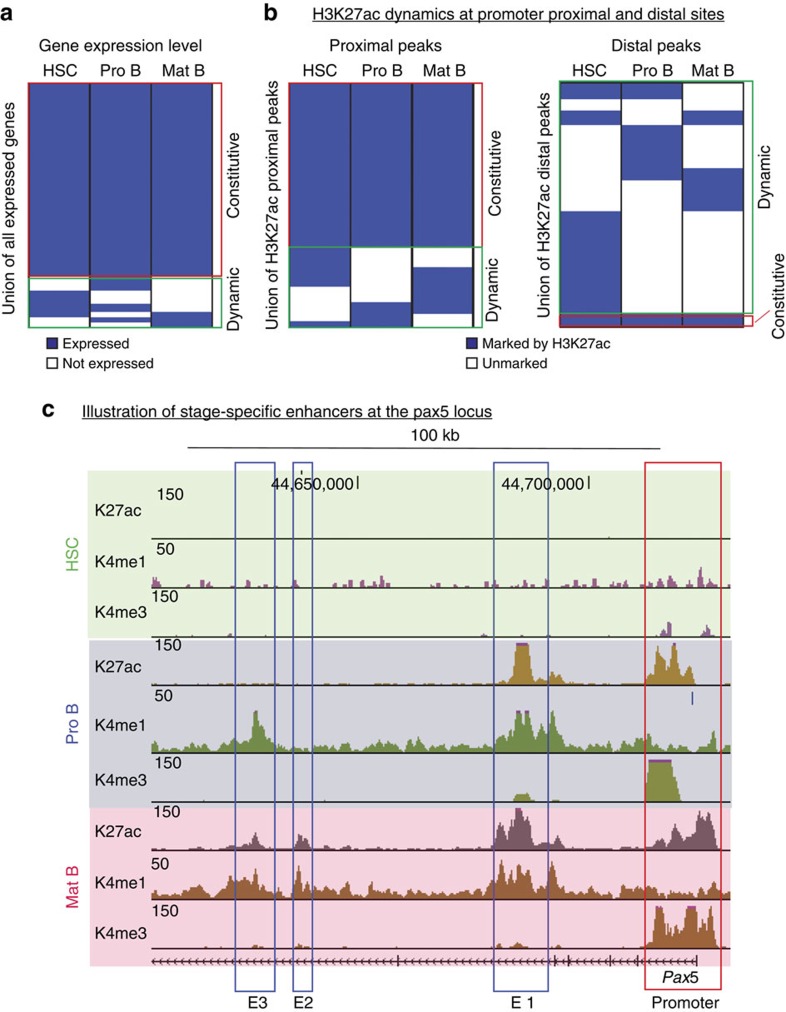
A widely accepted model posits that activation of enhancers during differentiation goes through a priming step prior to lineage commitment. To investigate the chronology of enhancer repertoire establishment during hematopoiesis, we monitored epigenome dynamics during three developmental stages representing hematopoietic stem cells, B-cell progenitors and mature B-cells. We find that only a minority of enhancers primed in stem cells or progenitors become active at later stages. Furthermore, most enhancers active in differentiated cells were not primed in earlier stages. Thus, the enhancer repertoire is reshaped dynamically during B-cell differentiation and enhancer priming in early stages does not appear to be an obligate step for enhancer activation. Furthermore, our data reveal that heterochromatin and Polycomb-mediated silencing have only a minor contribution in shaping enhancer repertoires during cell differentiation. Together, our data revisit the prevalent model about epigenetic reprogramming during hematopoiesis and give insights into the formation of gene regulatory networks.
一个被广泛接受的模型假定,在分化过程中增强子的激活在谱系确定之前要经历一个预激发步骤。为了研究造血过程中增强子库建立的时间顺序,我们监测了代表造血干细胞、B细胞祖细胞和成熟B细胞的三个发育阶段的表观基因组动态变化。我们发现,在干细胞或祖细胞中预激发的增强子只有少数在后期变得活跃。此外,在分化细胞中活跃的大多数增强子在早期并未被预激发。因此,在B细胞分化过程中增强子库会动态重塑,早期的增强子预激发似乎并非增强子激活的必要步骤。此外,我们的数据表明,异染色质和多梳蛋白介导的沉默在细胞分化过程中对塑造增强子库的贡献很小。总之,我们的数据重新审视了关于造血过程中表观遗传重编程的普遍模型,并为基因调控网络的形成提供了见解。