Acharya Dhiraj, Paul Amber M, Anderson John F, Huang Faqing, Bai Fengwei
Department of Biological Sciences, University of Southern Mississippi, Hattiesburg, Mississippi, United States of America.
Department of Entomology, Connecticut Agricultural Experiment Station, New Haven, Connecticut, United States of America.
PLoS Negl Trop Dis. 2015 Oct 20;9(10):e0004139. doi: 10.1371/journal.pntd.0004139. eCollection 2015.
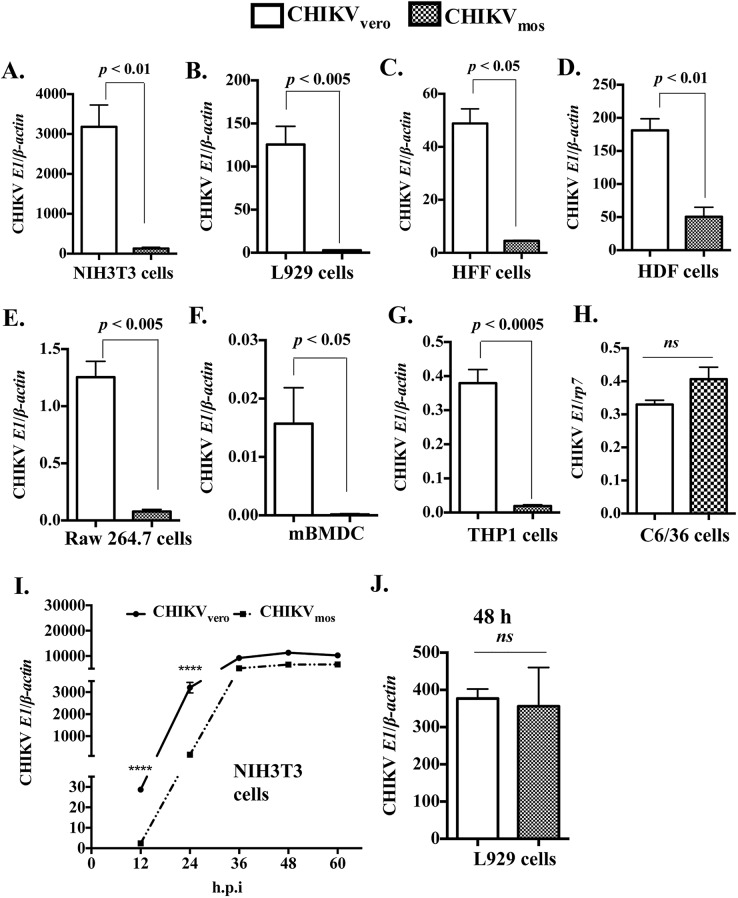
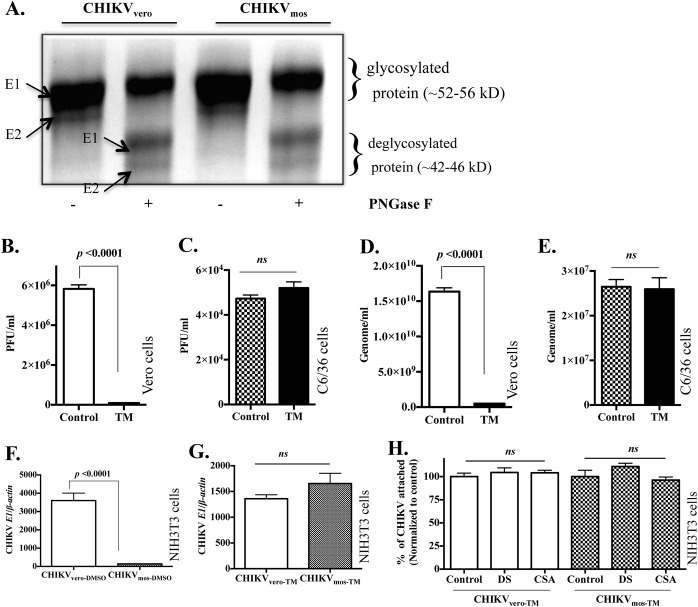
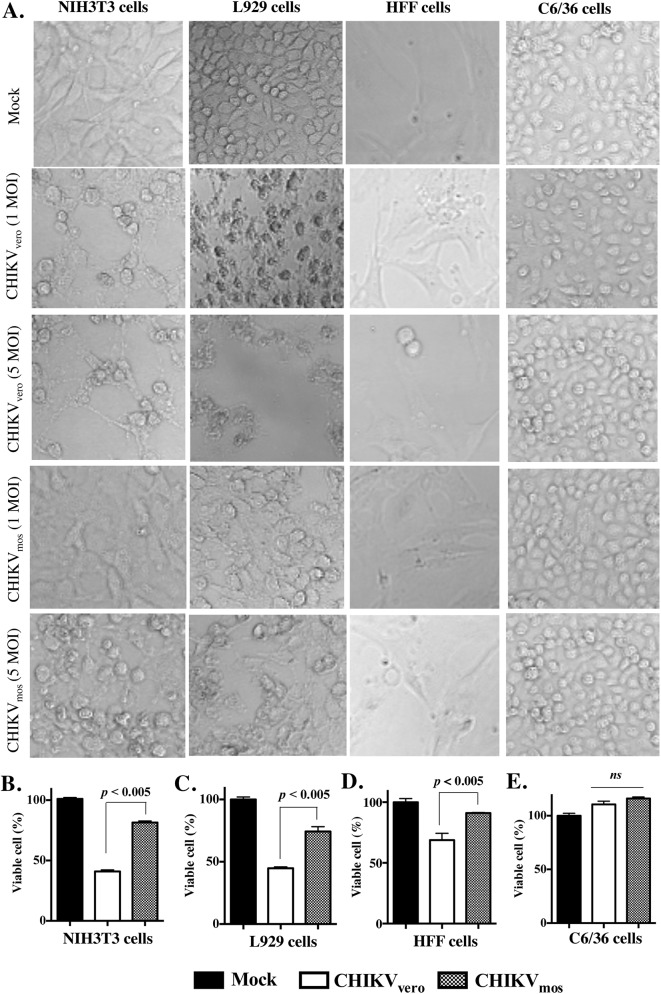
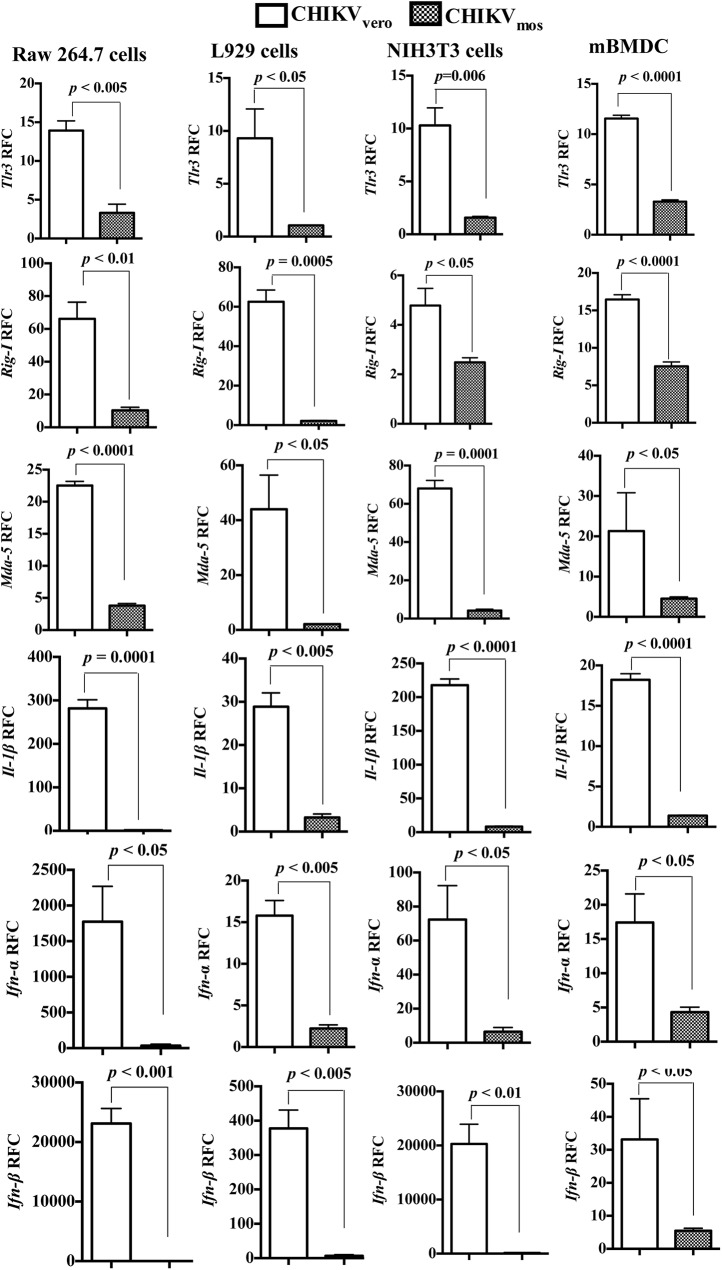
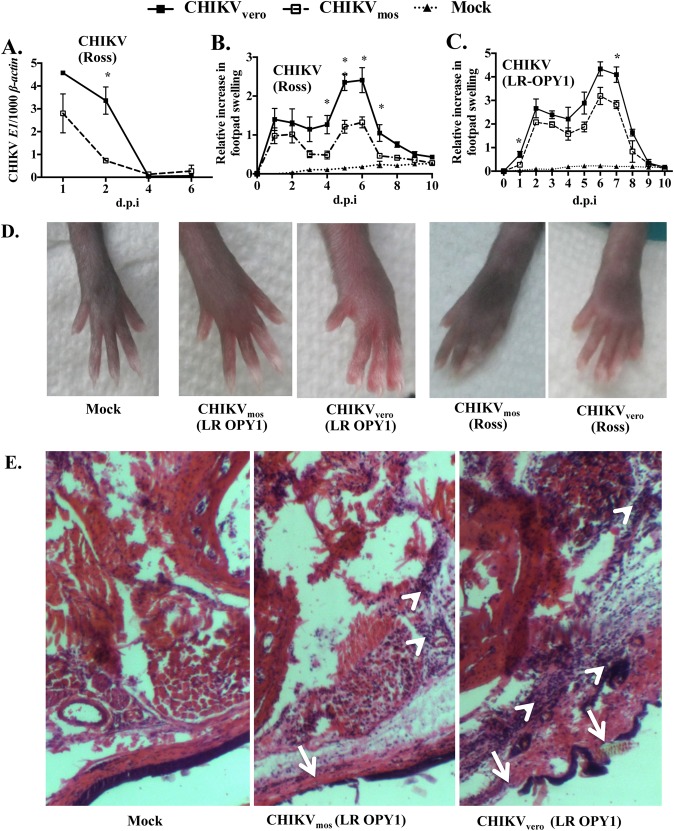
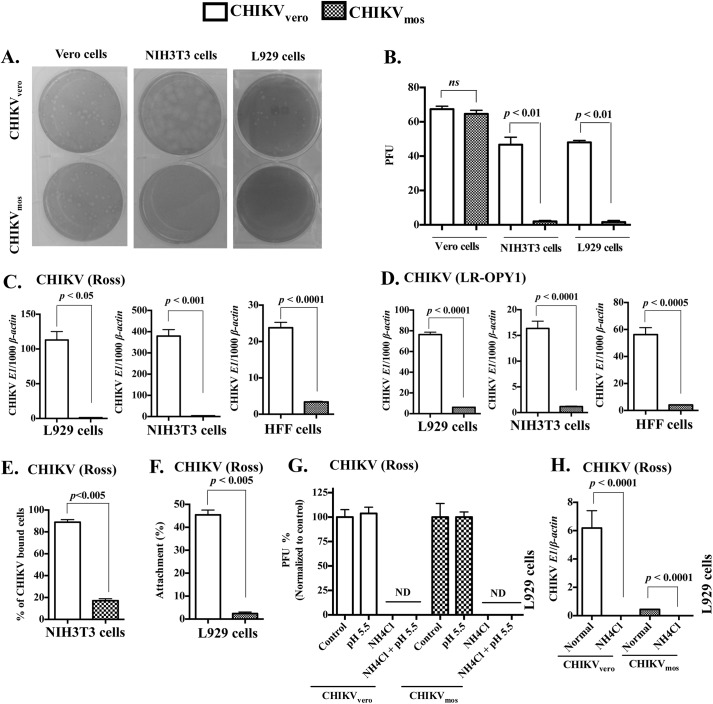
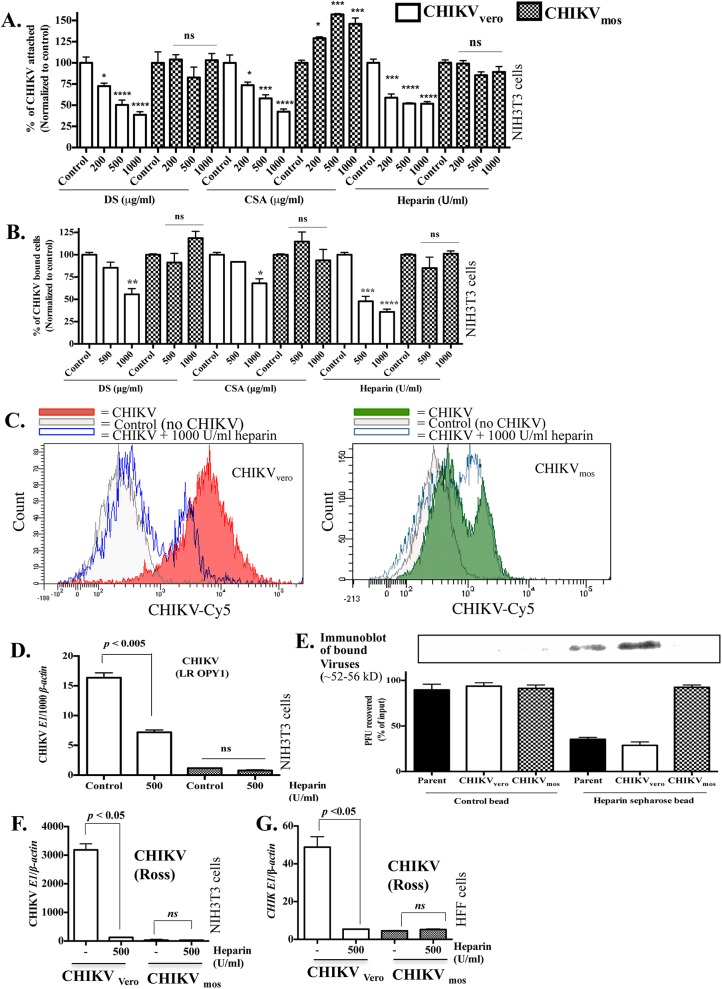
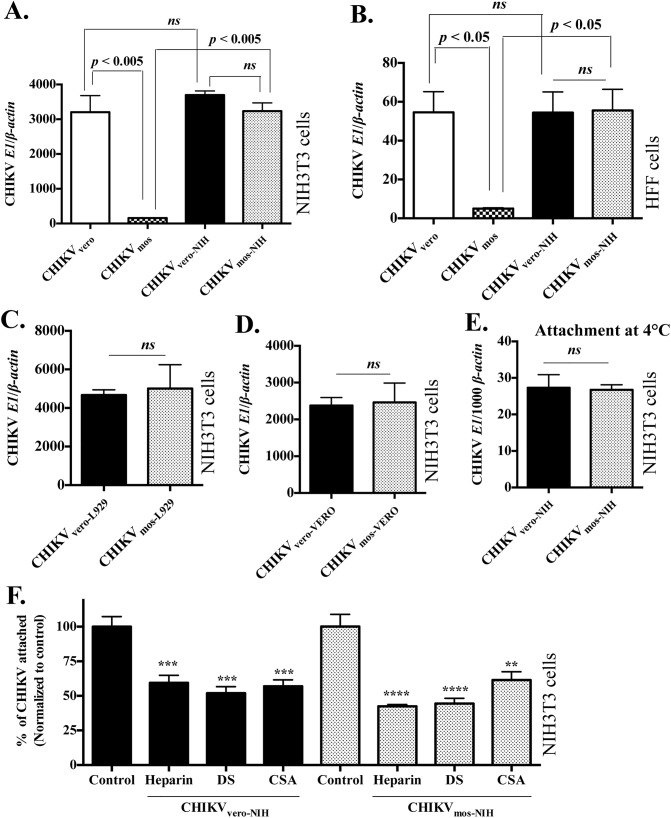
Chikungunya virus (CHIKV) is a mosquito-transmitted alphavirus that can cause fever and chronic arthritis in humans. CHIKV that is generated in mosquito or mammalian cells differs in glycosylation patterns of viral proteins, which may affect its replication and virulence. Herein, we compare replication, pathogenicity, and receptor binding of CHIKV generated in Vero cells (mammal) or C6/36 cells (mosquito) through a single passage. We demonstrate that mosquito cell-derived CHIKV (CHIKV mos) has slower replication than mammalian cell-derived CHIKV (CHIKV vero), when tested in both human and murine cell lines. Consistent with this, CHIKV mos infection in both cell lines produce less cytopathic effects and reduced antiviral responses. In addition, infection in mice show that CHIKV mos produces a lower level of viremia and less severe footpad swelling when compared with CHIKV vero. Interestingly, CHIKV mos has impaired ability to bind to glycosaminoglycan (GAG) receptors on mammalian cells. However, sequencing analysis shows that this impairment is not due to a mutation in the CHIKV E2 gene, which encodes for the viral receptor binding protein. Moreover, CHIKV mos progenies can regain GAG receptor binding capability and can replicate similarly to CHIKV vero after a single passage in mammalian cells. Furthermore, CHIKV vero and CHIKV mos no longer differ in replication when N-glycosylation of viral proteins was inhibited by growing these viruses in the presence of tunicamycin. Collectively, these results suggest that N-glycosylation of viral proteins within mosquito cells can result in loss of GAG receptor binding capability of CHIKV and reduction of its infectivity in mammalian cells.
基孔肯雅病毒(CHIKV)是一种通过蚊子传播的甲病毒,可导致人类发热和慢性关节炎。在蚊子或哺乳动物细胞中产生的CHIKV在病毒蛋白的糖基化模式上有所不同,这可能会影响其复制和毒力。在此,我们通过单次传代比较了在Vero细胞(哺乳动物)或C6/36细胞(蚊子)中产生的CHIKV的复制、致病性和受体结合情况。我们证明,在人和鼠细胞系中测试时,蚊子细胞衍生的CHIKV(CHIKV mos)的复制速度比哺乳动物细胞衍生的CHIKV(CHIKV vero)慢。与此一致的是,两种细胞系中CHIKV mos感染产生的细胞病变效应较少,抗病毒反应也降低。此外,在小鼠中的感染表明,与CHIKV vero相比,CHIKV mos产生的病毒血症水平较低,足垫肿胀也较轻。有趣的是,CHIKV mos与哺乳动物细胞上的糖胺聚糖(GAG)受体结合的能力受损。然而,测序分析表明,这种损伤并非由于编码病毒受体结合蛋白的CHIKV E2基因突变所致。此外,CHIKV mos子代在哺乳动物细胞中单次传代后可恢复GAG受体结合能力,并能与CHIKV vero类似地复制。此外,当在衣霉素存在的情况下培养这些病毒以抑制病毒蛋白的N-糖基化时,CHIKV vero和CHIKV mos在复制方面不再有差异。总的来说,这些结果表明,蚊子细胞内病毒蛋白的N-糖基化可导致CHIKV丧失GAG受体结合能力,并降低其在哺乳动物细胞中的感染性。