The Biodesign Institute and School of Life Sciences, Arizona State University, Tempe, AZ 85287, USA.
Department of Cell and Molecular Biology, University of Southern Mississippi, Hattiesburg, MS 39406, USA.
Viruses. 2023 May 11;15(5):1156. doi: 10.3390/v15051156.
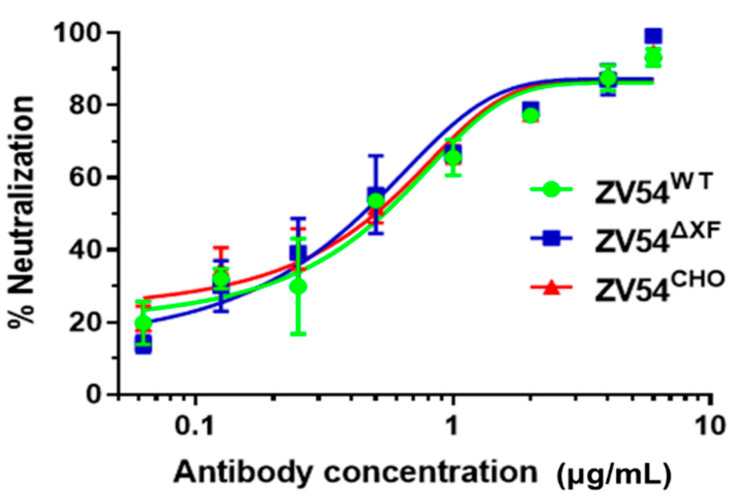
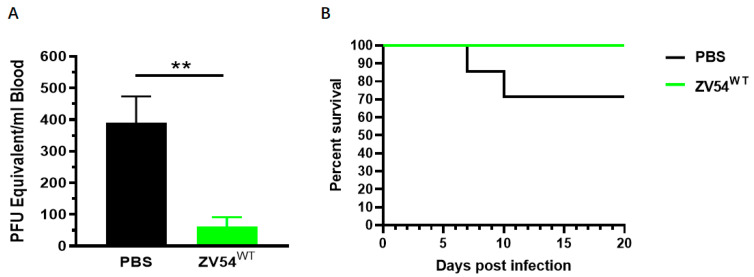
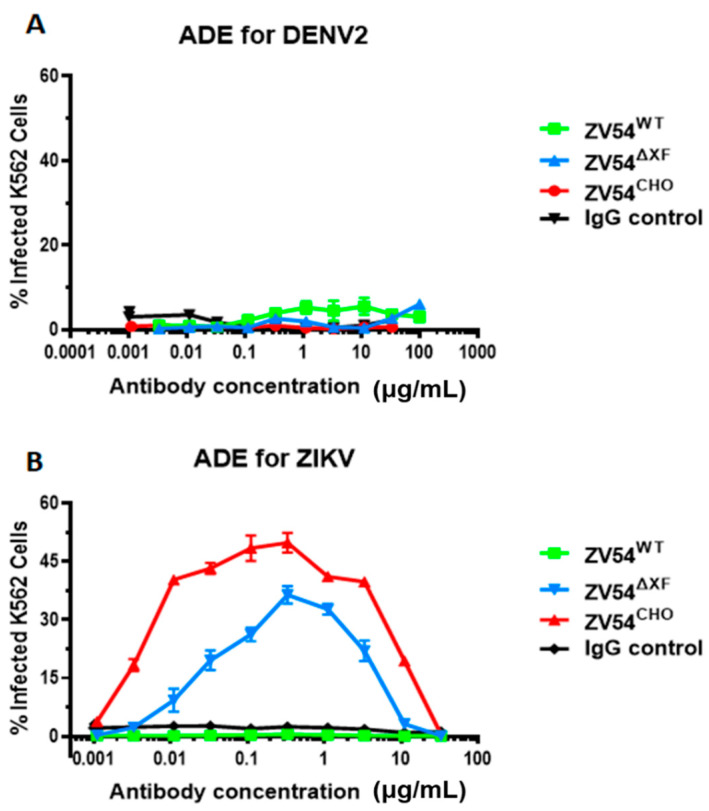
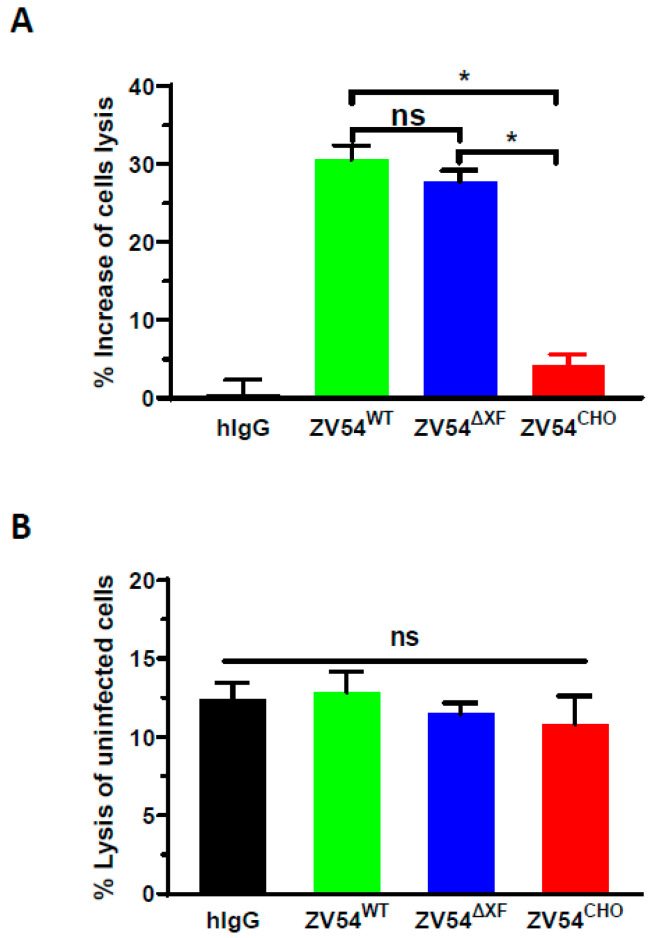
Antibody-dependent enhancement of infection (ADE) is clinically relevant to Dengue virus (DENV) infection and poses a major risk to the application of monoclonal antibody (mAb)-based therapeutics against related flaviviruses such as the Zika virus (ZIKV). Here, we tested a two-tier approach for selecting non-cross-reactive mAbs combined with modulating Fc glycosylation as a strategy to doubly secure the elimination of ADE while preserving Fc effector functions. To this end, we selected a ZIKV-specific mAb (ZV54) and generated three ZV54 variants using Chinese hamster ovary cells and wild-type (WT) and glycoengineered ΔXF plants as production hosts (ZV54, ZV54, and ZV54). The three ZV54 variants shared an identical polypeptide backbone, but each exhibited a distinct Fc N-glycosylation profile. All three ZV54 variants showed similar neutralization potency against ZIKV but no ADE activity for DENV infection, validating the importance of selecting the virus/serotype-specific mAbs for avoiding ADE by related flaviviruses. For ZIKV infection, however, ZV54 and ZV54 showed significant ADE activity while ZV54 completely forwent ADE, suggesting that Fc glycan modulation may yield mAb glycoforms that abrogate ADE even for homologous viruses. In contrast to the current strategies for Fc mutations that abrogate all effector functions along with ADE, our approach allowed the preservation of effector functions as all ZV54 glycovariants retained antibody-dependent cellular cytotoxicity (ADCC) against the ZIKV-infected cells. Furthermore, the ADE-free ZV54 demonstrated in vivo efficacy in a ZIKV-infection mouse model. Collectively, our study provides further support for the hypothesis that antibody-viral surface antigen and Fc-mediated host cell interactions are both prerequisites for ADE, and that a dual-approach strategy, as shown herein, contributes to the development of highly safe and efficacious anti-ZIKV mAb therapeutics. Our findings may be impactful to other ADE-prone viruses, including SARS-CoV-2.
抗体依赖的增强感染(ADE)与登革热病毒(DENV)感染密切相关,对基于单克隆抗体(mAb)的治疗方法在相关黄病毒(如寨卡病毒(ZIKV))的应用构成了重大风险。在这里,我们测试了一种选择非交叉反应性 mAb 的两阶段方法,同时调节 Fc 糖基化作为一种策略,以双重确保消除 ADE 的同时保留 Fc 效应功能。为此,我们选择了一种 ZIKV 特异性 mAb(ZV54),并使用中国仓鼠卵巢细胞和野生型(WT)和糖基工程化的ΔXF 植物作为生产宿主,生成了三种 ZV54 变体(ZV54、ZV54 和 ZV54)。这三种 ZV54 变体具有相同的多肽骨架,但每个变体都表现出不同的 Fc N-糖基化谱。所有三种 ZV54 变体对 ZIKV 表现出相似的中和效力,但对 DENV 感染没有 ADE 活性,验证了选择病毒/血清型特异性 mAb 以避免相关黄病毒引起的 ADE 的重要性。然而,对于 ZIKV 感染,ZV54 和 ZV54 表现出显著的 ADE 活性,而 ZV54 完全避免了 ADE,表明 Fc 糖基化修饰可能产生 mAb 糖型,即使对于同源病毒也能消除 ADE。与目前针对 Fc 突变的策略不同,该策略消除了所有效应功能以及 ADE,我们的方法允许保留效应功能,因为所有 ZV54 糖变体都保留了针对 ZIKV 感染细胞的抗体依赖性细胞毒性(ADCC)。此外,无 ADE 的 ZV54 在 ZIKV 感染的小鼠模型中表现出体内疗效。总的来说,我们的研究进一步支持了这样一种假设,即抗体-病毒表面抗原和 Fc 介导的宿主细胞相互作用都是 ADE 的前提条件,并且如本文所示的双重方法策略有助于开发高度安全有效的抗 ZIKV mAb 治疗方法。我们的发现可能对其他易发生 ADE 的病毒(包括 SARS-CoV-2)产生影响。