Laboratório de Virologia Molecular, Departamento de Genética, Instituto de Biologia, Universidade Federal do Rio de Janeiro, Rio de Janeiro, Brazil.
Laboratório de Biologia Integrativa, Departamento de Genética Ecologia e Evolução, Instituto de Ciências Biológicas, Universidade Federal de Minas Gerais, Belo Horizonte, Brazil.
Front Cell Infect Microbiol. 2021 Mar 15;11:641261. doi: 10.3389/fcimb.2021.641261. eCollection 2021.
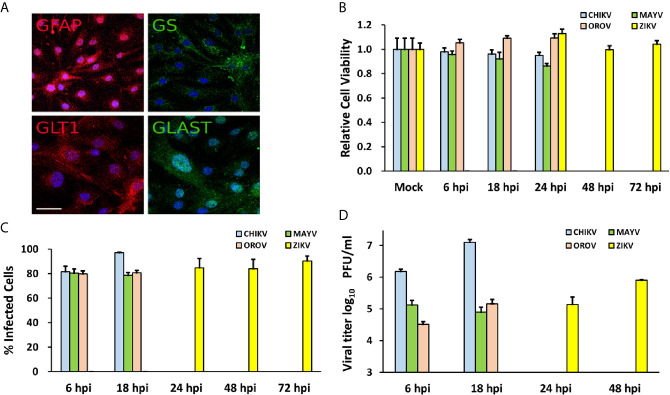
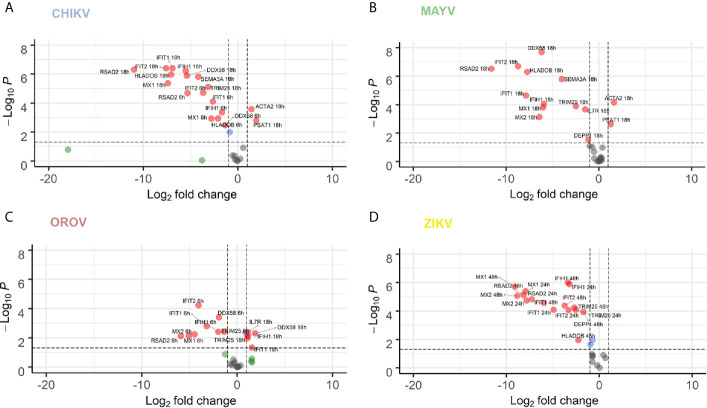
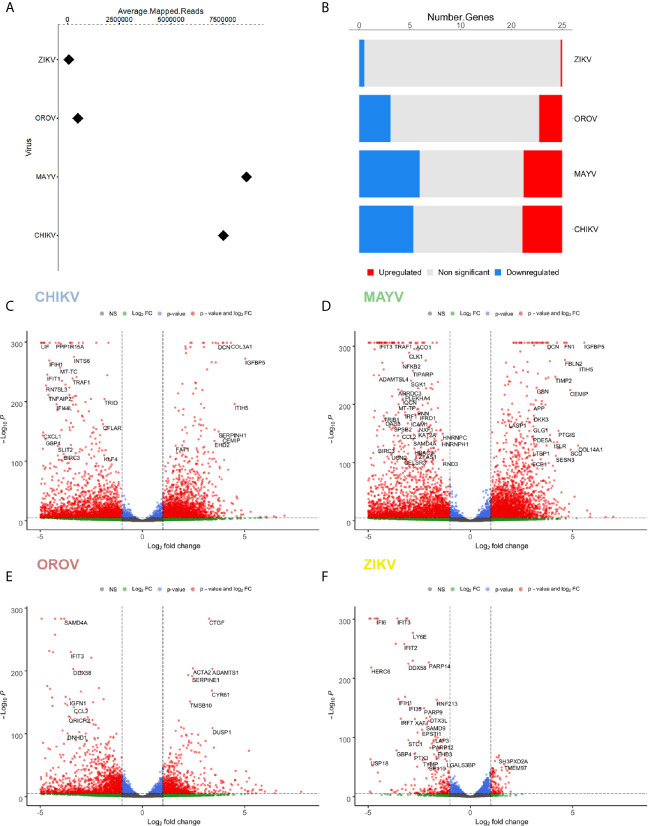
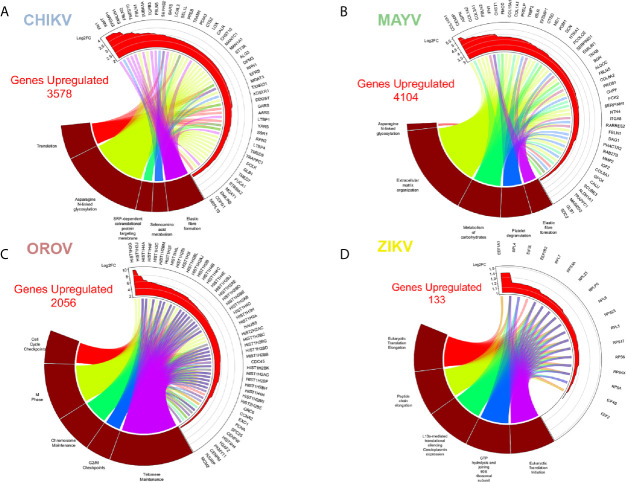
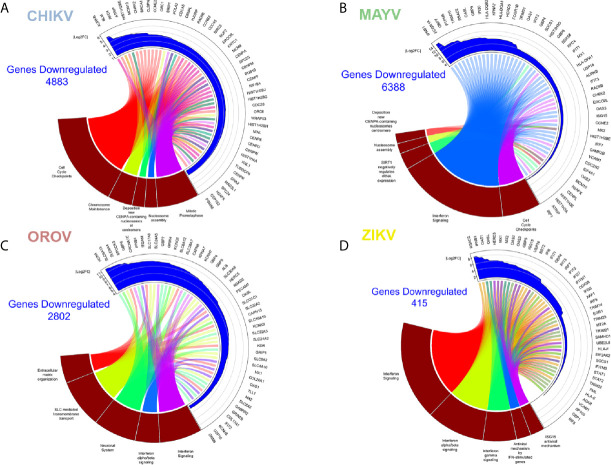
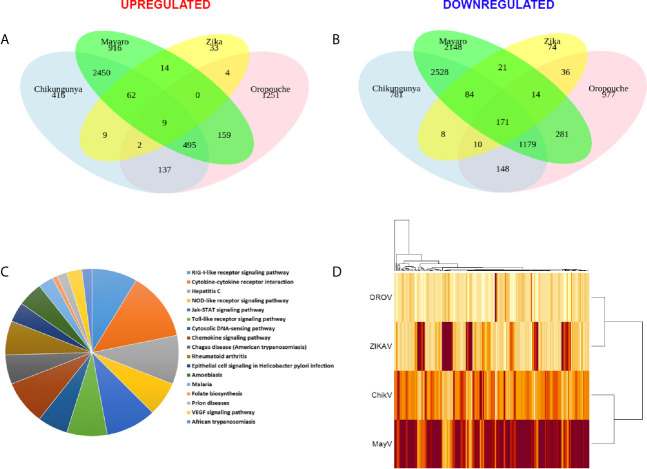
Arboviruses pose a major threat throughout the world and represent a great burden in tropical countries of South America. Although generally associated with moderate febrile illness, in more severe cases they can lead to neurological outcomes, such as encephalitis, Guillain-Barré syndrome, and Congenital Syndromes. In this context astrocytes play a central role in production of inflammatory cytokines, regulation of extracellular matrix, and control of glutamate driven neurotoxicity in the central nervous system. Here, we presented a comprehensive genome-wide transcriptome analysis of human primary astrocytes infected with Chikungunya, Mayaro, Oropouche, or Zika viruses. Analyses of differentially expressed genes (DEGs), pathway enrichment, and interactomes have shown that Alphaviruses up-regulated genes related to elastic fiber formation and N-glycosylation of glycoproteins, with down-regulation of cell cycle and DNA stability and chromosome maintenance genes. In contrast, Oropouche virus up-regulated cell cycle and DNA maintenance and condensation pathways while down-regulated extracellular matrix, collagen metabolism, glutamate and ion transporters pathways. Zika virus infection only up-regulated eukaryotic translation machinery while down-regulated interferon pathways. Reactome and integration analysis revealed a common signature in down-regulation of innate immune response, antiviral response, and inflammatory cytokines associated to interferon pathway for all arboviruses tested. Validation of interferon stimulated genes by reverse transcriptase quantitative polymerase chain reaction (RT-qPCR) corroborated our transcriptome findings. Altogether, our results showed a co-evolution in the mechanisms involved in the escape of arboviruses to antiviral immune response mediated by the interferon (IFN) pathway.
虫媒病毒在全球范围内构成重大威胁,是南美洲热带国家的沉重负担。虽然通常与中度发热疾病相关,但在更严重的情况下,它们可能导致神经学后果,如脑炎、吉兰-巴雷综合征和先天性综合征。在这种情况下,星形胶质细胞在产生炎症细胞因子、调节细胞外基质以及控制中枢神经系统中谷氨酸驱动的神经毒性方面发挥核心作用。在这里,我们对感染基孔肯雅热、马雅罗热、奥罗普切热或寨卡病毒的人原代星形胶质细胞进行了全面的全基因组转录组分析。差异表达基因(DEGs)分析、通路富集和相互作用网络分析表明,甲病毒上调了与弹性纤维形成和糖蛋白 N-糖基化相关的基因,而下调了细胞周期和 DNA 稳定性以及染色体维持基因。相比之下,奥罗普切病毒上调了细胞周期和 DNA 维持及浓缩途径,而下调了细胞外基质、胶原蛋白代谢、谷氨酸和离子转运体途径。寨卡病毒感染仅上调了真核翻译机制,而下调了干扰素途径。Reactome 和整合分析揭示了所有测试的虫媒病毒都存在一个共同的特征,即下调与干扰素途径相关的先天免疫反应、抗病毒反应和炎症细胞因子。通过逆转录定量聚合酶链反应(RT-qPCR)验证干扰素刺激基因,证实了我们的转录组发现。总之,我们的研究结果表明,虫媒病毒在逃避干扰素(IFN)途径介导的抗病毒免疫反应的机制中存在共同进化。