Finnegan Rory, Becker Suzanna
Neurotechnology and Neuroplasticity Lab, McMaster Integrative Neuroscience Discovery & Study, McMaster University Hamilton, ON, Canada.
Neurotechnology and Neuroplasticity Lab, Department of Psychology, Neuroscience and Behaviour, McMaster University Hamilton, ON, Canada.
Front Syst Neurosci. 2015 Oct 6;9:136. doi: 10.3389/fnsys.2015.00136. eCollection 2015.
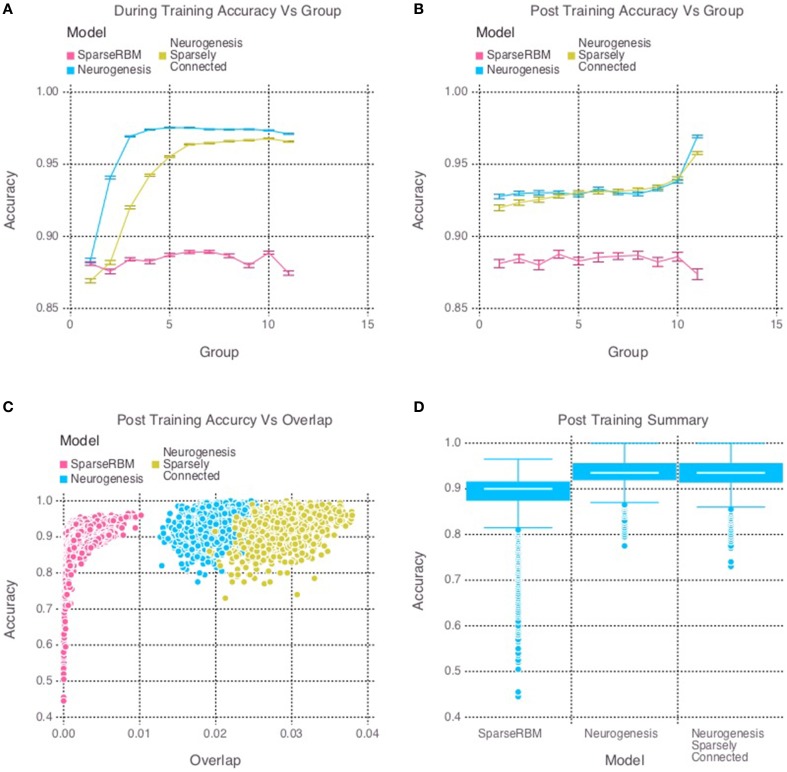
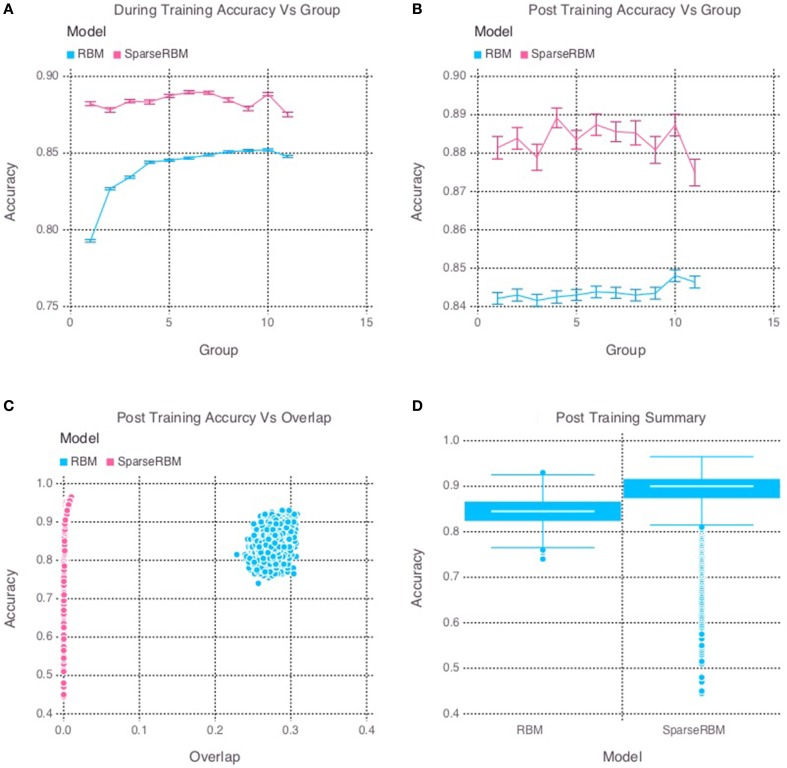
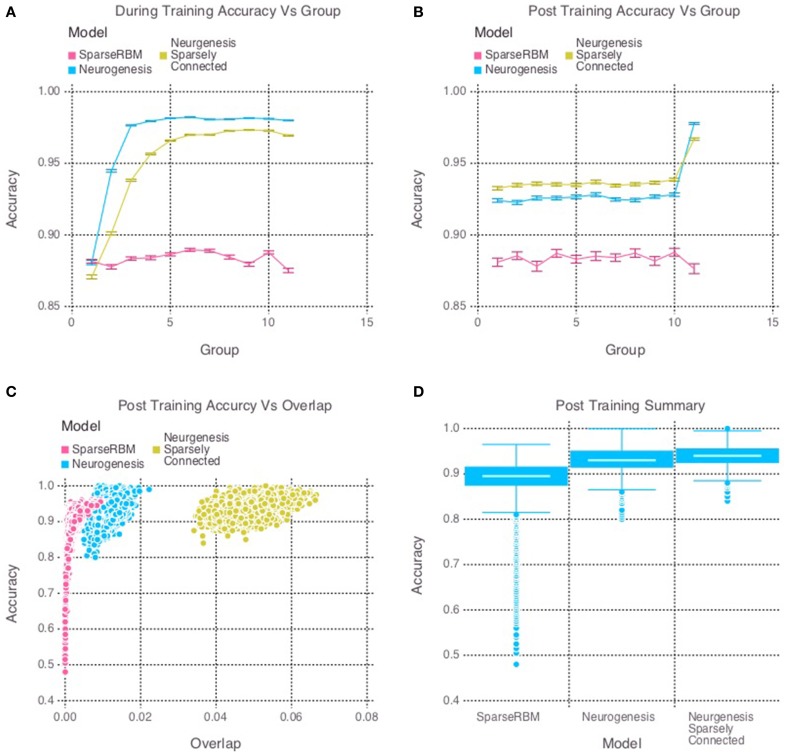
The hippocampus has been the focus of memory research for decades. While the functional role of this structure is not fully understood, it is widely recognized as being vital for rapid yet accurate encoding and retrieval of associative memories. Since the discovery of adult hippocampal neurogenesis in the dentate gyrus by Altman and Das in the 1960's, many theories and models have been put forward to explain the functional role it plays in learning and memory. These models postulate different ways in which new neurons are introduced into the dentate gyrus and their functional importance for learning and memory. Few if any previous models have incorporated the unique properties of young adult-born dentate granule cells and the developmental trajectory. In this paper, we propose a novel computational model of the dentate gyrus that incorporates the developmental trajectory of the adult-born dentate granule cells, including changes in synaptic plasticity, connectivity, excitability and lateral inhibition, using a modified version of the Restricted Boltzmann machine. Our results show superior performance on memory reconstruction tasks for both recent and distally learned items, when the unique characteristics of young dentate granule cells are taken into account. Even though the hyperexcitability of the young neurons generates more overlapping neural codes, reducing pattern separation, the unique properties of the young neurons nonetheless contribute to reducing retroactive and proactive interference, at both short and long time scales. The sparse connectivity is particularly important for generating distinct memory traces for highly overlapping patterns that are learned within the same context.
几十年来,海马体一直是记忆研究的焦点。虽然这个结构的功能作用尚未完全明了,但人们普遍认为它对于快速且准确地编码和提取联想记忆至关重要。自20世纪60年代阿尔特曼和达斯发现成年海马体齿状回神经发生以来,人们提出了许多理论和模型来解释其在学习和记忆中所起的功能作用。这些模型假定了将新神经元引入齿状回的不同方式及其对学习和记忆的功能重要性。以前几乎没有任何模型纳入了年轻的成年新生齿状颗粒细胞的独特特性及其发育轨迹。在本文中,我们提出了一种新颖的齿状回计算模型,该模型使用受限玻尔兹曼机的改进版本,纳入了成年新生齿状颗粒细胞的发育轨迹,包括突触可塑性、连接性、兴奋性和侧向抑制的变化。我们的结果表明,当考虑到年轻齿状颗粒细胞的独特特征时,该模型在近期和远期学习项目的记忆重建任务上表现出色。尽管年轻神经元的过度兴奋会产生更多重叠的神经编码,从而减少模式分离,但年轻神经元的独特特性在短期和长期时间尺度上都有助于减少追溯性和前瞻性干扰。稀疏连接对于为在相同情境中学习的高度重叠模式生成独特的记忆痕迹尤为重要。