Young Samantha A M, Miyata Haruhiko, Satouh Yuhkoh, Kato Hirotaka, Nozawa Kaori, Isotani Ayako, Aitken R John, Baker Mark A, Ikawa Masahito
School of Environmental and Life Science, University of Newcastle, Callaghan, New South Wales 2308, Australia.
Research Institute for Microbial Diseases, Osaka University, Suita, Osaka 565-0871, Japan.
Int J Mol Sci. 2015 Oct 16;16(10):24732-50. doi: 10.3390/ijms161024732.
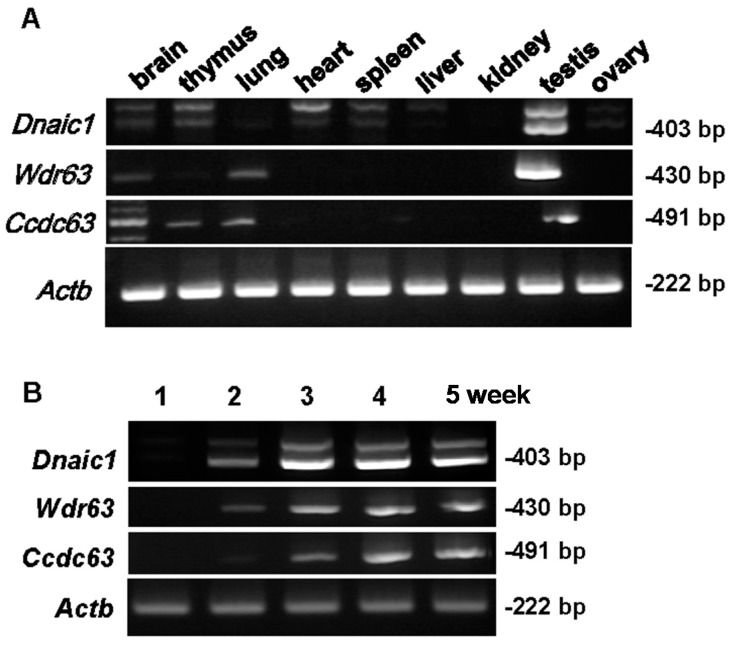
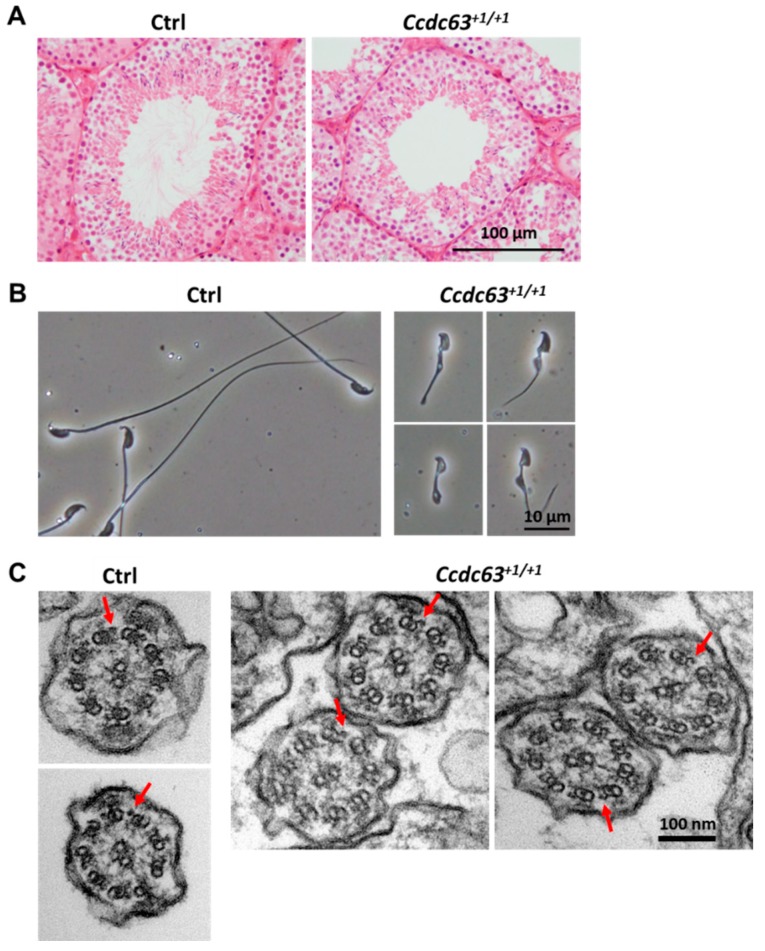
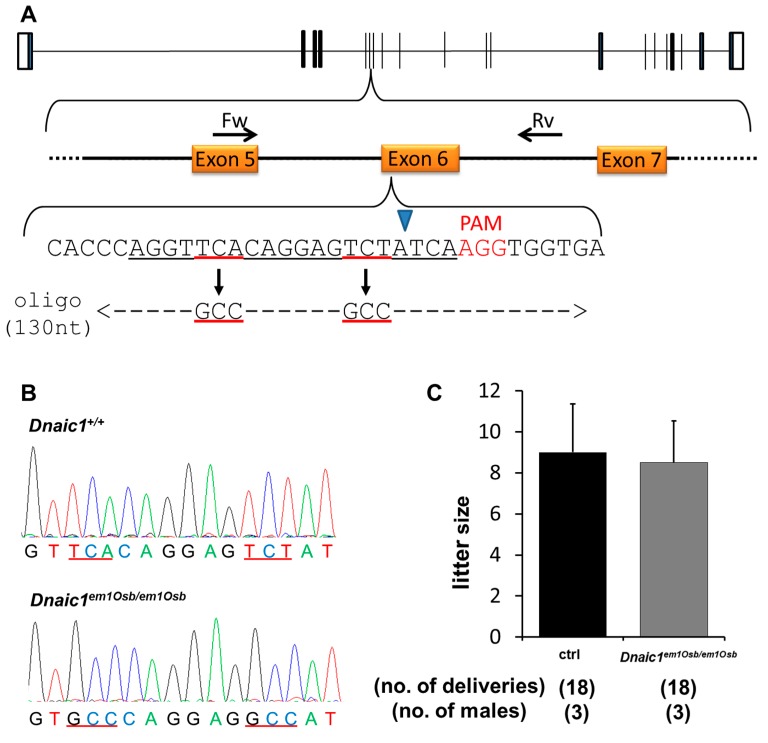
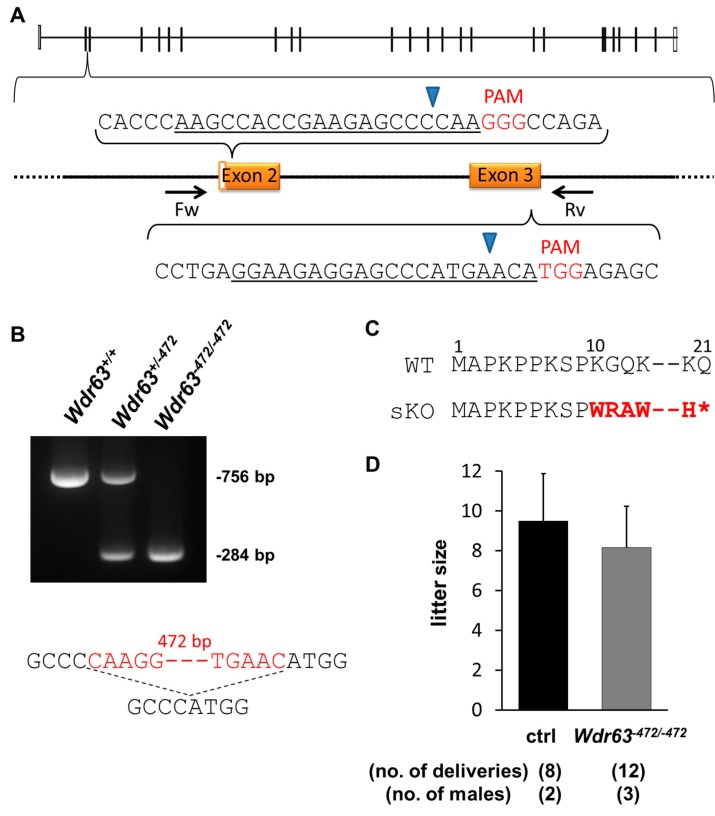
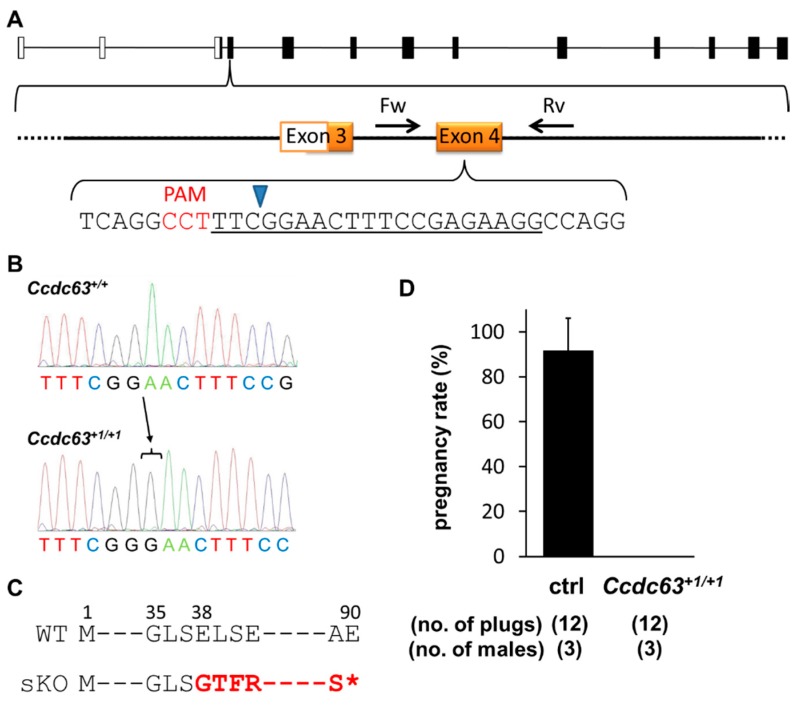
Spermatozoa are flagellated cells whose role in fertilization is dependent on their ability to move towards an oocyte. The structure of the sperm flagella is highly conserved across species, and much of what is known about this structure is derived from studies utilizing animal models. One group of proteins essential for the movement of the flagella are the dyneins. Using the advanced technology of CRISPR/Cas9 we have targeted three dynein group members; Dnaic1, Wdr63 and Ccdc63 in mice. All three of these genes are expressed strongly in the testis. We generated mice with amino acid substitutions in Dnaic1 to analyze two specific phosphorylation events at S124 and S127, and generated simple knockouts of Wdr63 and Ccdc63. We found that the targeted phosphorylation sites in Dnaic1 were not essential for male fertility. Similarly, Wdr63 was not essential for male fertility; however, Ccdc63 removal resulted in sterile male mice due to shortened flagella. This study demonstrates the versatility of the CRISPR/Cas9 system to generate animal models of a highly complex system by introducing point mutations and simple knockouts in a fast and efficient manner.
精子是有鞭毛的细胞,其在受精过程中的作用取决于它们向卵母细胞移动的能力。精子鞭毛的结构在物种间高度保守,目前对该结构的了解大多来自利用动物模型进行的研究。鞭毛运动所必需的一类蛋白质是动力蛋白。我们利用先进的CRISPR/Cas9技术,在小鼠中靶向了三个动力蛋白组成员:Dnaic1、Wdr63和Ccdc63。这三个基因在睾丸中均有强烈表达。我们构建了Dnaic1氨基酸替换的小鼠,以分析S124和S127处的两个特定磷酸化事件,并构建了Wdr63和Ccdc63的简单敲除小鼠。我们发现,Dnaic1中的靶向磷酸化位点对雄性生育力并非必不可少。同样,Wdr63对雄性生育力也不是必需的;然而,Ccdc63的缺失导致雄性小鼠不育,原因是鞭毛缩短。这项研究证明了CRISPR/Cas9系统的多功能性,即通过快速高效地引入点突变和简单敲除来生成高度复杂系统的动物模型。