Bobela Wojciech, Aebischer Patrick, Schneider Bernard Laurent
Brain Mind Institute, Ecole Polytechnique Fédérale de Lausanne (EPFL), Lausanne 1015, Switzerland.
Biomolecules. 2015 Oct 16;5(4):2675-700. doi: 10.3390/biom5042675.
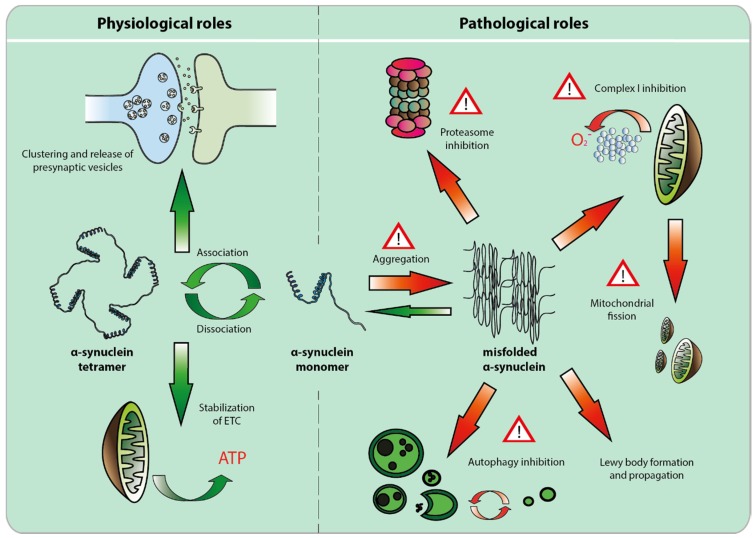
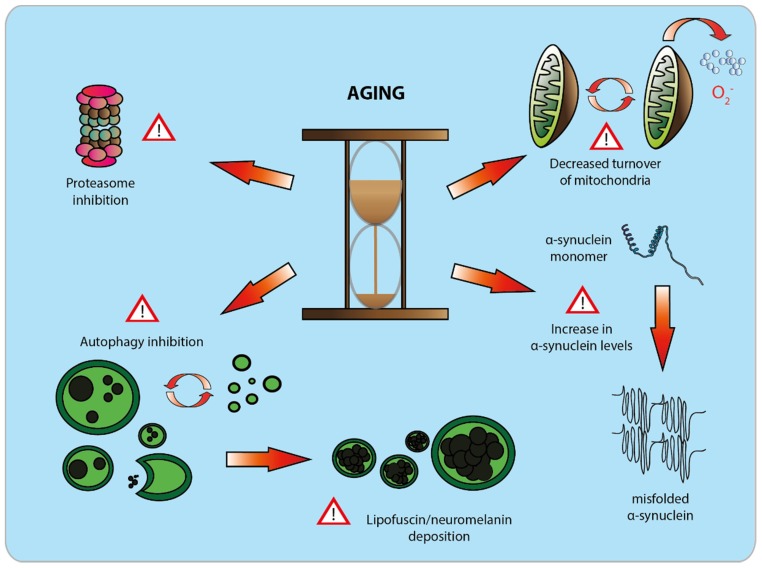
Accumulation and misfolding of the alpha-synuclein protein are core mechanisms in the pathogenesis of Parkinson's disease. While the normal function of alpha-synuclein is mainly related to the control of vesicular neurotransmission, its pathogenic effects are linked to various cellular functions, which include mitochondrial activity, as well as proteasome and autophagic degradation of proteins. Remarkably, these functions are also affected when the renewal of macromolecules and organelles becomes impaired during the normal aging process. As aging is considered a major risk factor for Parkinson's disease, it is critical to explore its molecular and cellular implications in the context of the alpha-synuclein pathology. Here, we discuss similarities and differences between normal brain aging and Parkinson's disease, with a particular emphasis on the nigral dopaminergic neurons, which appear to be selectively vulnerable to the combined effects of alpha-synuclein and aging.
α-突触核蛋白的积累和错误折叠是帕金森病发病机制的核心机制。虽然α-突触核蛋白的正常功能主要与囊泡神经传递的控制有关,但其致病作用与多种细胞功能相关,包括线粒体活性以及蛋白质的蛋白酶体和自噬降解。值得注意的是,当大分子和细胞器的更新在正常衰老过程中受损时,这些功能也会受到影响。由于衰老被认为是帕金森病的主要危险因素,在α-突触核蛋白病理学背景下探索其分子和细胞影响至关重要。在这里,我们讨论正常脑衰老和帕金森病之间的异同,特别强调黑质多巴胺能神经元,它们似乎对α-突触核蛋白和衰老的联合作用具有选择性易损性。