Rand Danielle, Derdak Zoltan, Carlson Rolf, Wands Jack R, Rose-Petruck Christoph
Department of Chemistry, Brown University. 324 Brook Street, Providence, Rhode Island 02912 (USA).
The Liver Research Center, Rhode Island Hospital and Warren Alpert Medical School of Brown University. 55 Claverick Street, Providence, Rhode Island 02903 (USA).
Sci Rep. 2015 Oct 29;5:15673. doi: 10.1038/srep15673.
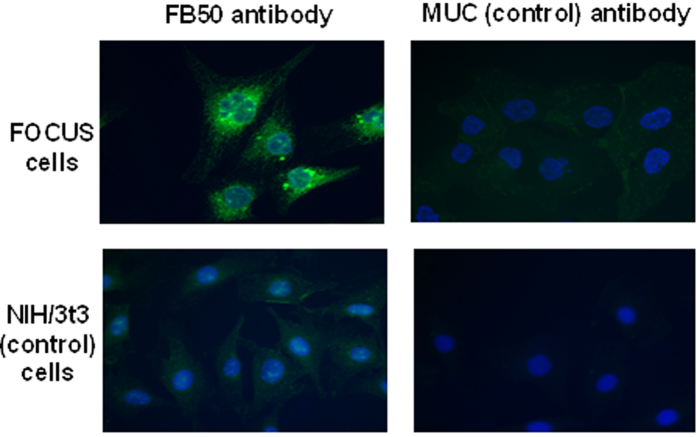
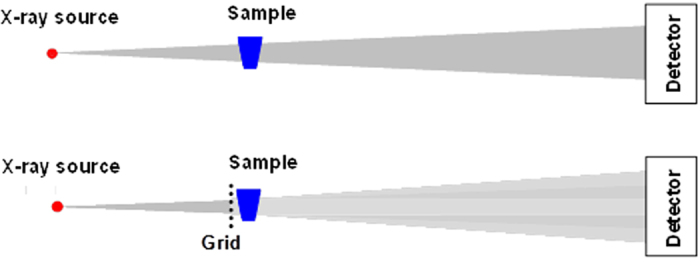
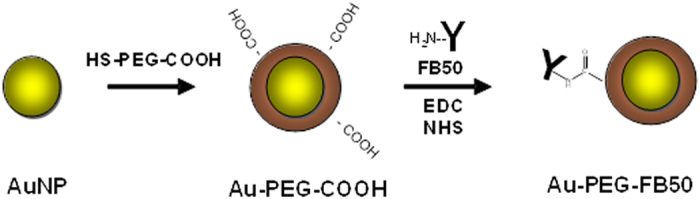
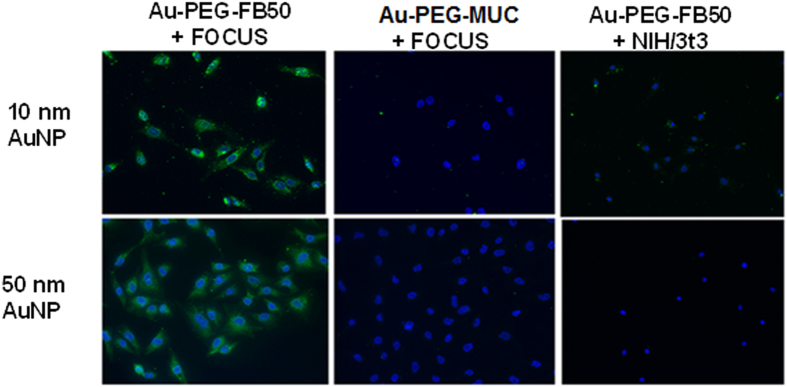
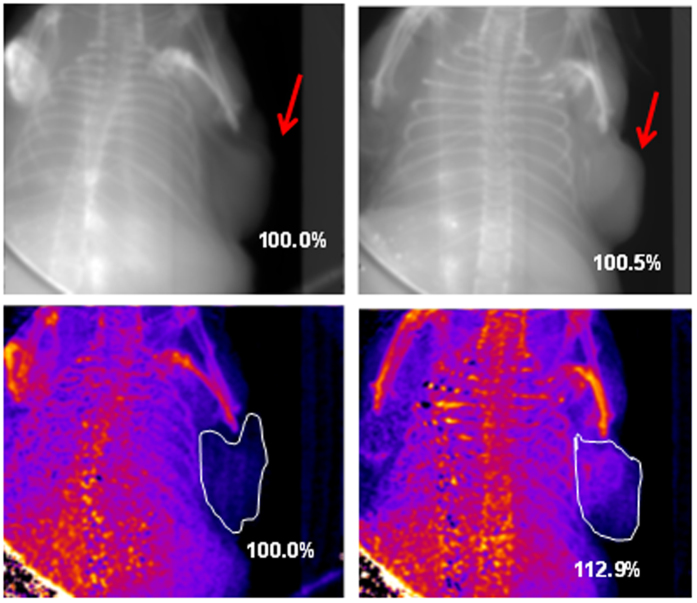
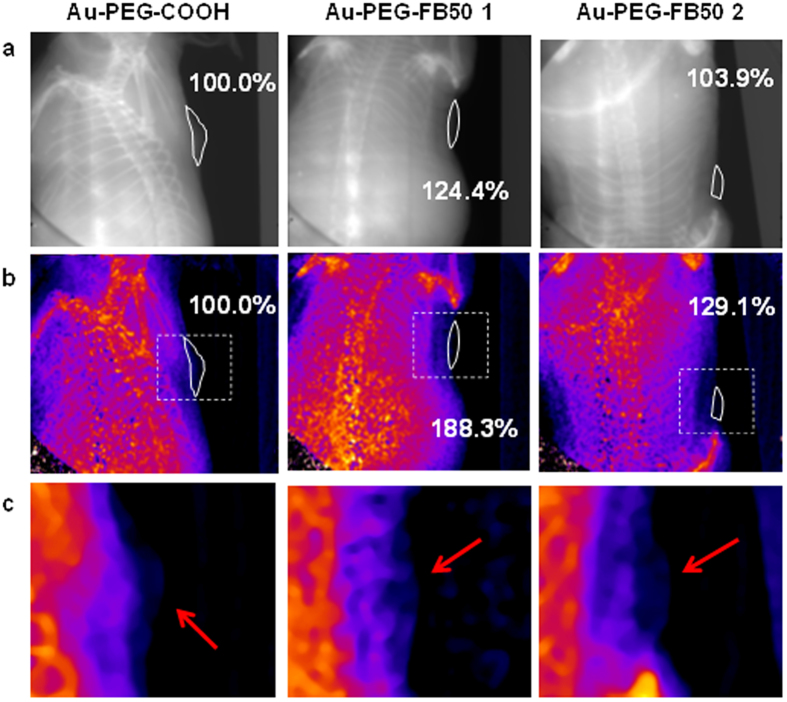
Hepatocellular carcinoma (HCC) is one of the most common malignant tumors worldwide and is almost uniformly fatal. Current methods of detection include ultrasound examination and imaging by CT scan or MRI; however, these techniques are problematic in terms of sensitivity and specificity, and the detection of early tumors (<1 cm diameter) has proven elusive. Better, more specific, and more sensitive detection methods are therefore urgently needed. Here we discuss the application of a newly developed x-ray imaging technique called Spatial Frequency Heterodyne Imaging (SFHI) for the early detection of HCC. SFHI uses x-rays scattered by an object to form an image and is more sensitive than conventional absorption-based x-radiography. We show that tissues labeled in vivo with gold nanoparticle contrast agents can be detected using SFHI. We also demonstrate that directed targeting and SFHI of HCC tumors in a mouse model is possible through the use of HCC-specific antibodies. The enhanced sensitivity of SFHI relative to currently available techniques enables the x-ray imaging of tumors that are just a few millimeters in diameter and substantially reduces the amount of nanoparticle contrast agent required for intravenous injection relative to absorption-based x-ray imaging.
肝细胞癌(HCC)是全球最常见的恶性肿瘤之一,几乎无一例外都是致命的。目前的检测方法包括超声检查以及CT扫描或MRI成像;然而,这些技术在灵敏度和特异性方面存在问题,而且事实证明,早期肿瘤(直径<1厘米)的检测很难实现。因此,迫切需要更好、更特异且更灵敏的检测方法。在此,我们讨论一种新开发的名为空间频率外差成像(SFHI)的X射线成像技术在HCC早期检测中的应用。SFHI利用物体散射的X射线形成图像,比传统的基于吸收的X射线摄影更灵敏。我们表明,使用SFHI可以检测体内用金纳米颗粒造影剂标记的组织。我们还证明,通过使用HCC特异性抗体,在小鼠模型中对HCC肿瘤进行定向靶向和SFHI检测是可行的。相对于目前可用的技术,SFHI更高的灵敏度能够对直径仅几毫米的肿瘤进行X射线成像,并且相对于基于吸收的X射线成像,大大减少了静脉注射所需的纳米颗粒造影剂的用量。