Qin Yuan, Zhang Qiang, Lee Shan, Zhong Wei-Long, Liu Yan-Rong, Liu Hui-Juan, Zhao Dong, Chen Shuang, Xiao Ting, Meng Jing, Jing Xue-Shuang, Wang Jing, Sun Bo, Dai Ting-Ting, Yang Cheng, Sun Tao, Zhou Hong-Gang
State Key Laboratory of Medicinal Chemical Biology and College of Pharmacy, Nankai University, Tianjin, China.
Tianjin Key Laboratory of Molecular Drug Research, Tianjin International Joint Academy of Biomedicine, Tianjin, China.
Oncotarget. 2015 Dec 1;6(38):40667-79. doi: 10.18632/oncotarget.5842.
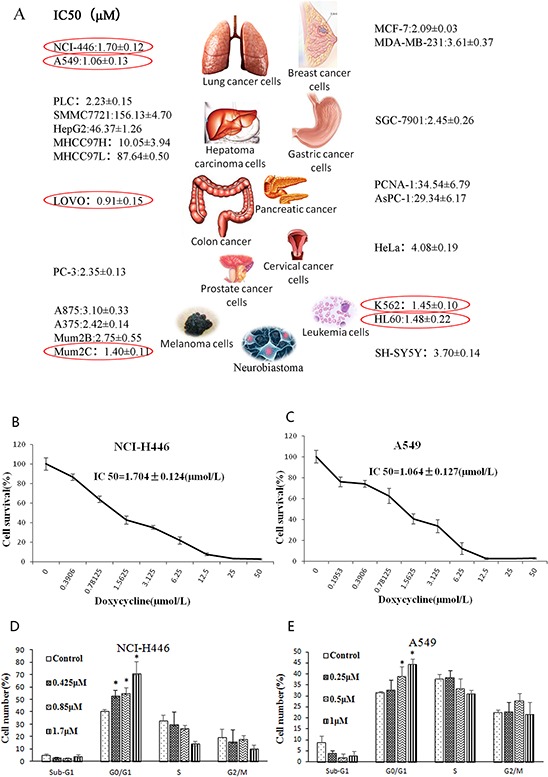
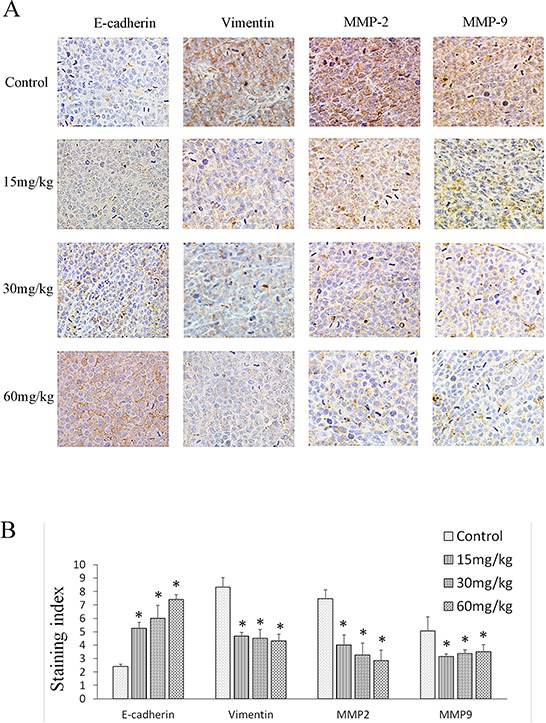
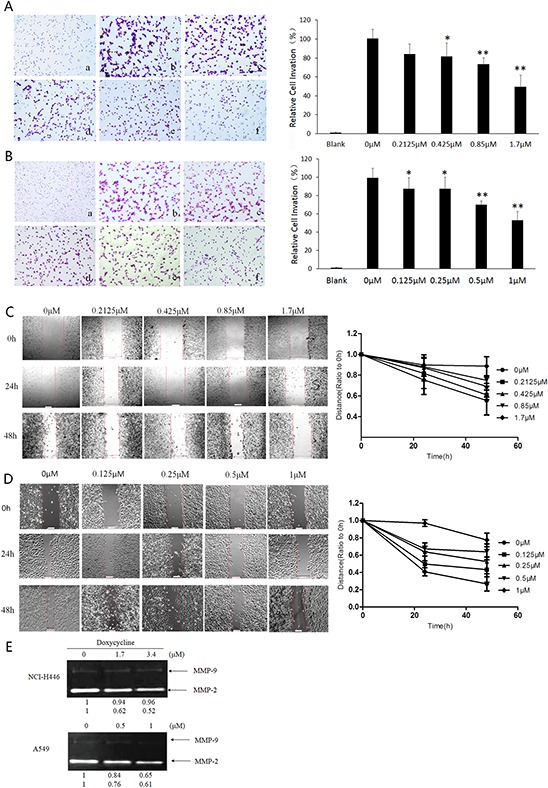
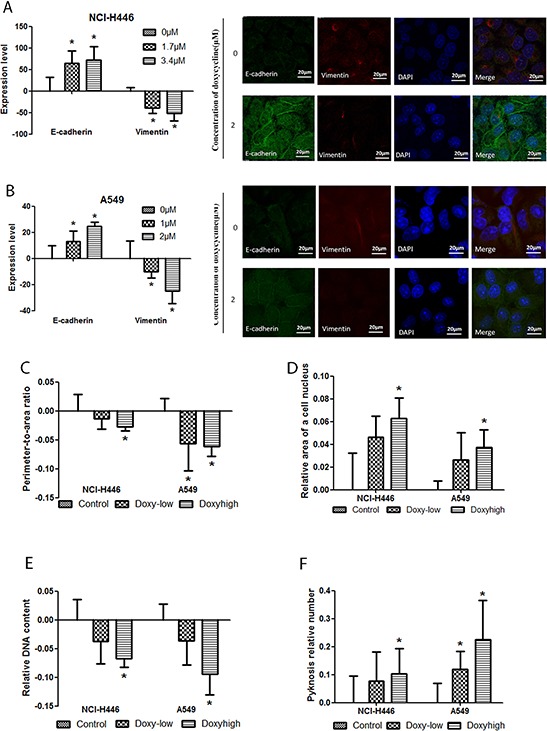
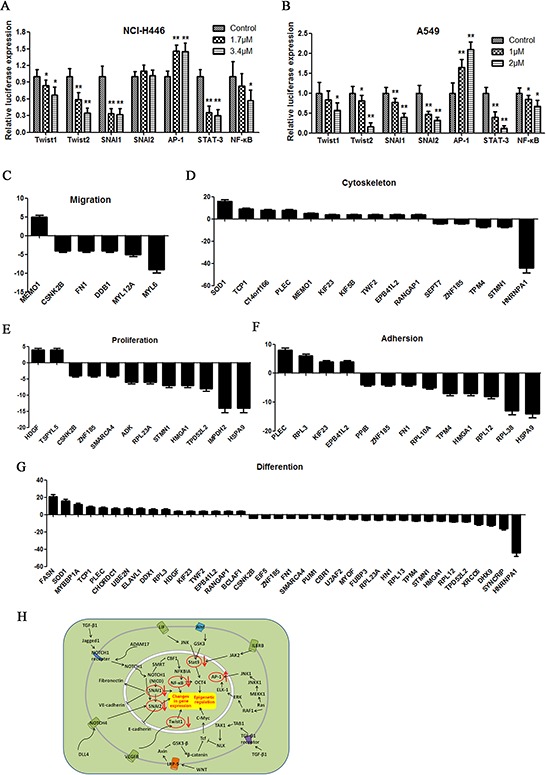
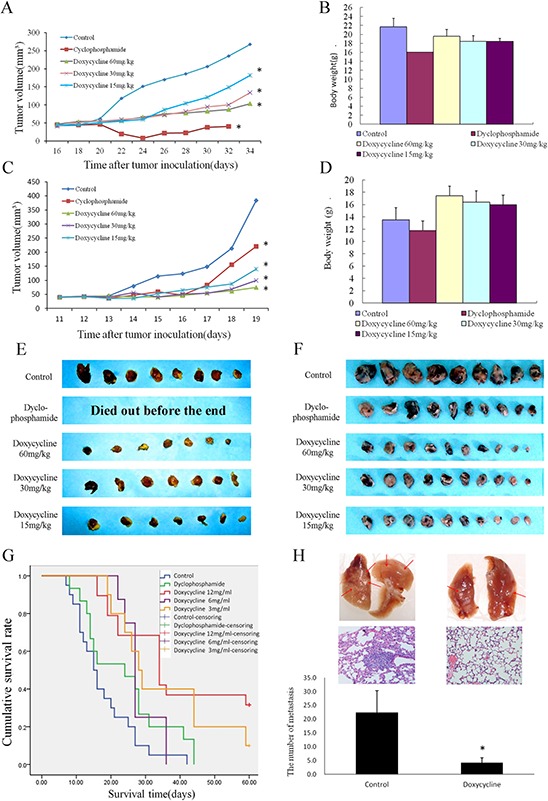
The gelatinase inhibitor doxycycline is the prototypical antitumor antibiotic. We investigated the effects of doxycycline on the migration, invasion, and metastasis of human lung cancer cell lines and in a mouse model. We also measured the effect of doxycycline on the transcription of epithelial-mesenchymal transition (EMT) markers, and used immunohistochemistry to determine whether EMT reversal was associated with doxycycline inhibition. Doxycycline dose-dependently inhibited proliferation, migration, and invasion of NCI-H446 human small cell lung cancer cells. It also suppressed tumor growth from NCI-H446 and A549 lung cancer cell xenografts without altering body weight, inhibited Lewis lung carcinoma cell migration, and prolonged survival. The activities of the transcription factors Twist1/2, SNAI1/2, AP1, NF-κB, and Stat3 were suppressed by doxycycline, which reversed EMT and inhibited signal transduction, thereby suppressing tumor growth and metastasis. Our data demonstrate functional targeting of transcription factors by doxycycline to reverse EMT and suppress tumor proliferation and metastasis. Thus, doxycycline selectively targets malignant tumors and reduces its metastatic potential with less cytotoxicity in lung cancer patients.
明胶酶抑制剂强力霉素是典型的抗肿瘤抗生素。我们研究了强力霉素对人肺癌细胞系的迁移、侵袭和转移的影响,并在小鼠模型中进行了研究。我们还测量了强力霉素对上皮-间质转化(EMT)标志物转录的影响,并使用免疫组织化学来确定EMT逆转是否与强力霉素抑制有关。强力霉素剂量依赖性地抑制NCI-H446人小细胞肺癌细胞的增殖、迁移和侵袭。它还抑制了NCI-H446和A549肺癌细胞异种移植瘤的生长,而不改变体重,抑制了Lewis肺癌细胞的迁移,并延长了生存期。强力霉素抑制了转录因子Twist1/2、SNAI1/2、AP1、NF-κB和Stat3的活性,逆转了EMT并抑制了信号转导,从而抑制了肿瘤生长和转移。我们的数据表明强力霉素通过功能靶向转录因子来逆转EMT并抑制肿瘤增殖和转移。因此,强力霉素选择性地靶向恶性肿瘤,并在肺癌患者中以较低的细胞毒性降低其转移潜能。