Bazan Silvia B, Costa Tania A, de Araújo Eliseu Frank, Feriotti Claudia, Loures Flávio V, Pretel Fernando D, Calich Vera L G
Departamento de Imunologia, Instituto de Ciências Biomédicas, Universidade de São Paulo, São Paulo, Brazil.
Centro de Facilidades de Apoio à Pesquisa (CEFAP), Instituto de Ciências Biomédicas, Universidade de São Paulo, São Paulo, Brazil.
PLoS Negl Trop Dis. 2015 Oct 29;9(10):e0004189. doi: 10.1371/journal.pntd.0004189. eCollection 2015.
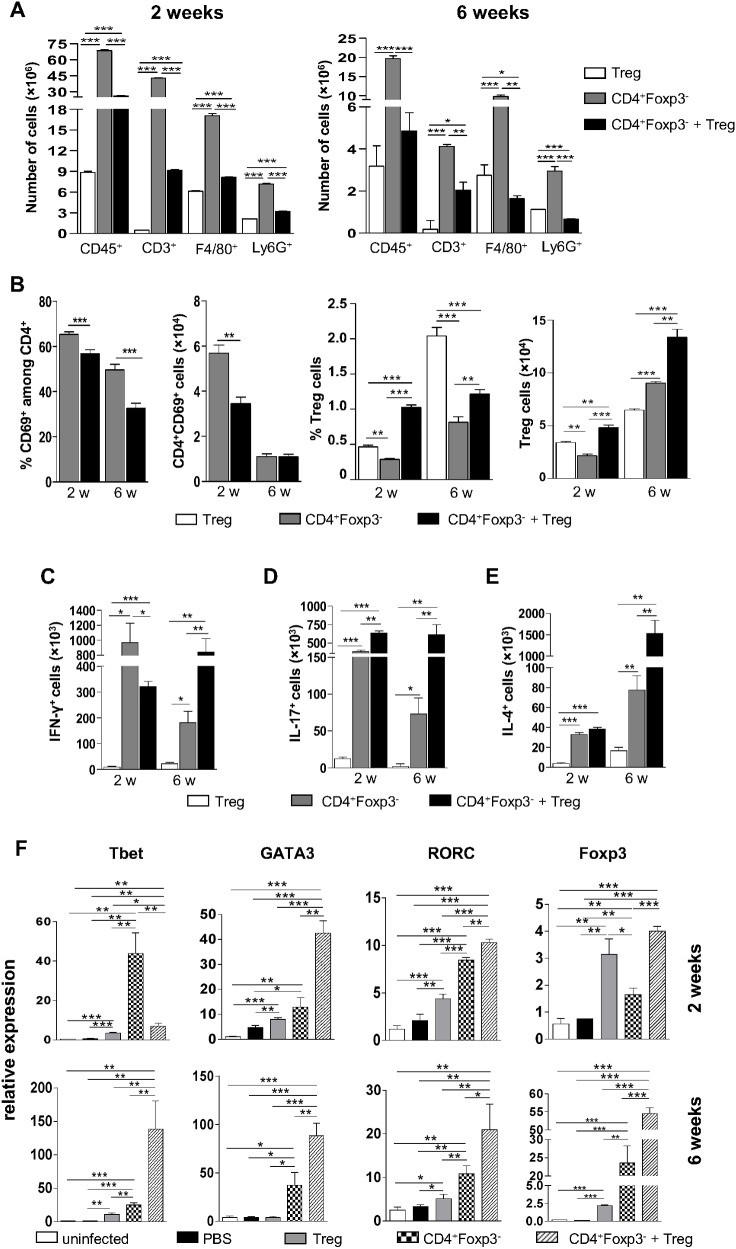
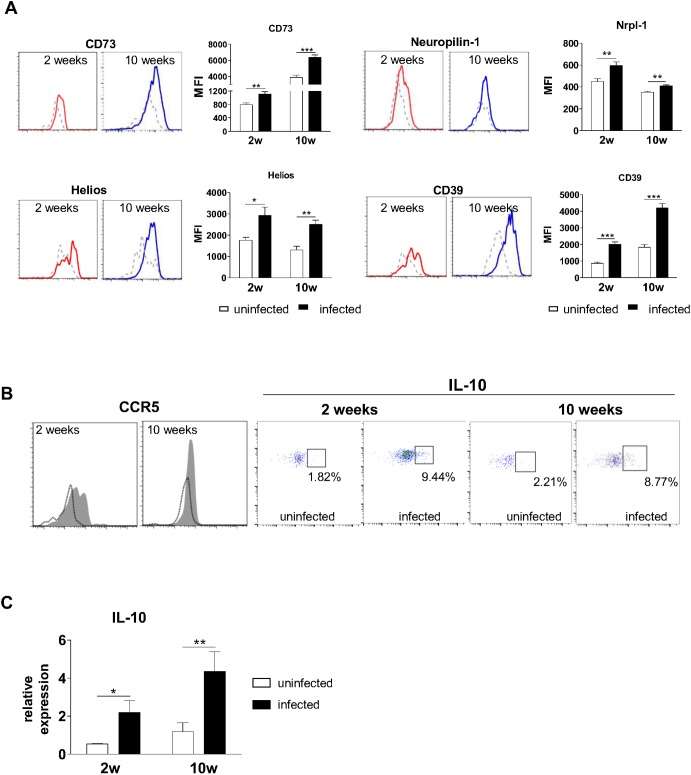
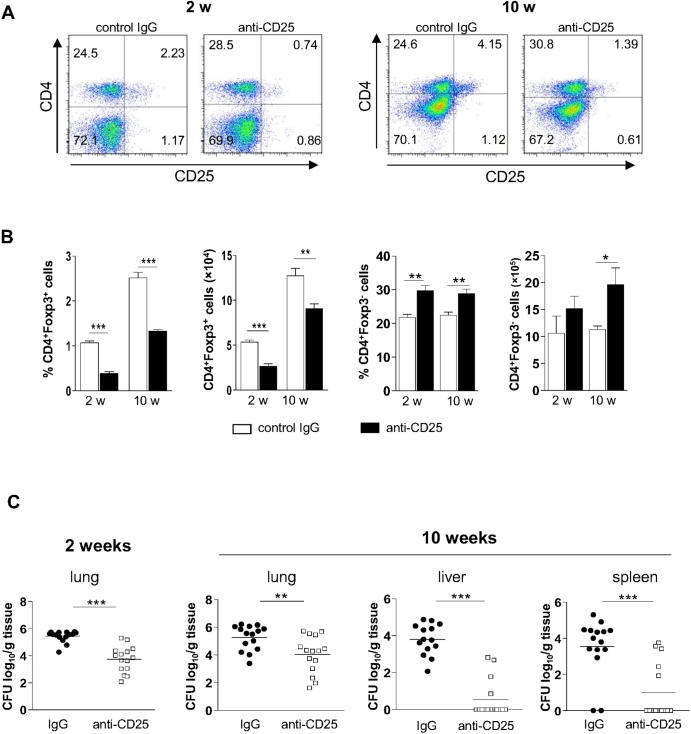
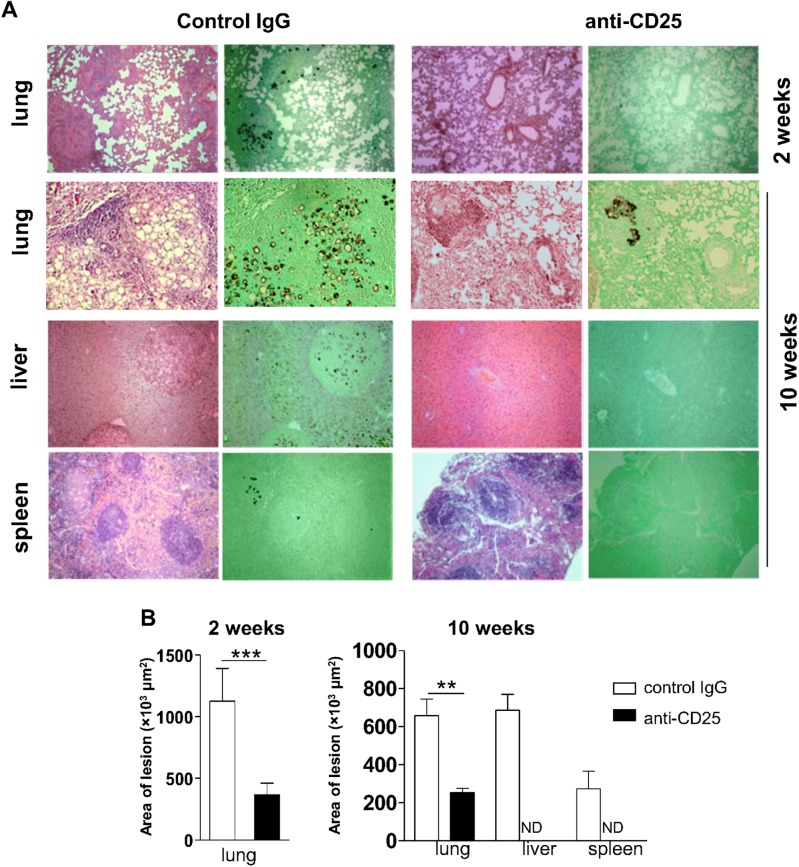
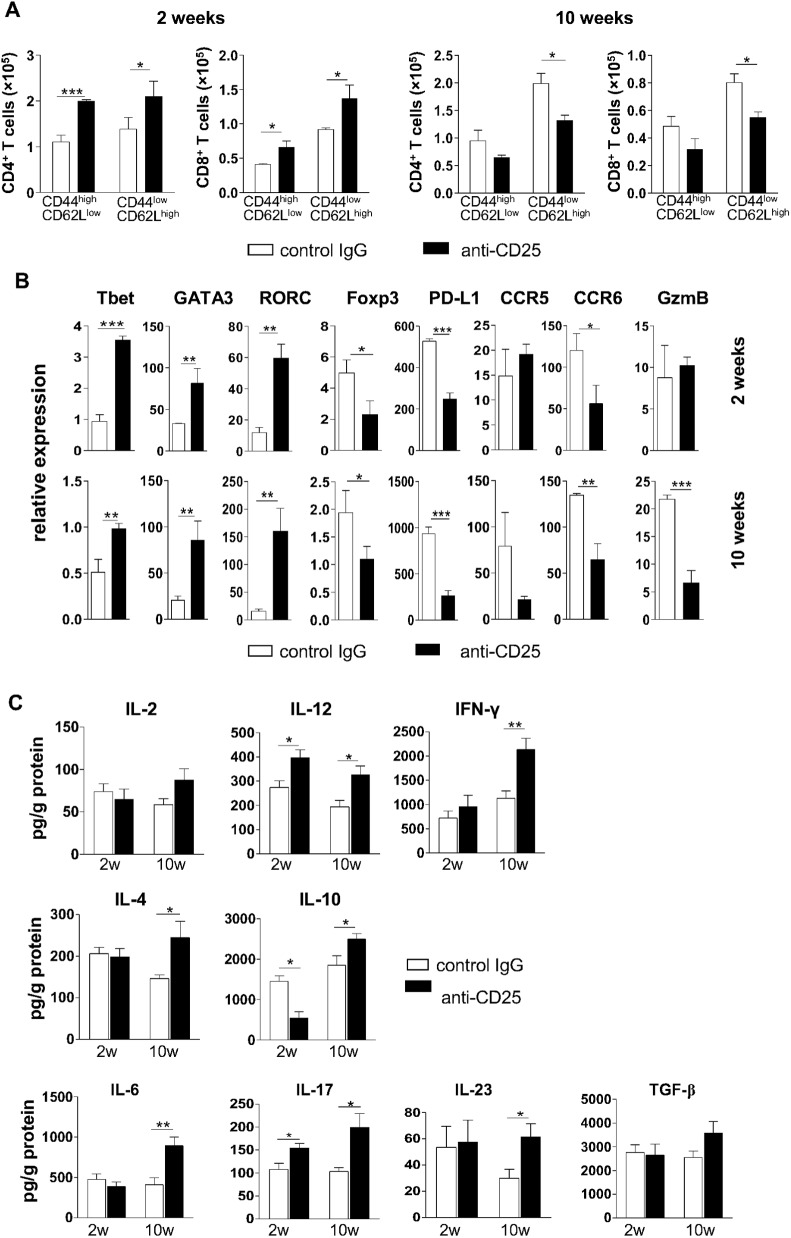
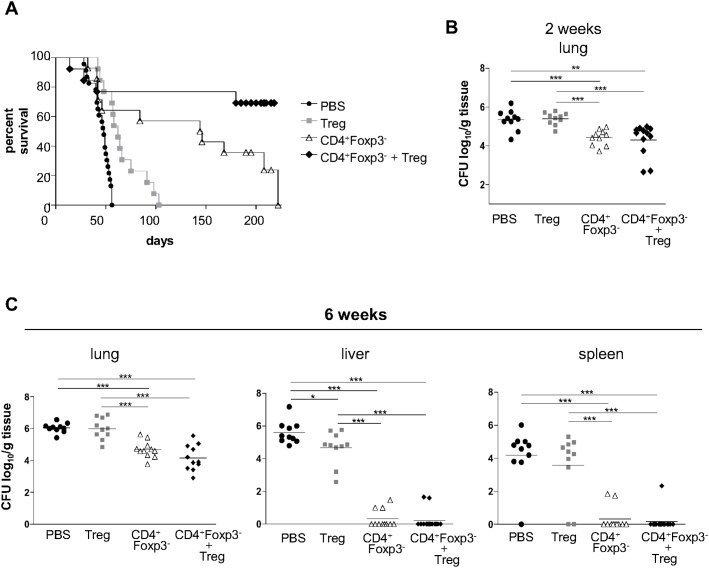
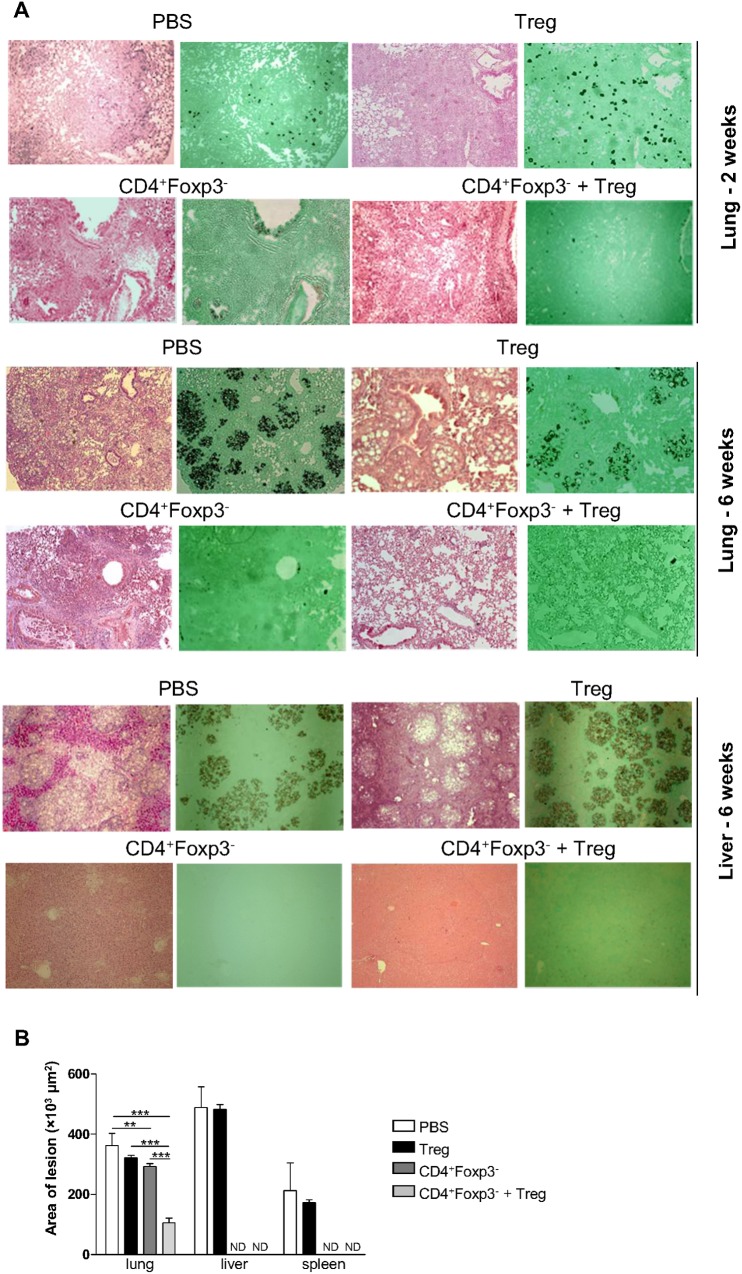
Paracoccidioidomycosis (PCM), is a pulmonary fungal disease whose severity depends on the adequate development of T cell immunity. Although regulatory T (Treg) cells were shown to control immunity against PCM, deleterious or protective effects were described in different experimental settings. To clarify the function of Treg cells in pulmonary PCM, loss-and gain-of-function approaches were performed with Foxp3GFP knock-in mice and immunodeficient Rag1-/- mice, respectively, which were intratracheally infected with 106 yeast cells. The activity of Foxp3-expressing Treg cells in pulmonary PCM was determined in Foxp3GFP transgenic mice. First, it was verified that natural Treg cells migrate to the lungs of infected mice, where they become activated. Depletion of Treg cells led to reduced fungal load, diminished pathogen dissemination and increased Th1/Th2/Th17 immunity. Further, adoptive transfer of diverse T cell subsets to Rag1-/- mice subsequently infected by the pulmonary route demonstrated that isolated CD4+Foxp3+ Treg cells were able to confer some degree of immunoprotection and that CD4+Foxp3- T cells alone reduced fungal growth and enhanced T cell immunity, but induced vigorous inflammatory reactions in the lungs. Nevertheless, transfer of Treg cells combined with CD4+Foxp3- T cells generated more efficient and balanced immune Th1/Th2/Th17 responses able to limit pathogen growth and excessive tissue inflammation, leading to regressive disease and increased survival rates. Altogether, these loss- and gain-of-function approaches allow us to clearly demonstrate the dual role of Treg cells in pulmonary PCM, their deleterious effects by impairing T cell immunity and pathogen eradication, and their protective role by suppressing exacerbated tissue inflammation.
副球孢子菌病(PCM)是一种肺部真菌疾病,其严重程度取决于T细胞免疫的充分发展。尽管调节性T(Treg)细胞被证明可控制针对PCM的免疫,但在不同的实验环境中描述了其有害或保护作用。为了阐明Treg细胞在肺部PCM中的功能,分别对Foxp3GFP基因敲入小鼠和免疫缺陷的Rag1-/-小鼠进行了功能缺失和功能获得研究,这些小鼠经气管内接种106个酵母细胞。在Foxp3GFP转基因小鼠中测定了肺部PCM中表达Foxp3的Treg细胞的活性。首先,证实天然Treg细胞迁移到感染小鼠的肺部并在那里被激活。Treg细胞的耗竭导致真菌负荷降低、病原体传播减少以及Th1/Th2/Th17免疫增强。此外,将不同的T细胞亚群过继转移到随后经肺部途径感染的Rag1-/-小鼠中表明,分离的CD4+Foxp3+ Treg细胞能够赋予一定程度的免疫保护,单独的CD4+Foxp3- T细胞可减少真菌生长并增强T细胞免疫,但会在肺部引发强烈的炎症反应。然而,Treg细胞与CD4+Foxp3- T细胞联合转移可产生更有效且平衡的免疫Th1/Th2/Th17反应,能够限制病原体生长和过度的组织炎症,导致疾病消退和存活率提高。总之,这些功能缺失和功能获得方法使我们能够清楚地证明Treg细胞在肺部PCM中的双重作用,它们通过损害T细胞免疫和病原体清除产生的有害作用,以及通过抑制加剧的组织炎症发挥的保护作用。