Kelly Kevin R, Espitia Claudia M, Zhao Weiguo, Wendlandt Erik, Tricot Guido, Zhan Fenghuang, Carew Jennifer S, Nawrocki Steffan T
Anne Nohl Division of Hematology and Center for The Study of Blood Diseases, University of Southern California Keck School of Medicine, Los Angeles, CA, USA.
Department of Medicine and The Institute for Drug Development, Cancer Therapy and Research Center at The University of Texas Health Science Center, San Antonio, TX, USA.
Oncotarget. 2015 Dec 1;6(38):41275-89. doi: 10.18632/oncotarget.5753.
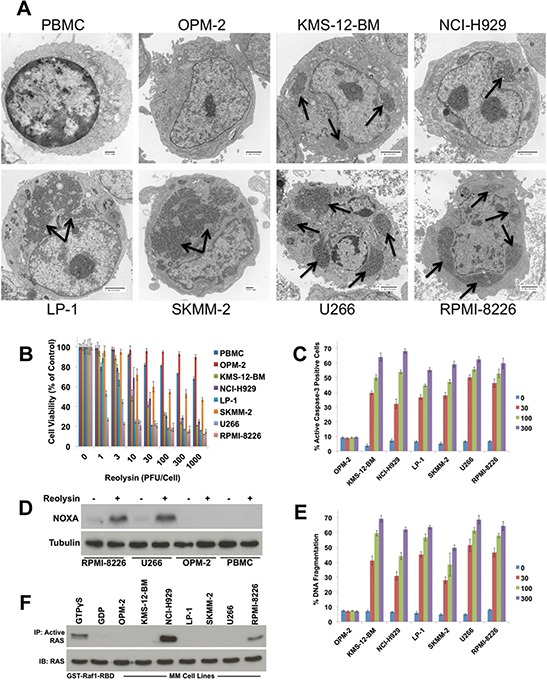
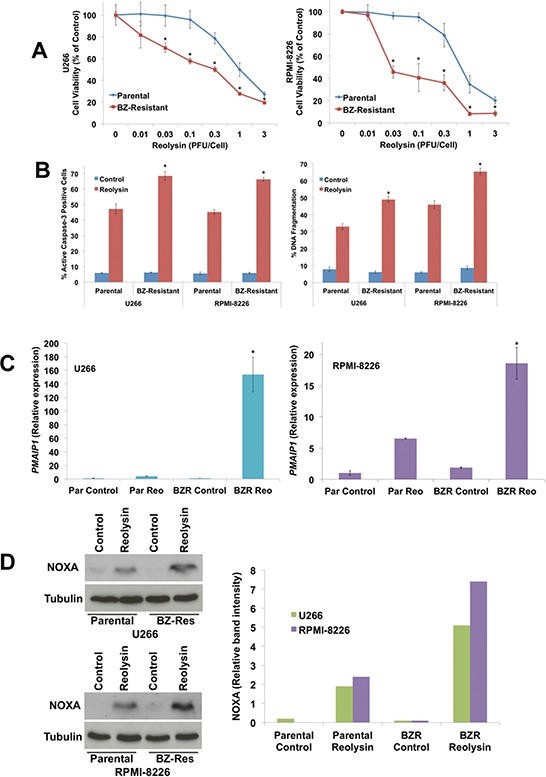
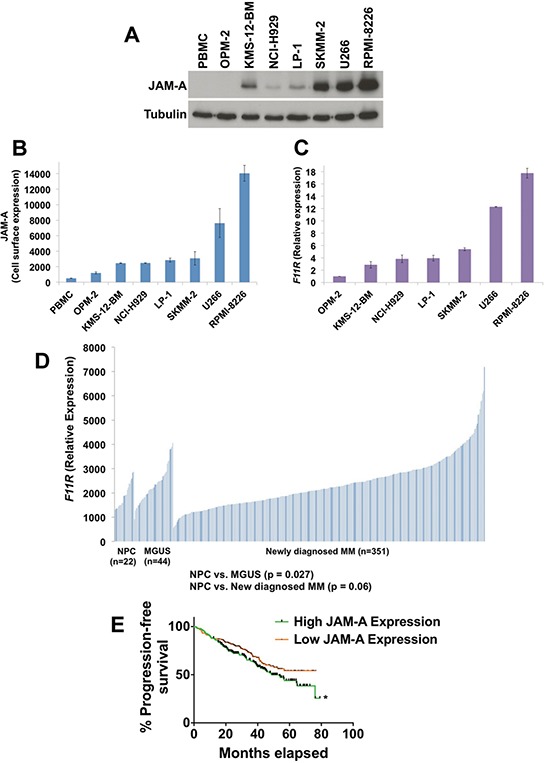
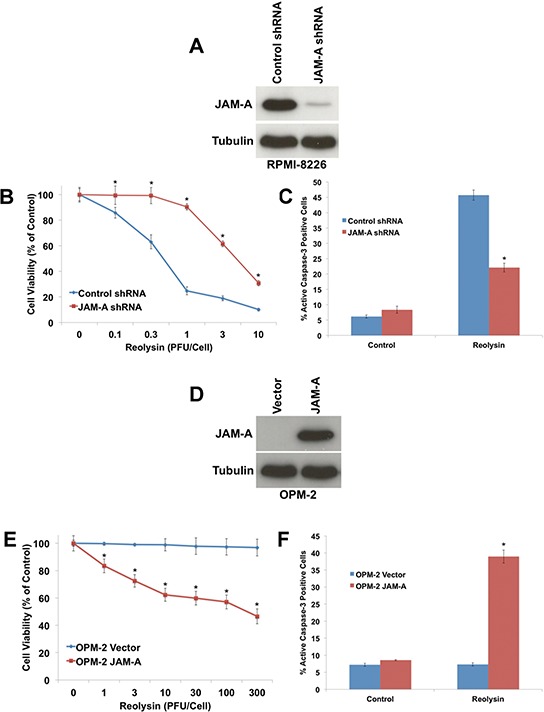
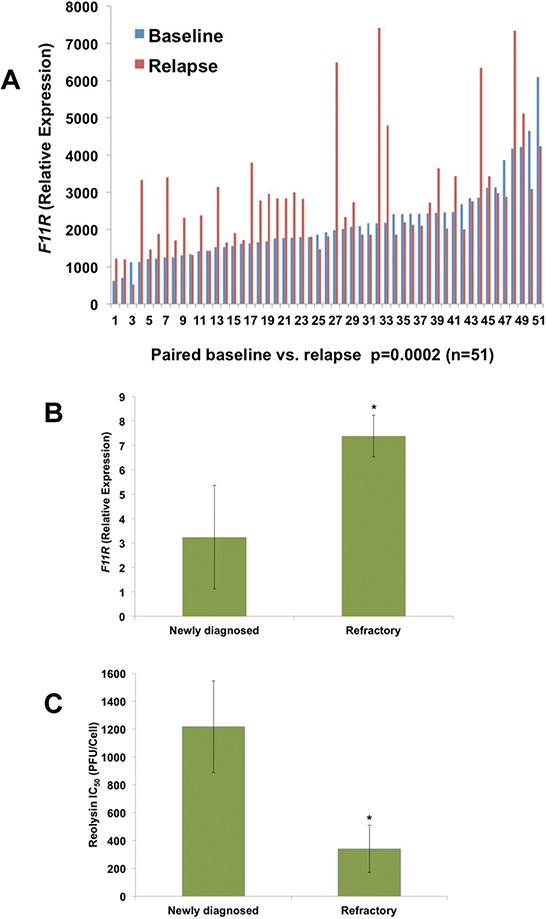
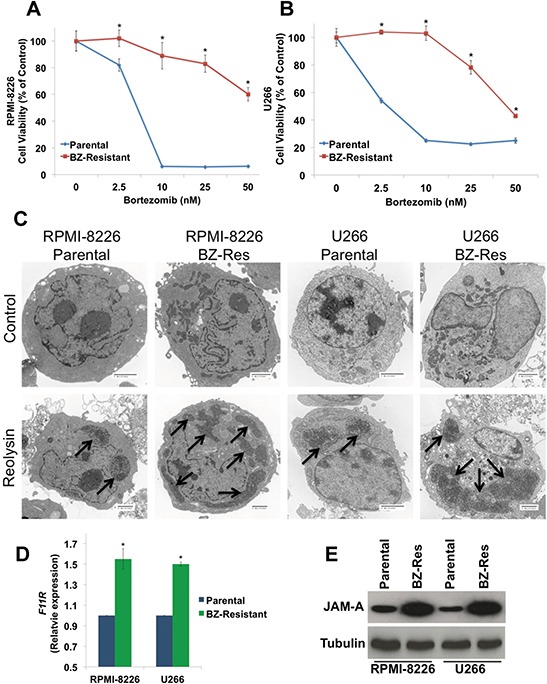
Despite the development of several new agents for multiple myeloma (MM) therapy over the last decade, drug resistance continues to be a significant problem. Patients with relapsed/refractory disease have high mortality rates and desperately need new precision approaches that directly target specific molecular features that are prevalent in the refractory setting. Reolysin is a proprietary formulation of reovirus for cancer therapy that has demonstrated efficacy in multiple clinical trials. Its selective effects against solid tumors have been largely attributed to RAS-mediated control of reovirus replication. However, the mechanisms regulating its preferential anti-neoplastic effects in MM and other hematological malignancies have not been rigorously studied. Here we report that the reovirus receptor, junctional adhesion molecule-A (JAM-A) is highly expressed in primary cells from patients with MM and the majority of MM cell lines compared to normal controls. A series of experiments demonstrated that JAM-A expression, rather than RAS, was required for Reolysin-induced cell death in MM models. Notably, analysis of paired primary MM specimens revealed that JAM-A expression was significantly increased at relapse compared to diagnosis. Two different models of acquired resistance to bortezomib also displayed both higher JAM-A expression and elevated sensitivity to Reolysin compared to parental cells, suggesting that Reolysin may be an effective agent for patients with relapsed/refractory disease due to their high JAM-A levels. Taken together, these findings support further investigation of Reolysin for the treatment of patients with relapsed/refractory MM and of JAM-A as a predictive biomarker for sensitivity to Reolysin-induced cell death.
尽管在过去十年中开发了几种用于多发性骨髓瘤(MM)治疗的新型药物,但耐药性仍然是一个重大问题。复发/难治性疾病患者的死亡率很高,迫切需要新的精准方法来直接靶向难治性患者中普遍存在的特定分子特征。溶瘤呼肠孤病毒是一种用于癌症治疗的呼肠孤病毒专利制剂,已在多项临床试验中证明了其疗效。其对实体瘤的选择性作用主要归因于RAS介导的呼肠孤病毒复制控制。然而,调节其在MM和其他血液系统恶性肿瘤中优先抗肿瘤作用的机制尚未得到严格研究。在这里,我们报告称,与正常对照相比,MM患者的原代细胞和大多数MM细胞系中呼肠孤病毒受体——连接黏附分子A(JAM-A)高度表达。一系列实验表明,在MM模型中,溶瘤呼肠孤病毒诱导的细胞死亡需要JAM-A的表达,而不是RAS的表达。值得注意的是,对配对的原发性MM标本分析显示,与诊断时相比,复发时JAM-A表达显著增加。与亲代细胞相比,两种不同的硼替佐米获得性耐药模型也显示出更高的JAM-A表达和对溶瘤呼肠孤病毒的敏感性增加,这表明由于JAM-A水平高溶瘤呼肠孤病毒可能是复发/难治性疾病患者的有效药物。综上所述,这些发现支持进一步研究溶瘤呼肠孤病毒用于治疗复发/难治性MM患者以及研究JAM-A作为溶瘤呼肠孤病毒诱导细胞死亡敏感性的预测生物标志物。