Mittwede Peter N, Clemmer John S, Bergin Patrick F, Xiang Lusha
*Department of Physiology and Biophysics †Department of Orthopedic Surgery, University of Mississippi Medical Center, Jackson, Mississippi.
Shock. 2016 Apr;45(4):349-58. doi: 10.1097/SHK.0000000000000512.
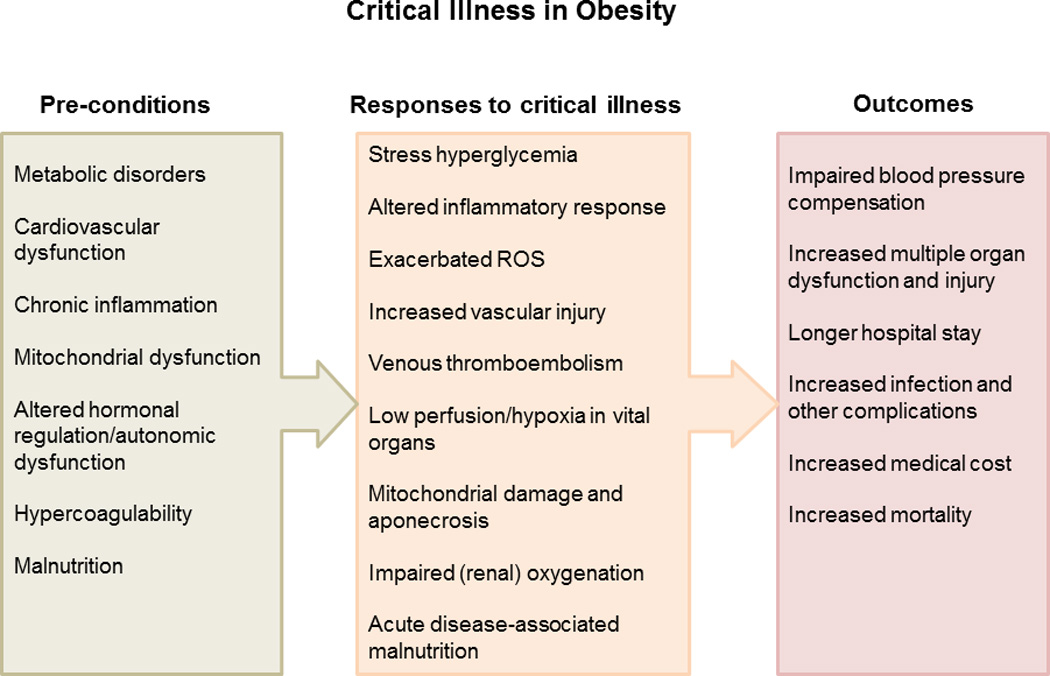
Critical illness is a major cause of morbidity and mortality around the world. While obesity is often detrimental in the context of trauma, it is paradoxically associated with improved outcomes in some septic patients. The reasons for these disparate outcomes are not well understood. A number of animal models have been used to study the obese response to various forms of critical illness. Just as there have been many animal models that have attempted to mimic clinical conditions, there are many clinical scenarios that can occur in the highly heterogeneous critically ill patient population that occupies hospitals and intensive care units. This poses a formidable challenge for clinicians and researchers attempting to understand the mechanisms of disease and develop appropriate therapies and treatment algorithms for specific subsets of patients, including the obese. The development of new, and the modification of existing animal models, is important in order to bring effective treatments to a wide range of patients. Not only do experimental variables need to be matched as closely as possible to clinical scenarios, but animal models with pre-existing comorbid conditions need to be studied. This review briefly summarizes animal models of hemorrhage, blunt trauma, traumatic brain injury, and sepsis. It also discusses what has been learned through the use of obese models to study the pathophysiology of critical illness in light of what has been demonstrated in the clinical literature.
危重病是全球发病和死亡的主要原因。虽然肥胖在创伤情况下往往有害,但矛盾的是,它与一些脓毒症患者的预后改善有关。这些不同结果的原因尚不清楚。许多动物模型已被用于研究肥胖对各种形式危重病的反应。正如有许多动物模型试图模拟临床情况一样,在占据医院和重症监护病房的高度异质的危重病患者群体中,也会出现许多临床情况。这给试图了解疾病机制并为包括肥胖患者在内的特定患者亚组开发适当治疗方法和治疗算法的临床医生和研究人员带来了巨大挑战。开发新的动物模型以及对现有动物模型进行改进,对于为广泛患者带来有效治疗至关重要。不仅实验变量需要尽可能与临床情况相匹配,而且还需要研究具有预先存在合并症的动物模型。本综述简要总结了出血、钝性创伤、创伤性脑损伤和脓毒症的动物模型。它还根据临床文献中已证明的内容,讨论了通过使用肥胖模型研究危重病病理生理学所学到的知识。