Li Peiqi, Hashimoto Yoshiya, Honda Yoshitomo, Arima Yoshiyuki, Matsumoto Naoyuki
Department of Orthodontics, Graduate School of Dentistry, Osaka Dental University, 8-1 Kuzuha Hanazonocho, Hirakata, Osaka 573-1121, Japan.
Department of Biomaterials, Osaka Dental University, 8-1 Kuzuha Hanazonocho, Hirakata, Osaka 573-1121, Japan.
Int J Mol Sci. 2015 Oct 26;16(10):25678-90. doi: 10.3390/ijms161025678.
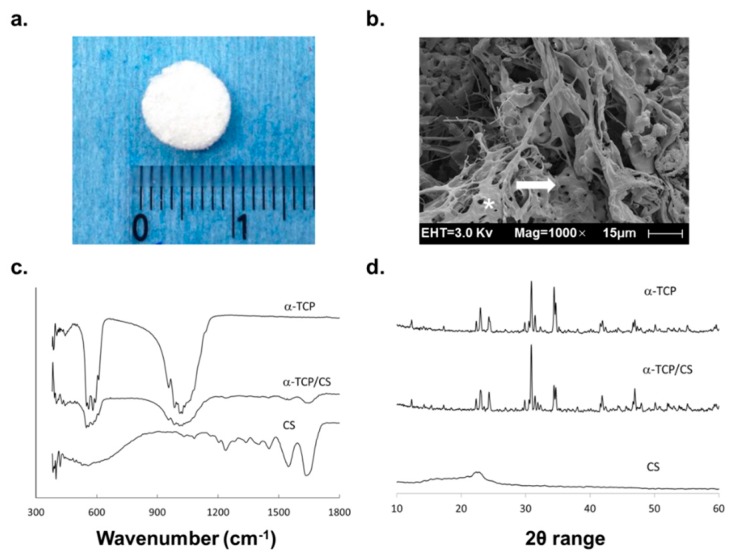
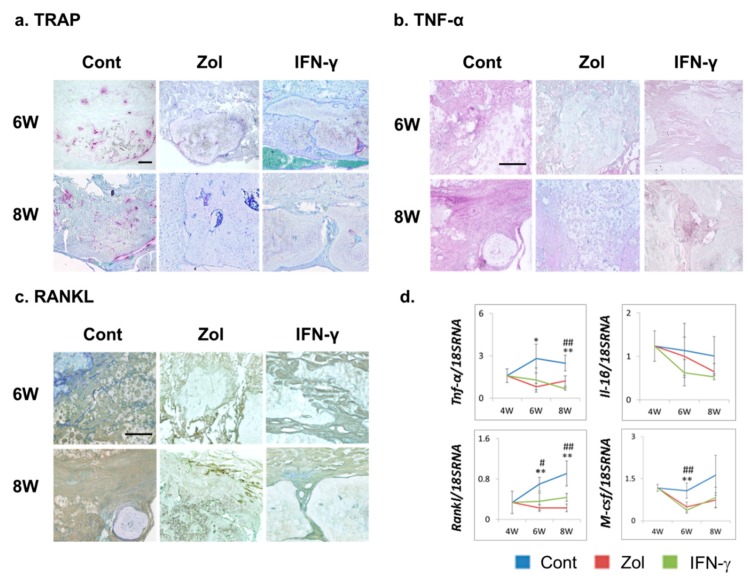
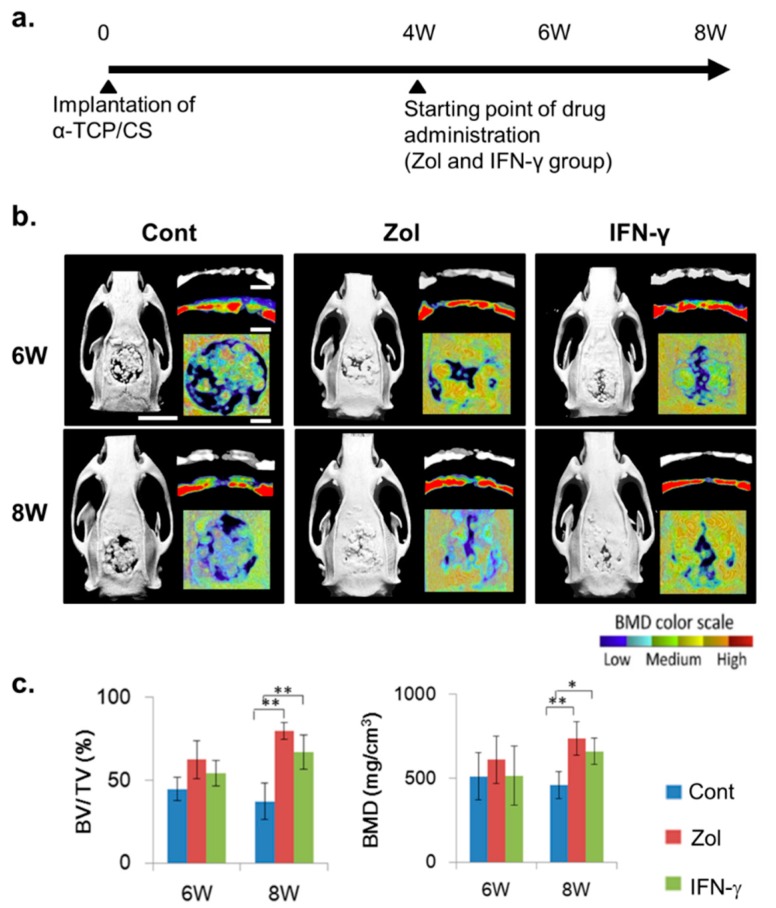
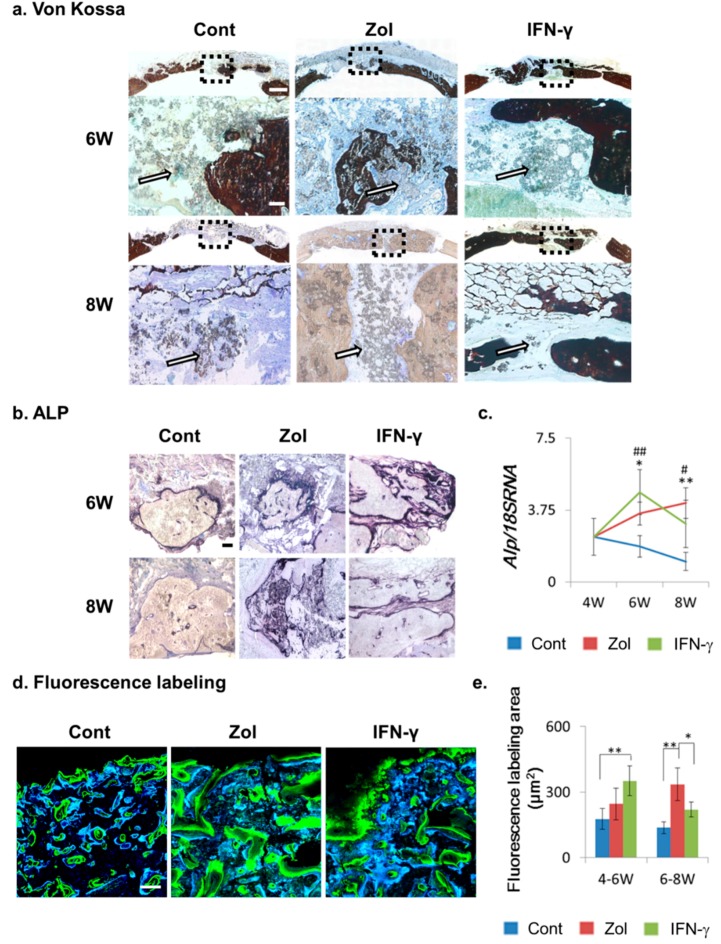
Inflammatory responses are frequently associated with the expression of inflammatory cytokines and severe osteoclastogenesis, which significantly affect the efficacy of biomaterials. Recent findings have suggested that interferon (IFN)-γ and zoledronate (Zol) are effective inhibitors of osteoclastogenesis. However, little is known regarding the utility of IFN-γ and Zol in bone tissue engineering. In this study, we generated rat models by generating critically sized defects in calvarias implanted with an alpha-tricalcium phosphate/collagen sponge (α-TCP/CS). At four weeks post-implantation, the rats were divided into IFN-γ, Zol, and control (no treatment) groups. Compared with the control group, the IFN-γ and Zol groups showed remarkable attenuation of severe osteoclastogenesis, leading to a significant enhancement in bone mass. Histomorphometric data and mRNA expression patterns in IFN-γ and Zol-injected rats reflected high bone-turnover with increased bone formation, a reduction in osteoclast numbers, and tumor necrosis factor-α expression. Our results demonstrated that the administration of IFN-γ and Zol enhanced bone regeneration of α-TCP/CS implants by enhancing bone formation, while hampering excess bone resorption.
炎症反应通常与炎症细胞因子的表达和严重的破骨细胞生成相关,这会显著影响生物材料的功效。最近的研究结果表明,干扰素(IFN)-γ和唑来膦酸盐(Zol)是破骨细胞生成的有效抑制剂。然而,关于IFN-γ和Zol在骨组织工程中的应用知之甚少。在本研究中,我们通过在植入α-磷酸三钙/胶原海绵(α-TCP/CS)的颅骨上制造临界尺寸的缺损来建立大鼠模型。植入后四周,将大鼠分为IFN-γ组、Zol组和对照组(不治疗)。与对照组相比,IFN-γ组和Zol组严重破骨细胞生成明显减弱,导致骨量显著增加。IFN-γ和Zol注射大鼠的组织形态计量学数据和mRNA表达模式反映出高骨转换,伴有骨形成增加、破骨细胞数量减少和肿瘤坏死因子-α表达降低。我们的结果表明,给予IFN-γ和Zol可通过促进骨形成,同时抑制过度的骨吸收,增强α-TCP/CS植入物的骨再生。