Doe John E, Lander Deborah R, Doerrer Nancy G, Heard Nina, Hines Ronald N, Lowit Anna B, Pastoor Timothy, Phillips Richard D, Sargent Dana, Sherman James H, Young Tanir Jennifer, Embry Michelle R
a Parker Doe Partnership LLP , Frodsham , Cheshire , UK .
b DuPont Haskell Global Centers for Health & Environmental Sciences , Newark , DE , USA .
Crit Rev Toxicol. 2016;46(1):54-73. doi: 10.3109/10408444.2015.1082974. Epub 2015 Oct 30.
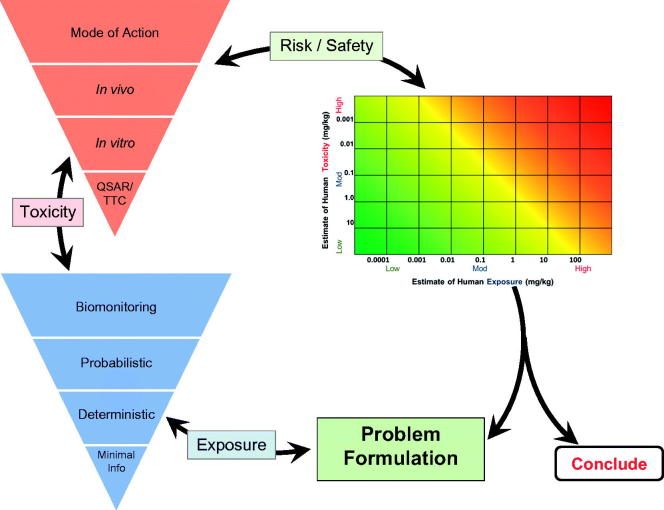
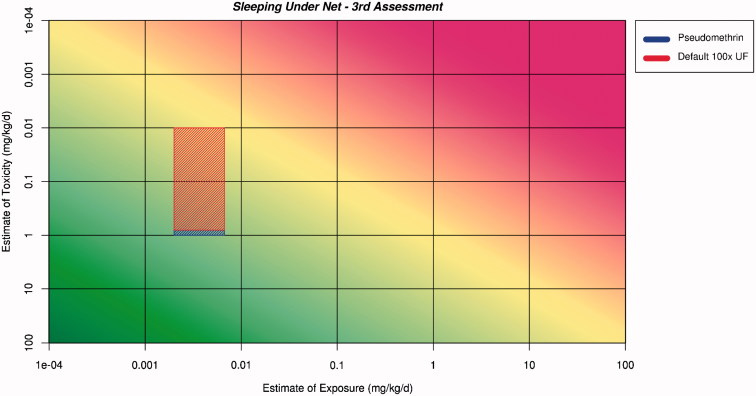
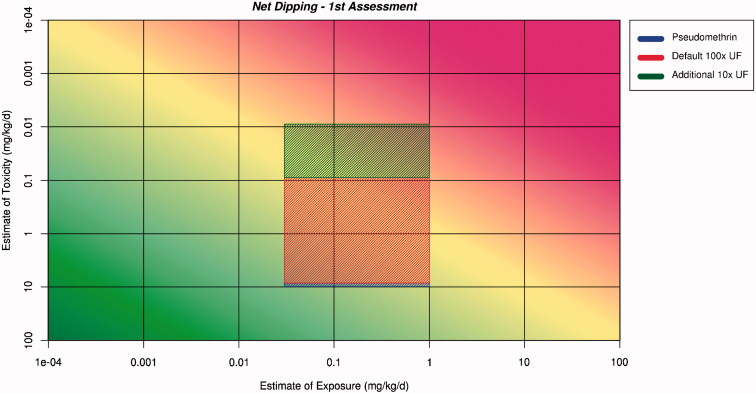
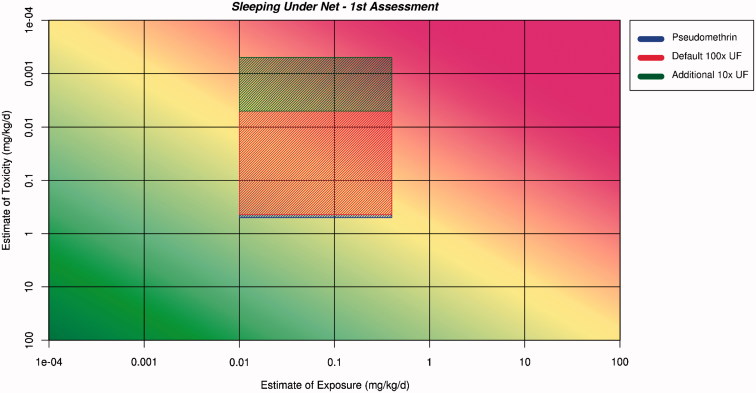
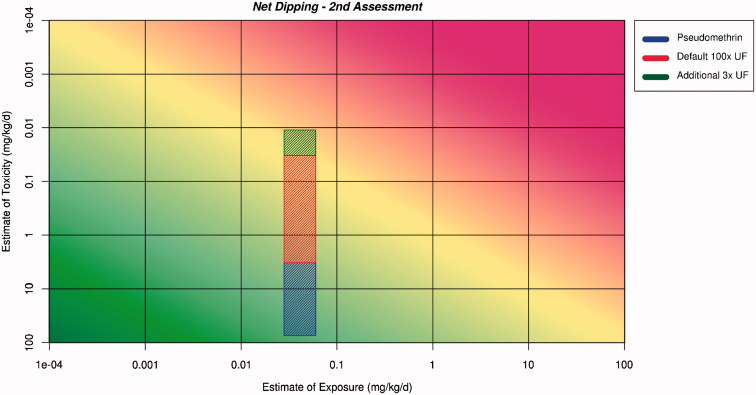
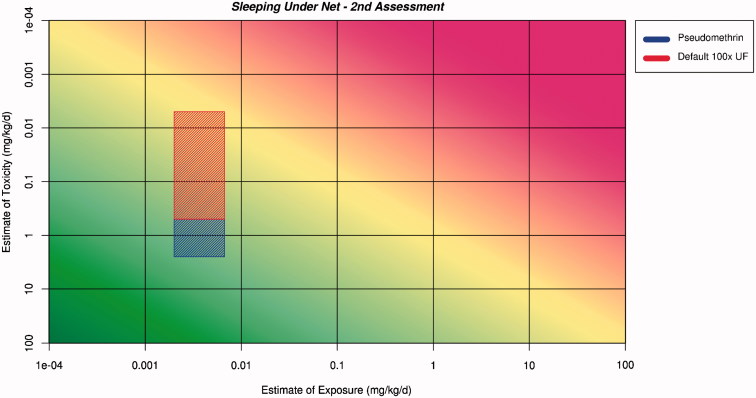
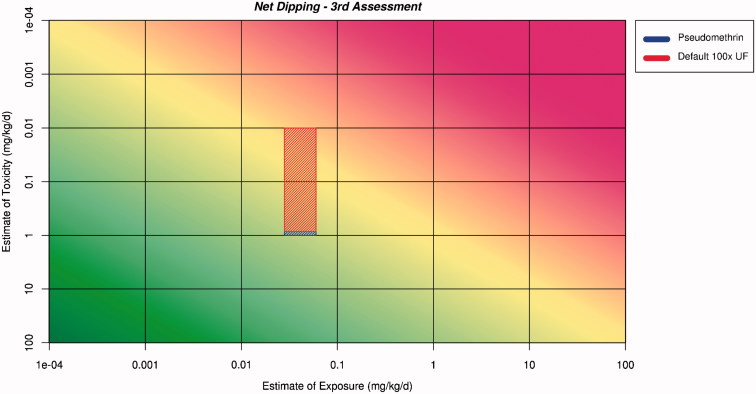
The HESI-coordinated RISK21 roadmap and matrix are tools that provide a transparent method to compare exposure and toxicity information and assess whether additional refinement is required to obtain the necessary precision level for a decision regarding safety. A case study of the use of a pyrethroid, "pseudomethrin," in bed netting to control malaria is presented to demonstrate the application of the roadmap and matrix. The evaluation began with a problem formulation step. The first assessment utilized existing information pertaining to the use and the class of chemistry. At each stage of the step-wise approach, the precision of the toxicity and exposure estimates were refined as necessary by obtaining key data which enabled a decision on safety to be made efficiently and with confidence. The evaluation demonstrated the concept of using existing information within the RISK21 matrix to drive the generation of additional data using a value-of-information approach. The use of the matrix highlighted whether exposure or toxicity required further investigation and emphasized the need to address the default uncertainty factor of 100 at the highest tier of the evaluation. It also showed how new methodology such as the use of in vitro studies and assays could be used to answer the specific questions which arise through the use of the matrix. The matrix also serves as a useful means to communicate progress to stakeholders during an assessment of chemical use.
由HESI协调制定的RISK21路线图和矩阵是工具,它们提供了一种透明的方法来比较暴露和毒性信息,并评估是否需要进一步细化以获得关于安全性决策所需的精度水平。本文介绍了拟除虫菊酯“假菊酯”用于蚊帐控制疟疾的案例研究,以展示路线图和矩阵的应用。评估从问题制定步骤开始。首次评估利用了与用途和化学类别相关的现有信息。在逐步方法的每个阶段,根据需要通过获取关键数据来细化毒性和暴露估计的精度,从而能够高效且自信地做出关于安全性的决策。该评估展示了在RISK21矩阵中使用现有信息,通过信息价值方法推动生成更多数据的概念。矩阵的使用突出了暴露或毒性是否需要进一步调查,并强调在评估的最高层级解决默认不确定性因子100的必要性。它还展示了如何使用体外研究和分析等新方法来回答因使用矩阵而产生的具体问题。矩阵也是在化学品使用评估期间向利益相关者传达进展的有用手段。