De Robertis Mariangela, Arigoni Maddalena, Loiacono Luisa, Riccardo Federica, Calogero Raffaele Adolfo, Feodorova Yana, Tashkova Dessislava, Belovejdov Vesselin, Sarafian Victoria, Cavallo Federica, Signori Emanuela
Laboratory of Molecular Medicine and Biotechnology, Center of Integrated Research, Campus Bio-Medico University of Rome, 00128 Rome, Italy.
Laboratory of Molecular Pathology and Experimental Oncology, Institute of Translational Pharmacology, National Research Council (CNR), 00133 Rome, Italy.
Oncotarget. 2015 Dec 1;6(38):41237-57. doi: 10.18632/oncotarget.5652.
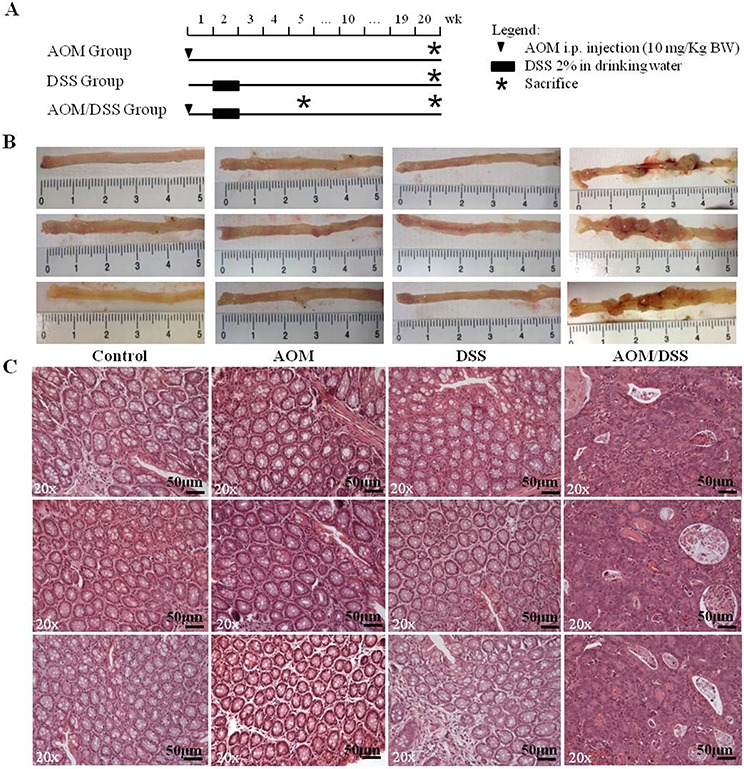
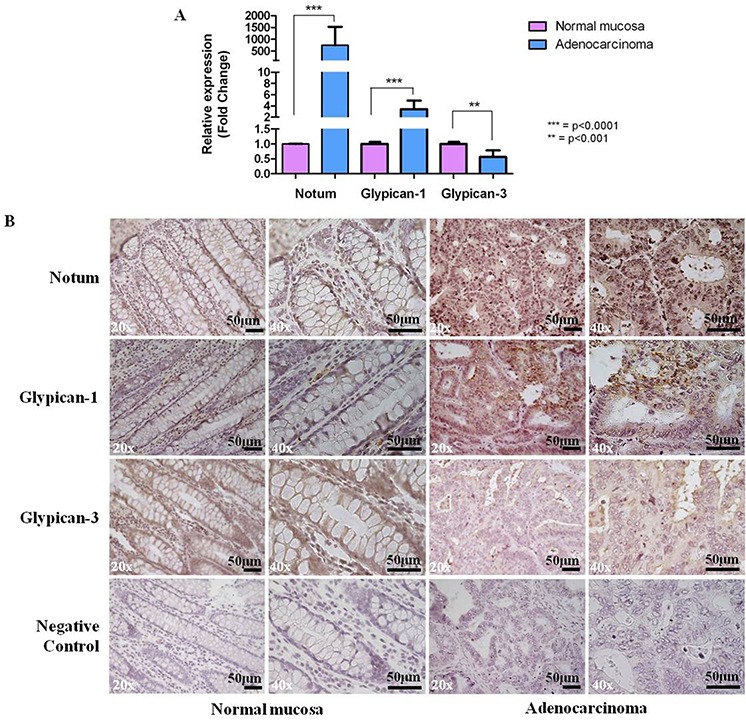
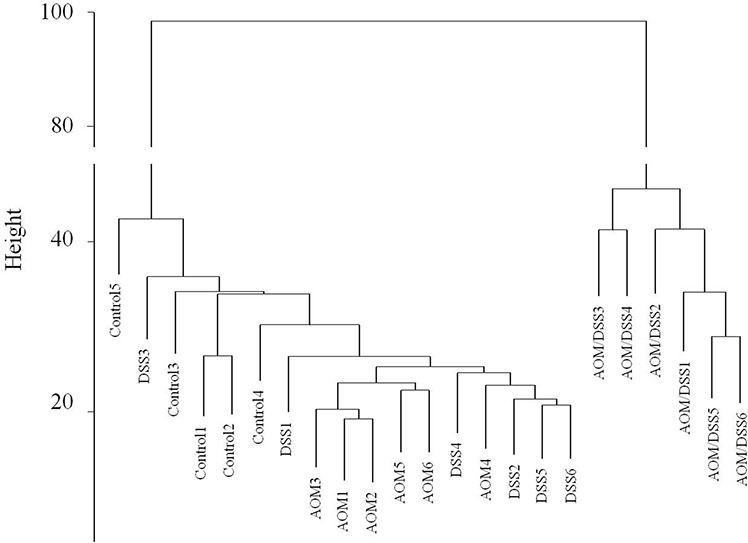
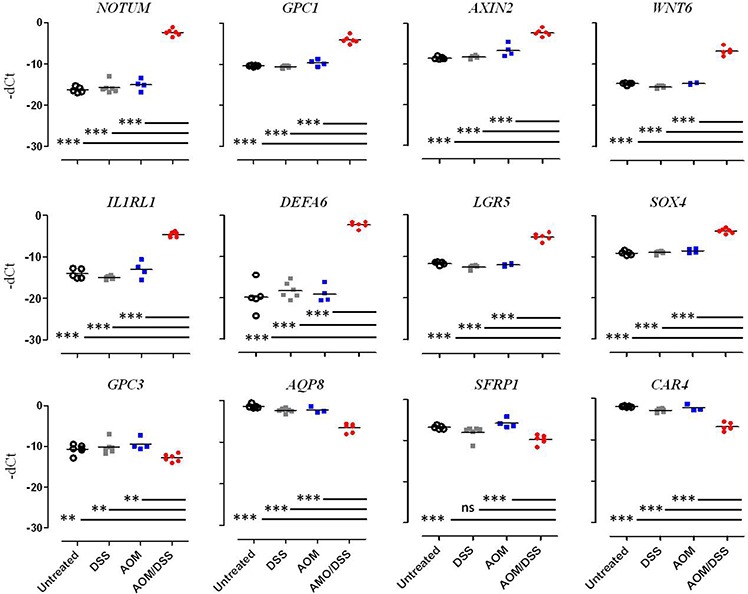
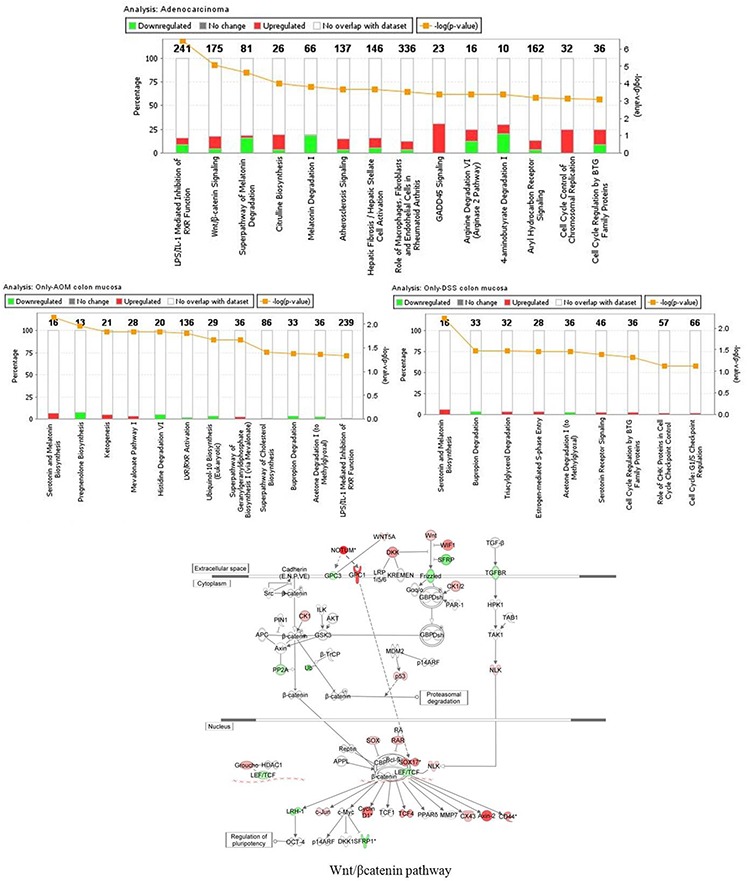
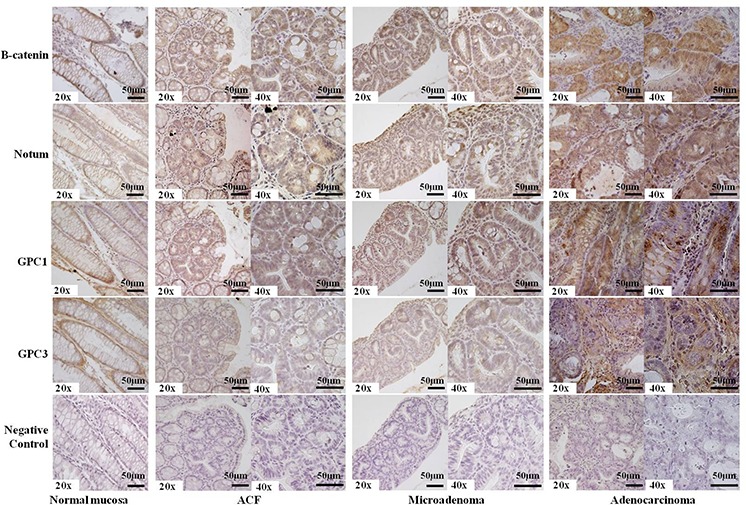
The connection between colorectal cancer (CRC) and Wnt signaling pathway activation is well known, but full elucidation of the underlying regulation of the Wnt/β-catenin pathway and its biological functions in CRC pathogenesis is still needed. Here, the azoxymethane/dextran sulfate sodium salt (AOM/DSS) murine model has been used as an experimental platform able to mimic human sporadic CRC development with predictable timing. We performed genome-wide expression profiling of AOM/DSS-induced tumors and normal colon mucosa to identify potential novel CRC biomarkers. Remarkably, the enhanced expression of Notum, a conserved feedback antagonist of Wnt, was observed in tumors along with alterations in Glypican-1 and Glypican-3 levels. These findings were confirmed in a set of human CRC samples. Here, we provide the first demonstration of significant changes in Notum and glypicans gene expression during CRC development and present evidence to suggest them as potential new biomarkers of CRC pathogenesis.
结直肠癌(CRC)与Wnt信号通路激活之间的联系已广为人知,但仍需全面阐明Wnt/β-连环蛋白通路的潜在调控及其在CRC发病机制中的生物学功能。在此,偶氮甲烷/葡聚糖硫酸钠(AOM/DSS)小鼠模型已被用作一个实验平台,能够以可预测的时间模拟人类散发性CRC的发展。我们对AOM/DSS诱导的肿瘤和正常结肠黏膜进行了全基因组表达谱分析,以确定潜在的新型CRC生物标志物。值得注意的是,在肿瘤中观察到Wnt保守反馈拮抗剂Notum的表达增强,同时Glypican-1和Glypican-3水平也发生了变化。这些发现在一组人类CRC样本中得到了证实。在此,我们首次证明了在CRC发展过程中Notum和Glypicans基因表达的显著变化,并提供证据表明它们可能是CRC发病机制的潜在新生物标志物。