Collins Josie K, Lane Simon I R, Merriman Julie A, Jones Keith T
Centre for Biological Sciences, Faculty of Natural and Environmental Sciences, University of Southampton, Southampton SO17 1BJ, UK.
Nat Commun. 2015 Nov 2;6:8553. doi: 10.1038/ncomms9553.
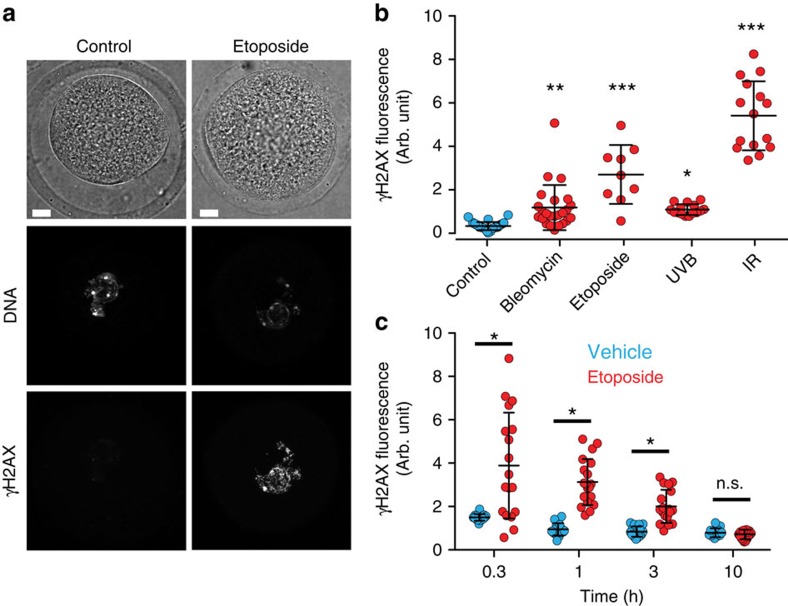
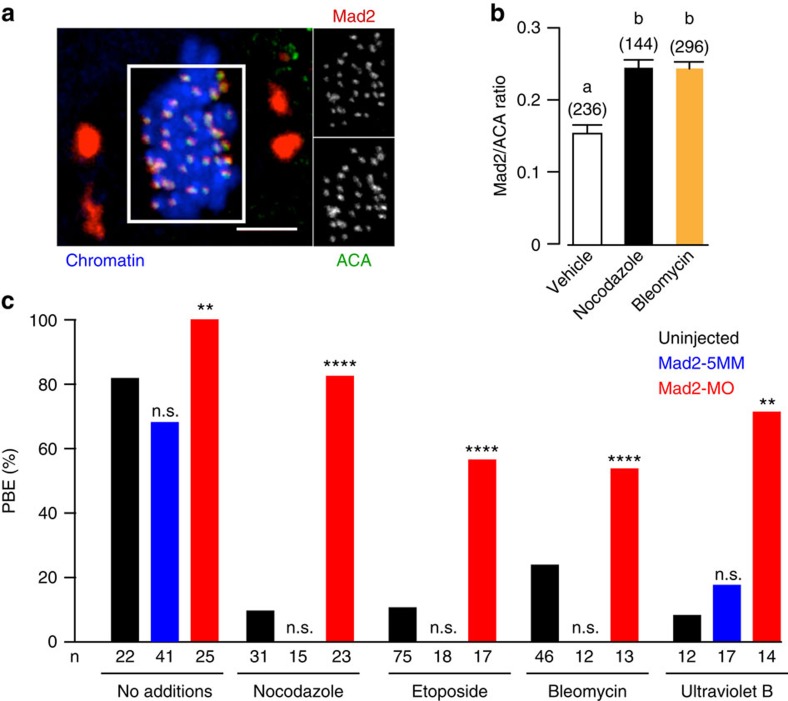
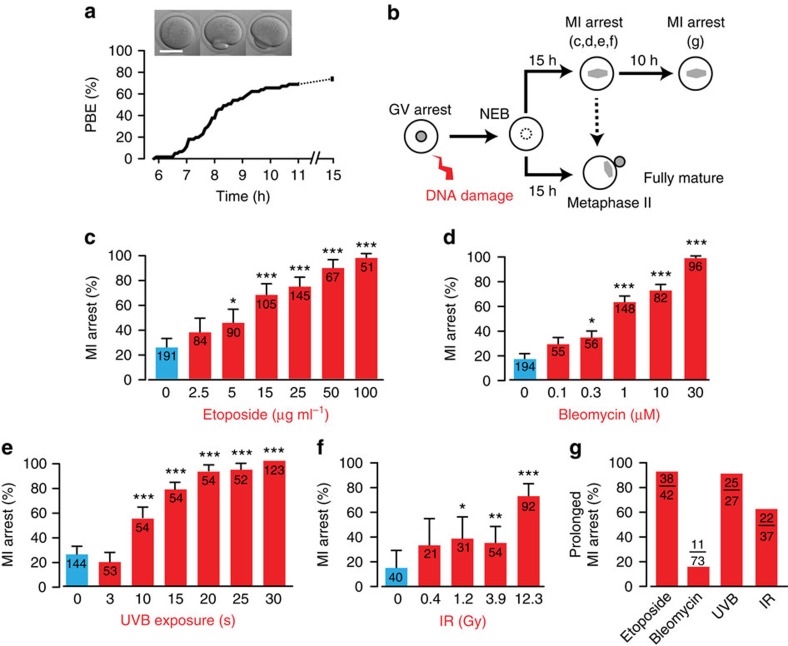
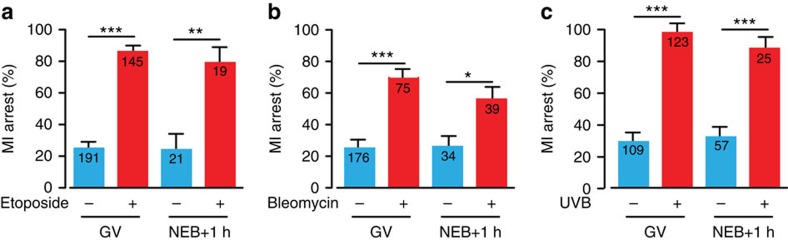
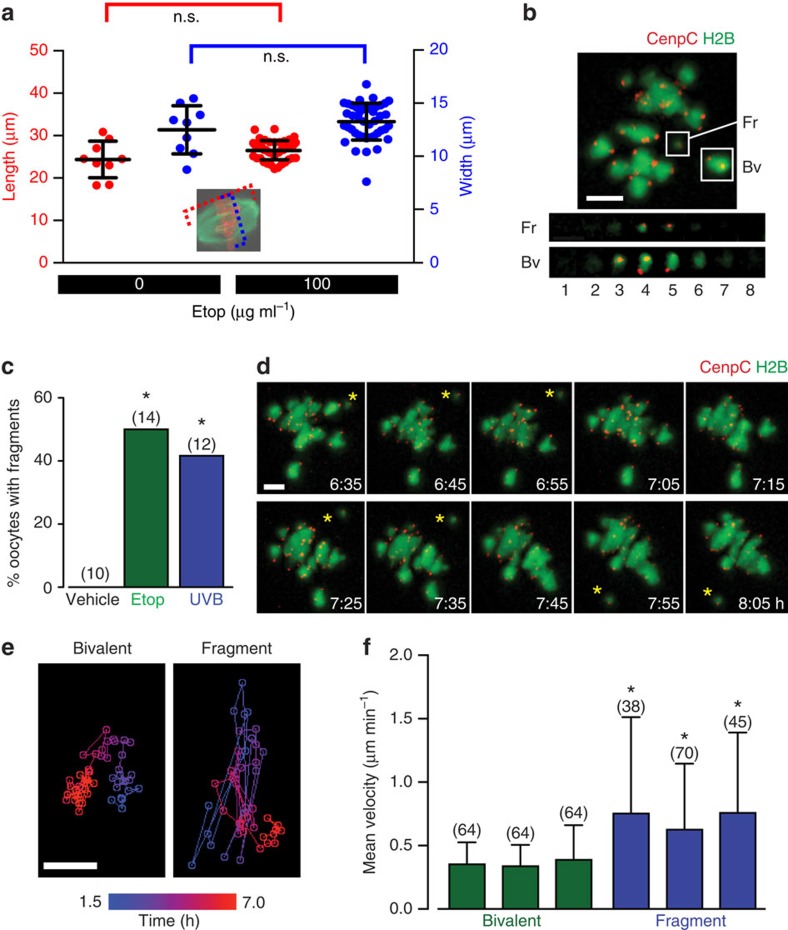
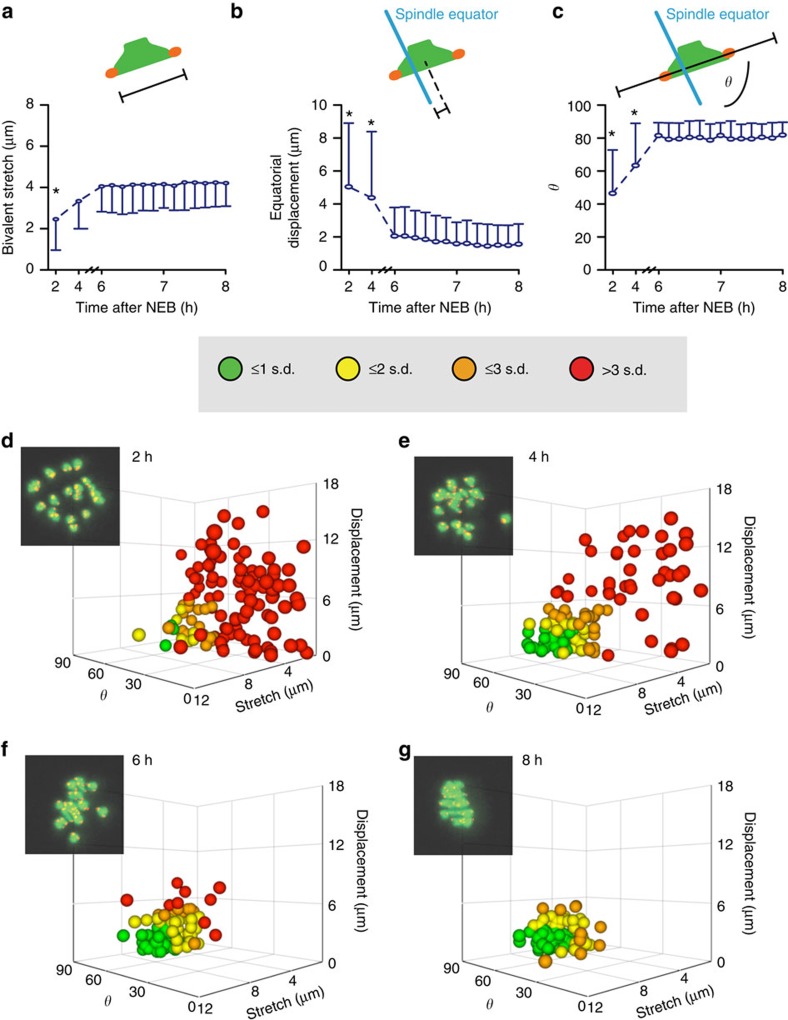
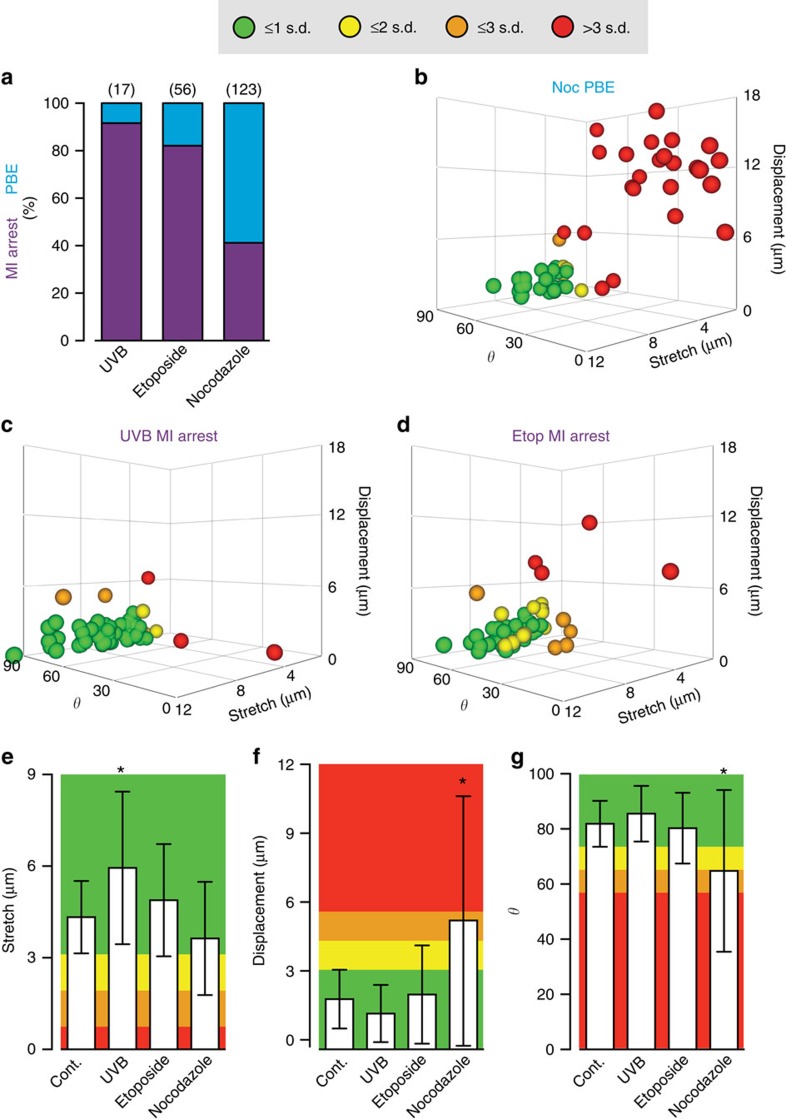
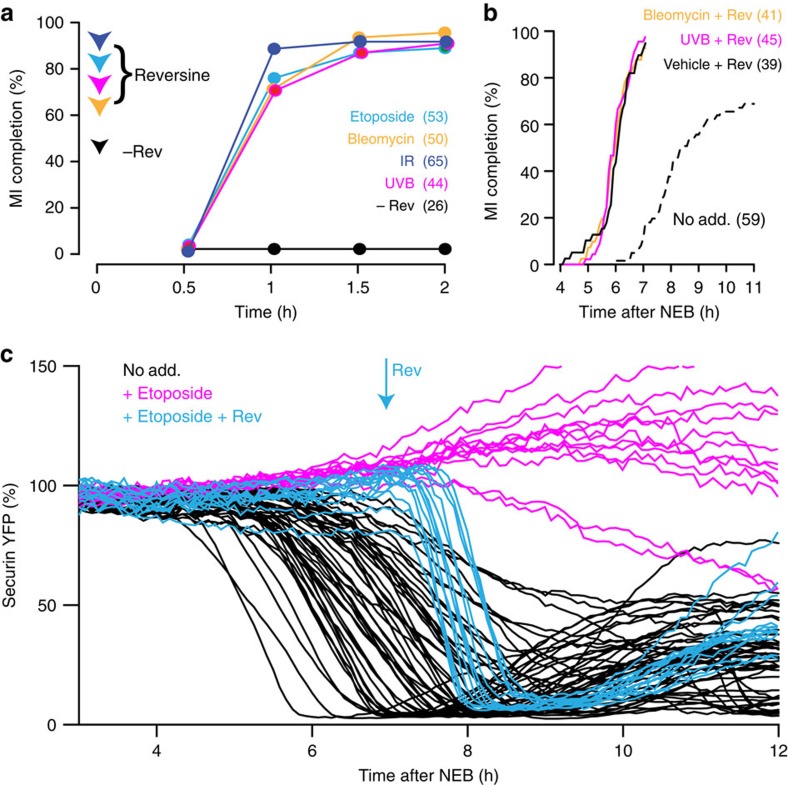
Extensive damage to maternal DNA during meiosis causes infertility, birth defects and abortions. However, it is unknown if fully grown oocytes have a mechanism to prevent the creation of DNA-damaged embryos. Here we show that DNA damage activates a pathway involving the spindle assembly checkpoint (SAC) in response to chemically induced double strand breaks, UVB and ionizing radiation. DNA damage can occur either before or after nuclear envelope breakdown, and provides an effective block to anaphase-promoting complex activity, and consequently the formation of mature eggs. This contrasts with somatic cells, where DNA damage fails to affect mitotic progression. However, it uncovers a second function for the meiotic SAC, which in the context of detecting microtubule-kinetochore errors has hitherto been labelled as weak or ineffectual in mammalian oocytes. We propose that its essential role in the detection of DNA damage sheds new light on its biological purpose in mammalian female meiosis.
减数分裂过程中母源DNA的广泛损伤会导致不孕、出生缺陷和流产。然而,完全成熟的卵母细胞是否具有防止产生DNA损伤胚胎的机制尚不清楚。在这里,我们表明DNA损伤会激活一条涉及纺锤体组装检查点(SAC)的通路,以应对化学诱导的双链断裂、UVB和电离辐射。DNA损伤可发生在核膜破裂之前或之后,并有效地阻断后期促进复合物的活性,从而阻止成熟卵子的形成。这与体细胞形成对比,在体细胞中DNA损伤不会影响有丝分裂进程。然而,这揭示了减数分裂SAC的第二个功能,在检测微管-动粒错误的背景下,该功能在哺乳动物卵母细胞中迄今被认为是微弱或无效的。我们认为,其在检测DNA损伤中的重要作用为其在哺乳动物雌性减数分裂中的生物学目的提供了新的线索。