Lane Simon I R, Morgan Stephanie L, Wu Tianyu, Collins Josie K, Merriman Julie A, ElInati Elias, Turner James M, Jones Keith T
Biological Sciences, Faculty of Natural and Environmental Sciences, University of Southampton, Southampton, SO17 1BJ, UK
Biological Sciences, Faculty of Natural and Environmental Sciences, University of Southampton, Southampton, SO17 1BJ, UK.
Development. 2017 Oct 1;144(19):3475-3486. doi: 10.1242/dev.153965. Epub 2017 Aug 29.
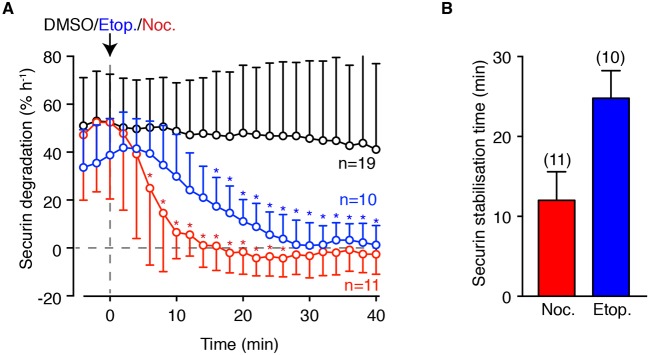
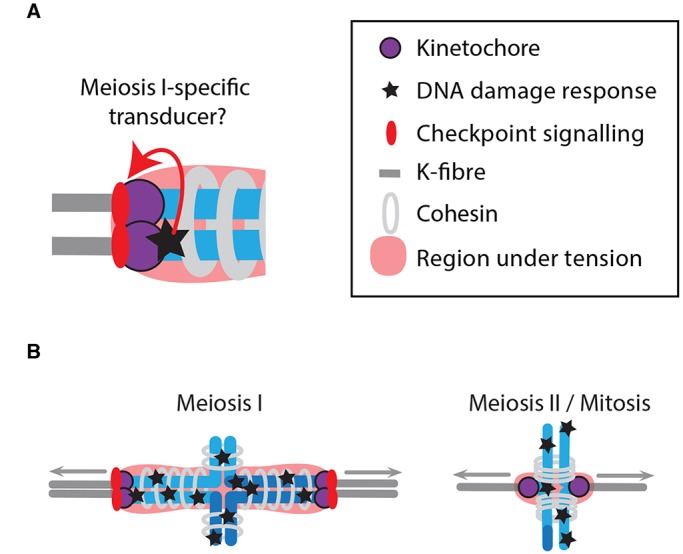
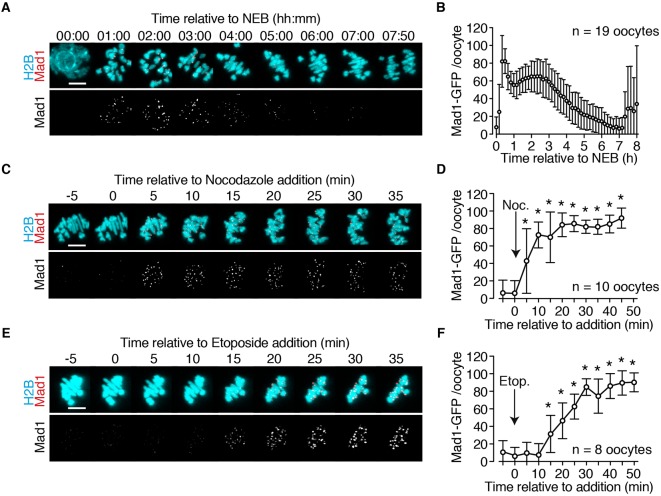
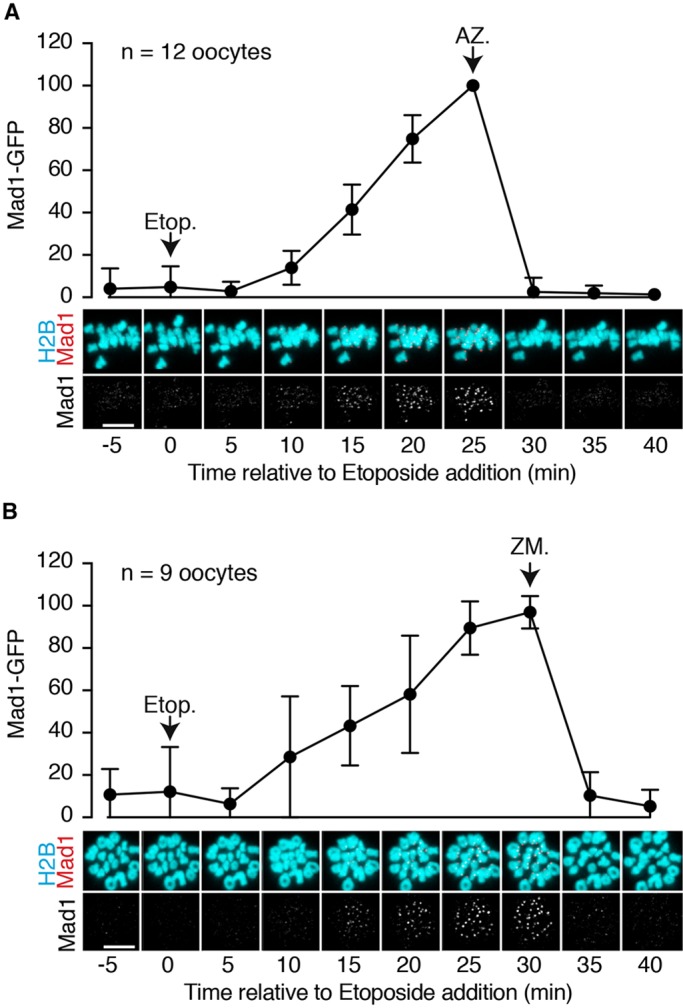
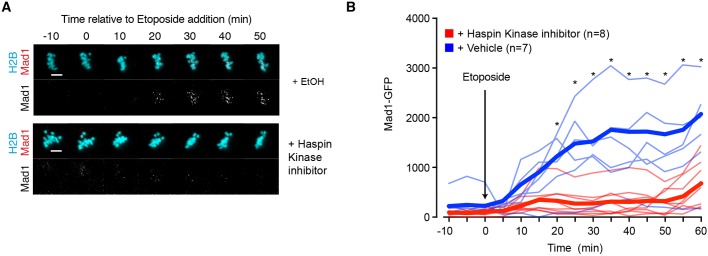
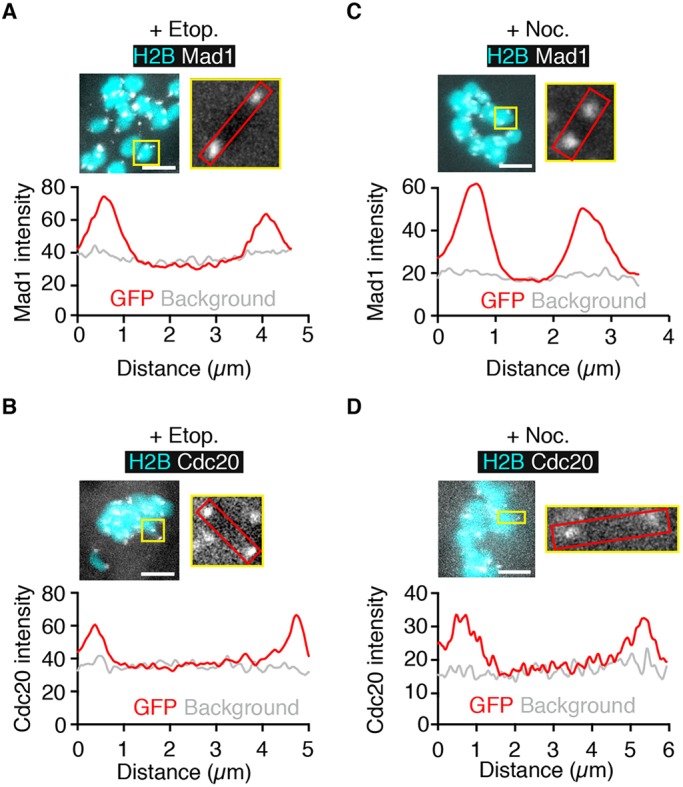
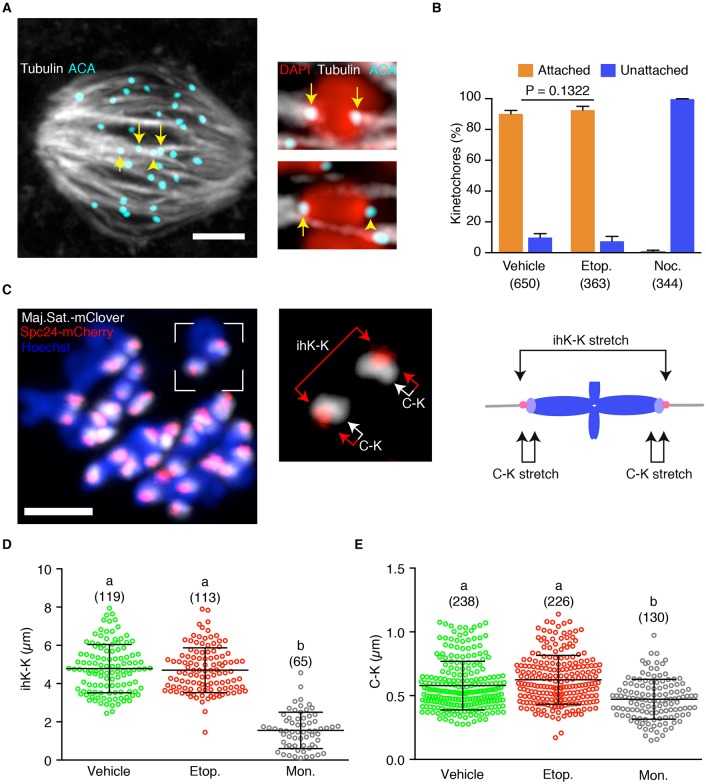
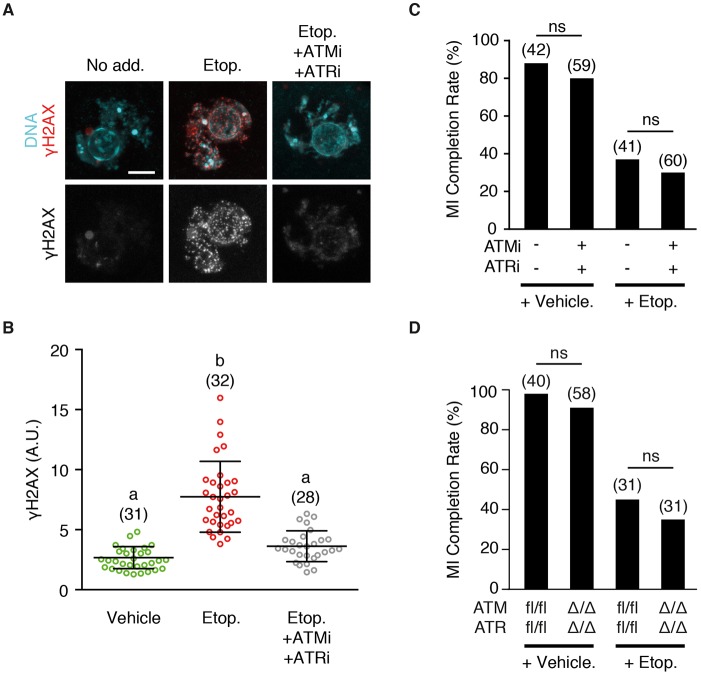
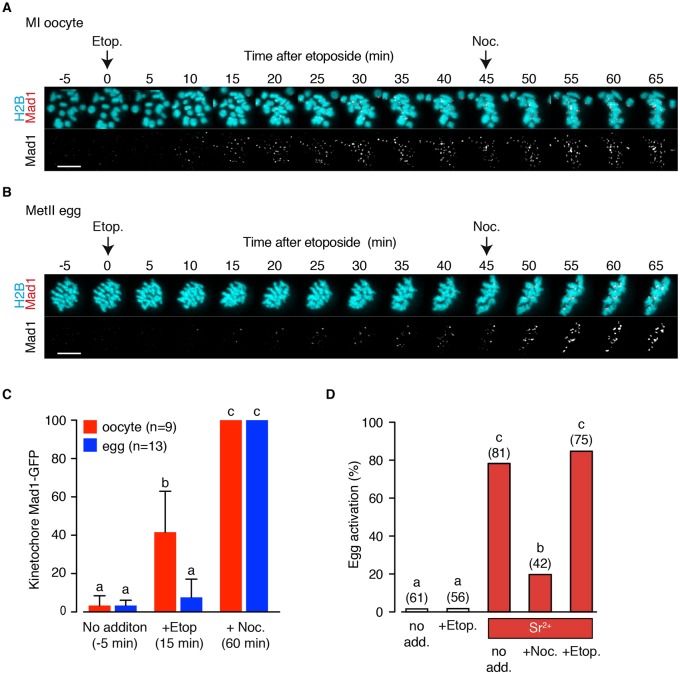
Mouse oocytes carrying DNA damage arrest in meiosis I, thereby preventing creation of embryos with deleterious mutations. The arrest is dependent on activation of the spindle assembly checkpoint, which results in anaphase-promoting complex (APC) inhibition. However, little is understood about how this checkpoint is engaged following DNA damage. Here, we find that within minutes of DNA damage checkpoint proteins are assembled at the kinetochore, not at damage sites along chromosome arms, such that the APC is fully inhibited within 30 min. Despite this robust response, there is no measurable loss in k-fibres, or tension across the bivalent. Through pharmacological inhibition we observed that the response is dependent on Mps1 kinase, aurora kinase and Haspin. Using oocyte-specific knockouts we find the response does not require the DNA damage response kinases ATM or ATR. Furthermore, checkpoint activation does not occur in response to DNA damage in fully mature eggs during meiosis II, despite the divisions being separated by just a few hours. Therefore, mouse oocytes have a unique ability to sense DNA damage rapidly by activating the checkpoint at their kinetochores.
携带DNA损伤的小鼠卵母细胞会在减数分裂I期停滞,从而防止产生具有有害突变的胚胎。这种停滞依赖于纺锤体组装检查点的激活,这会导致后期促进复合物(APC)受到抑制。然而,对于DNA损伤后该检查点如何被激活,人们了解甚少。在这里,我们发现,在DNA损伤后的几分钟内,检查点蛋白会在动粒处组装,而不是在染色体臂上的损伤位点,从而使APC在30分钟内被完全抑制。尽管有这种强烈的反应,但在动粒微管或二价体上的张力方面并没有可测量的损失。通过药理学抑制,我们观察到这种反应依赖于Mps1激酶、极光激酶和Haspin。利用卵母细胞特异性基因敲除,我们发现这种反应不需要DNA损伤反应激酶ATM或ATR。此外,在减数分裂II期的完全成熟卵子中,尽管两次分裂仅相隔几个小时,但对DNA损伤不会发生检查点激活。因此,小鼠卵母细胞具有通过激活其动粒处的检查点来快速感知DNA损伤的独特能力。