Austen Katharina, Ringer Pia, Mehlich Alexander, Chrostek-Grashoff Anna, Kluger Carleen, Klingner Christoph, Sabass Benedikt, Zent Roy, Rief Matthias, Grashoff Carsten
Max Planck Institute of Biochemistry, Group of Molecular Mechanotransduction, Martinsried D-82152, Germany.
Technical University of Munich, Physics Department E22, Garching D-85748, Germany.
Nat Cell Biol. 2015 Dec;17(12):1597-606. doi: 10.1038/ncb3268. Epub 2015 Nov 2.
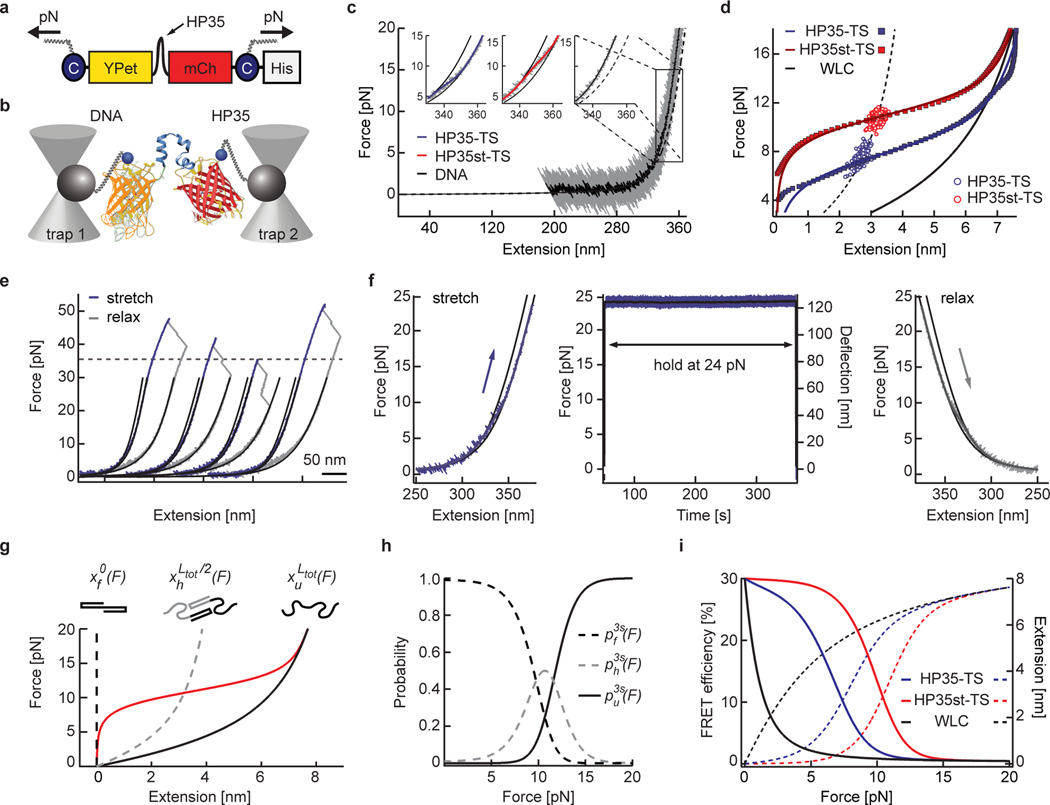
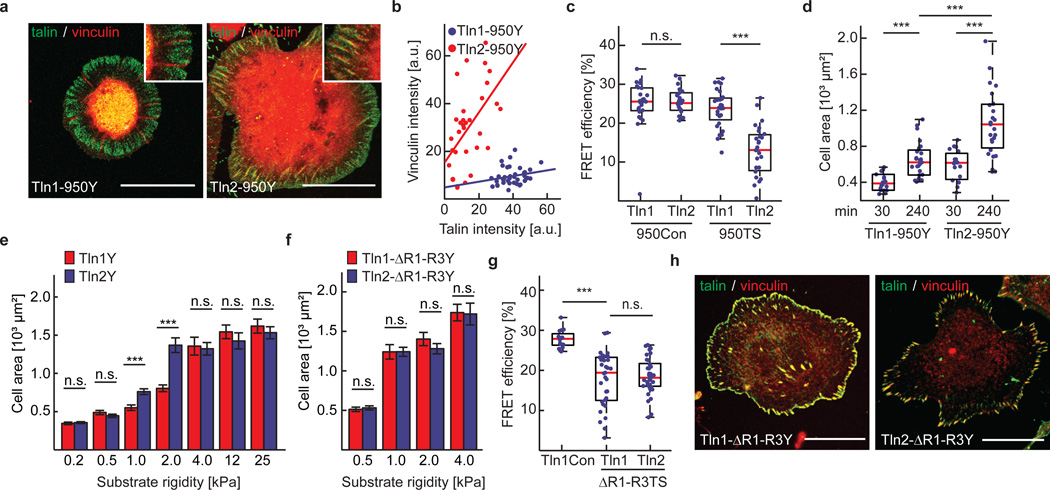
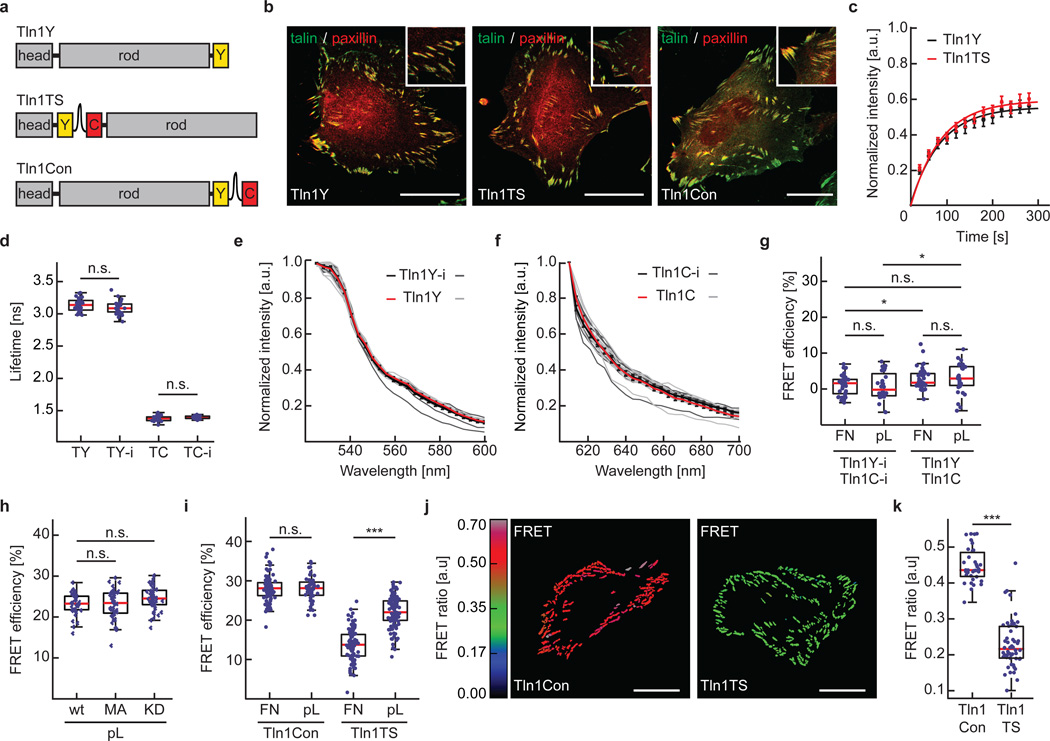
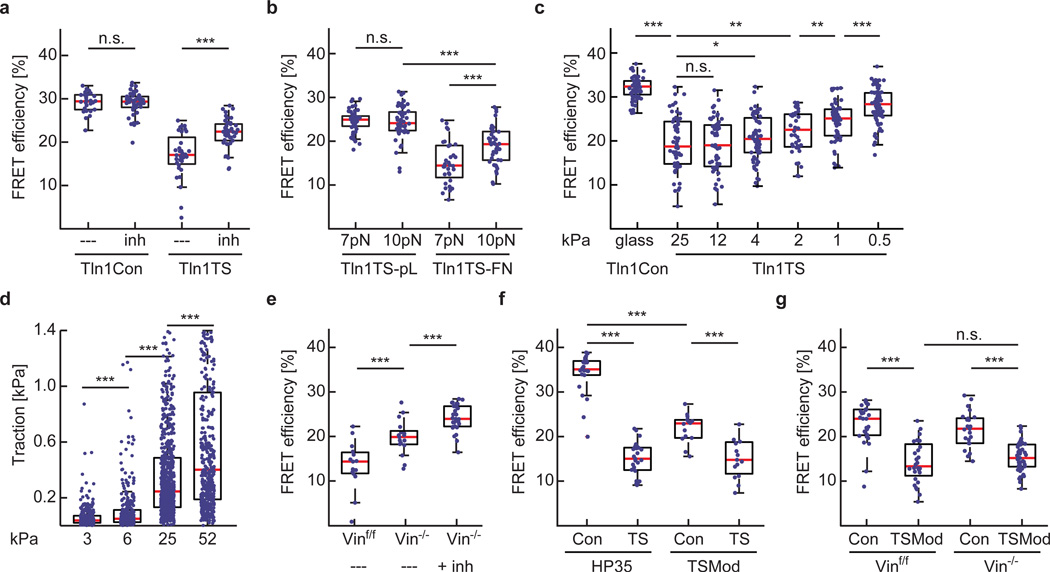
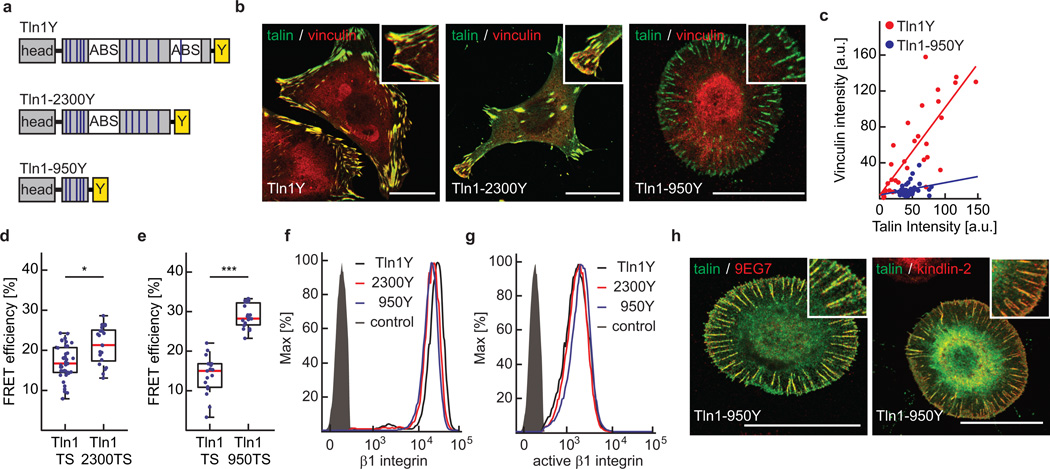
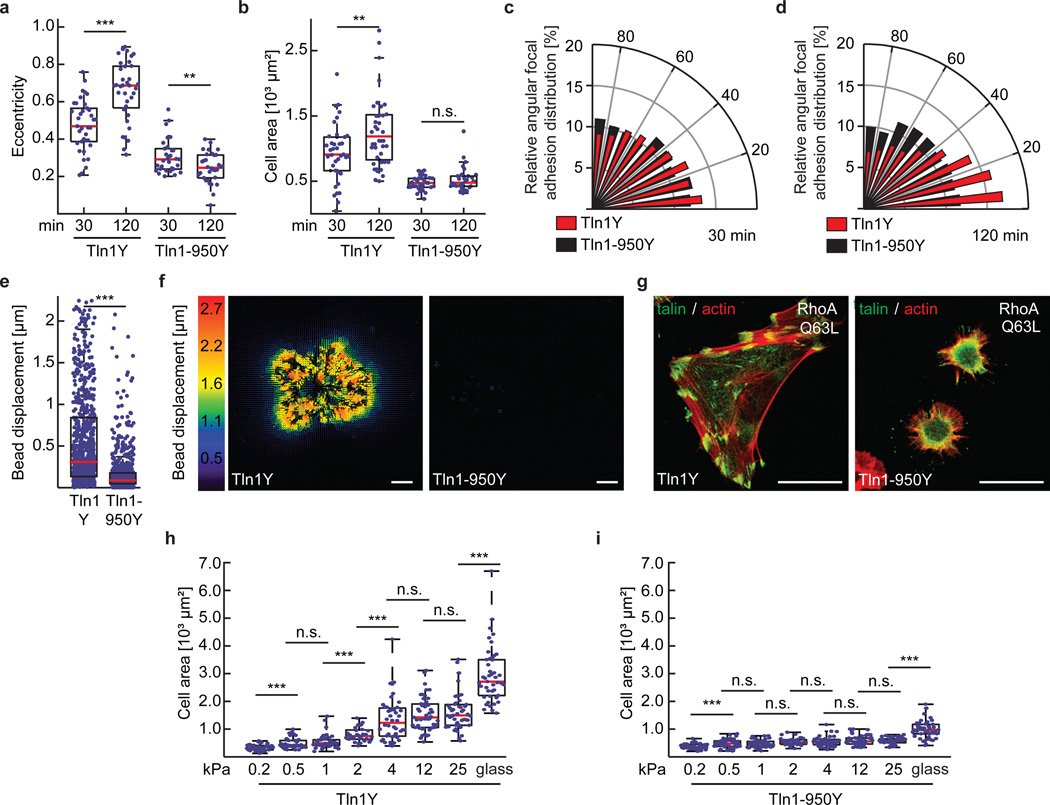
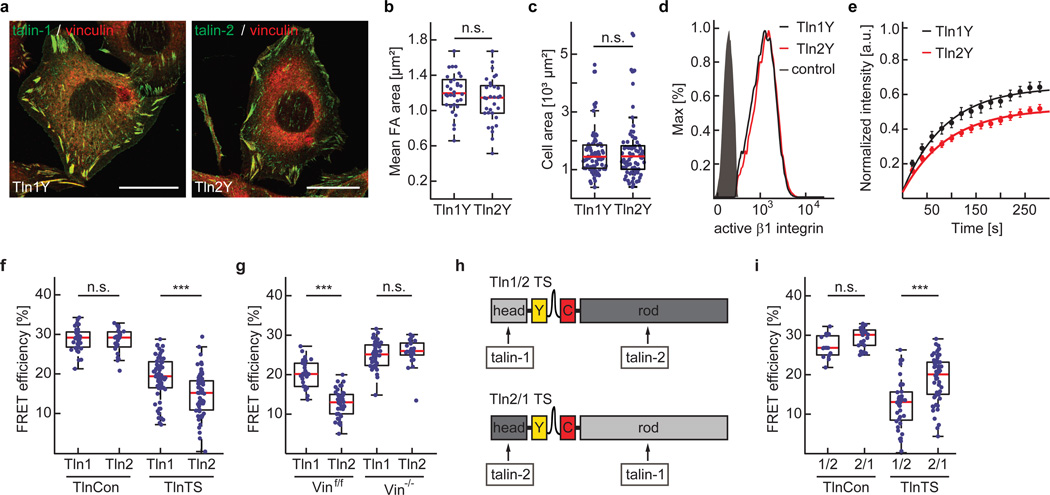
The ability of cells to adhere and sense differences in tissue stiffness is crucial for organ development and function. The central mechanisms by which adherent cells detect extracellular matrix compliance, however, are still unknown. Using two single-molecule-calibrated biosensors that allow the analysis of a previously inaccessible but physiologically highly relevant force regime in cells, we demonstrate that the integrin activator talin establishes mechanical linkages following cell adhesion, which are indispensable for cells to probe tissue stiffness. Talin linkages are exposed to a range of piconewton forces and bear, on average, 7-10 pN during cell adhesion depending on their association with F-actin and vinculin. Disruption of talin's mechanical engagement does not impair integrin activation and initial cell adhesion but prevents focal adhesion reinforcement and thus extracellular rigidity sensing. Intriguingly, talin mechanics are isoform specific so that expression of either talin-1 or talin-2 modulates extracellular rigidity sensing.
细胞粘附并感知组织硬度差异的能力对于器官发育和功能至关重要。然而,粘附细胞检测细胞外基质顺应性的核心机制仍不清楚。我们使用两种单分子校准生物传感器,能够分析细胞中以前无法获得但在生理上高度相关的力状态,结果表明整联蛋白激活剂踝蛋白在细胞粘附后建立了机械连接,这对于细胞探测组织硬度是必不可少的。踝蛋白连接暴露于一系列皮牛顿力,在细胞粘附过程中,根据它们与F-肌动蛋白和纽蛋白的关联,平均承受7-10皮牛顿的力。破坏踝蛋白的机械连接不会损害整联蛋白激活和初始细胞粘附,但会阻止粘着斑强化,从而阻止细胞外刚性感知。有趣的是,踝蛋白力学具有亚型特异性,因此踝蛋白-1或踝蛋白-2的表达均可调节细胞外刚性感知。