Yu Jian-Bo, Shi Jia, Zhang Yuan, Gong Li-Rong, Dong Shu-An, Cao Xin-Shun, Wu Li-Li, Wu Li-Na
Department of Anesthesiology, Tianjin Nankai Hospital, Tianjin Medical University, Tianjin, China.
PLoS One. 2015 Nov 2;10(11):e0141622. doi: 10.1371/journal.pone.0141622. eCollection 2015.
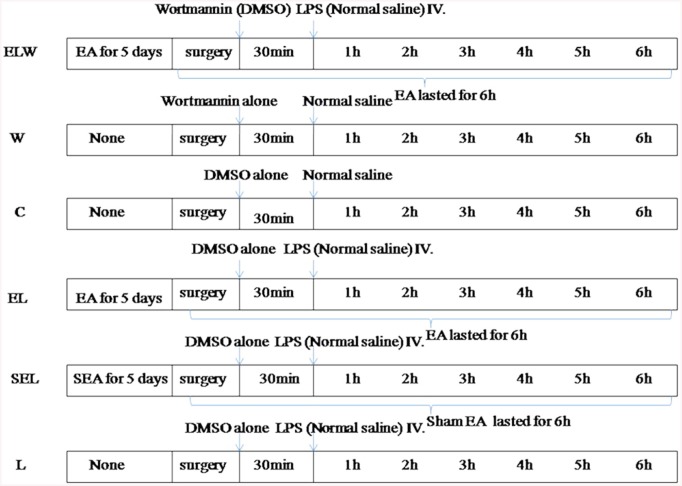
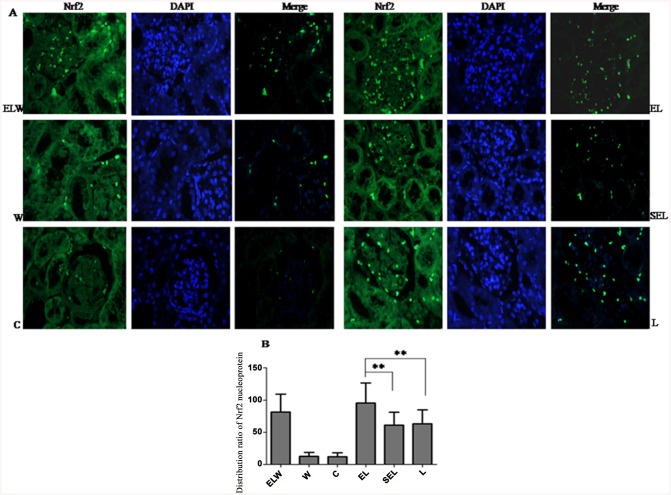
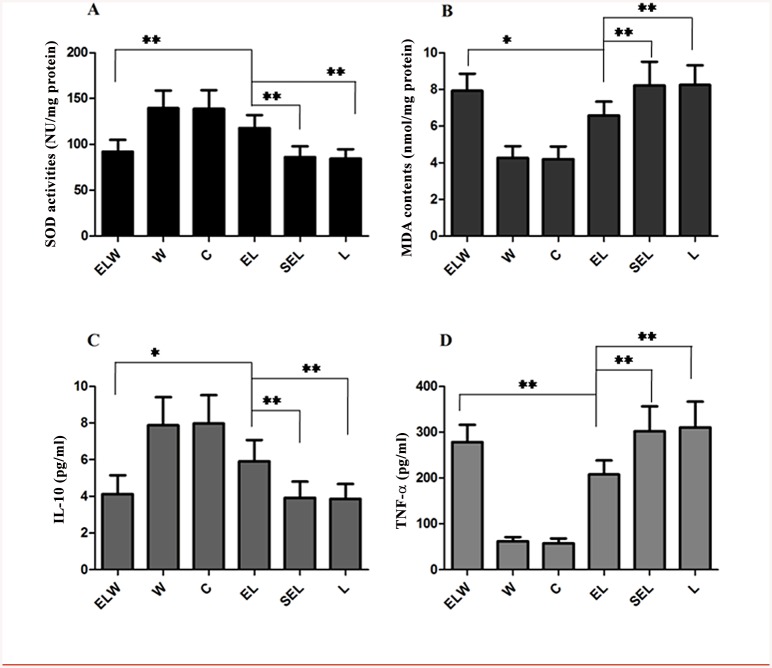
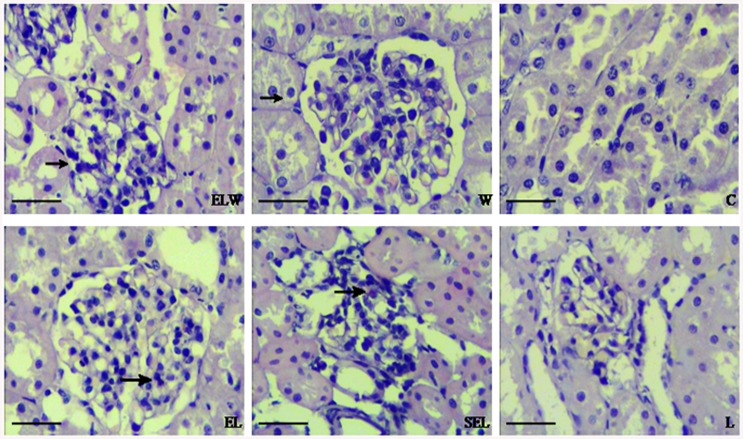
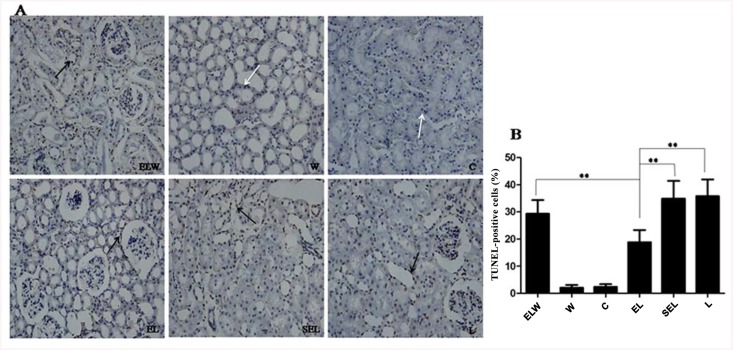
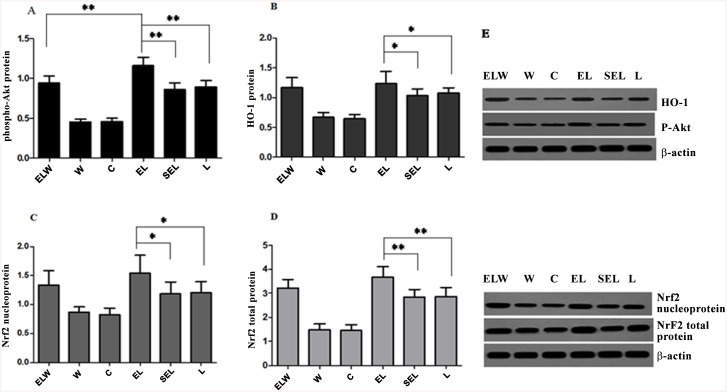
Electroacupuncture at select acupoints have been verified to protect against organ dysfunctions during endotoxic shock. And, heme oxygenase (HO)-1 as a phase II enzyme and antioxidant contributed to the protection of kidney in septic shock rats. The phosphatidylinositol 3-kinase (PI3K)-Akt pathway mediated the activation of NF-E2 related factor-2 (Nrf2), which was involved in HO-1 induction. To understand the efficacy of electroacupuncture stimulation in ameliorating acute kidney injury (AKI) through the PI3K/Akt/Nrf2 pathway and subsequent HO-1 upregulation, a dose of LPS 5mg/kg was administered intravenously to replicate the rabbit model of AKI induced by endotoxic shock. Electroacupuncture pretreatment was handled bilaterally at Zusanli and Neiguan acupoints for five consecutive days while sham electroacupuncture at non-acupoints as control. Results displayed that electroacupuncture stimulation significantly alleviated the morphologic renal damage, attenuated renal tubular apoptosis, suppressed the elevated biochemical indicators of AKI caused by LPS, enhanced the expressions of phospho-Akt, HO-1protein, Nrf2 total and nucleoprotein, and highlighted the proportions of Nrf2 nucleoprotein as a parallel. Furthermore, partial protective effects of elecroacupuncture were counteracted by preconditioning with wortmannin (the selective PI3K inhibitor), indicating a direct involvement of PI3K/Akt pathway. Inconsistently, wortmannin pretreatment made little difference to the expressions of HO-1, Nrf2 nucleoprotein and total protein, which indicated that PI3K/Akt may be not the only pathway responsible for electroacupuncture-afforded protection against LPS-induced AKI. These findings provide new insights into the potential future clinical applications of electroacupuncture for AKI induced by endotoxic shock instead of traditional remedies.
已证实针刺特定穴位可预防内毒素休克期间的器官功能障碍。此外,血红素加氧酶(HO)-1作为一种II相酶和抗氧化剂,有助于保护脓毒症休克大鼠的肾脏。磷脂酰肌醇3激酶(PI3K)-Akt信号通路介导了NF-E2相关因子-2(Nrf2)的激活,而Nrf2参与了HO-1的诱导。为了解针刺刺激通过PI3K/Akt/Nrf2信号通路及随后的HO-1上调改善急性肾损伤(AKI)的效果,静脉注射5mg/kg剂量的脂多糖(LPS)以复制内毒素休克诱导的兔AKI模型。连续5天对双侧足三里和内关穴进行电针预处理,同时对非穴位进行假电针作为对照。结果显示,电针刺激显著减轻了肾脏形态学损伤,减轻了肾小管凋亡,抑制了LPS引起的AKI生化指标升高,增强了磷酸化Akt、HO-1蛋白、Nrf2总蛋白和核蛋白的表达,并同时突出了Nrf2核蛋白的比例。此外,渥曼青霉素(选择性PI3K抑制剂)预处理抵消了电针的部分保护作用,表明PI3K/Akt信号通路直接参与其中。不一致的是,渥曼青霉素预处理对HO-1、Nrf2核蛋白和总蛋白的表达影响不大,这表明PI3K/Akt可能不是电针提供的抗LPS诱导的AKI保护作用的唯一信号通路。这些发现为电针在未来临床上治疗内毒素休克诱导的AKI提供了新的潜在应用思路,而非传统疗法。