Verheijden Simon, De Schepper Sebastiaan, Boeckxstaens Guy E
Laboratory of Neuroimmune Interaction and Mucosal Immunology, Department of Clinical and Experimental Medicine, Translational Research Center for Gastrointestinal Disorders (TARGID), University Hospital Leuven KU Leuven, Leuven, Belgium.
Front Cell Neurosci. 2015 Oct 8;9:403. doi: 10.3389/fncel.2015.00403. eCollection 2015.
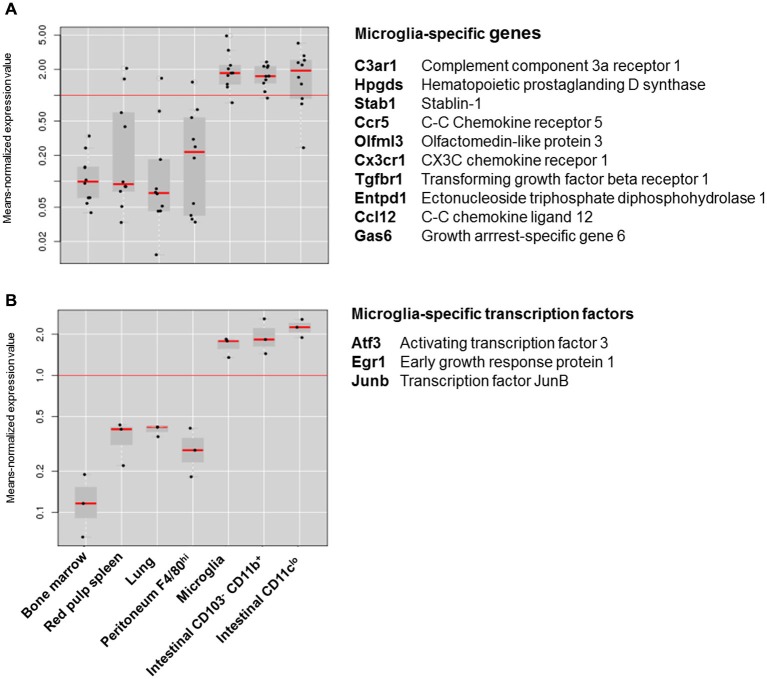
Intestinal macrophages are strategically located in different layers of the intestine, including the mucosa, submucosa and muscularis externa, where they perform complex tasks to maintain intestinal homeostasis. As the gastrointestinal tract is continuously challenged by foreign antigens, macrophage activation should be tightly controlled to prevent chronic inflammation and tissue damage. Unraveling the precise cellular and molecular mechanisms underlying the tissue-specific control of macrophage activation is crucial to get more insight into intestinal immune regulation. Two recent reports provide unanticipated evidence that the enteric nervous system (ENS) acts as a critical regulator of macrophage function in the myenteric plexus. Both studies clearly illustrate that enteric neurons reciprocally interact with intestinal macrophages and are actively involved in shaping their phenotype. This concept has striking parallels with the central nervous system (CNS), where neuronal signals maintain microglia, the resident macrophages of the CNS, in a quiescent, anti-inflammatory state. This inevitably evokes the perception that the ENS and CNS share mechanisms of neuroimmune interaction. In line, intestinal macrophages, both in the muscularis externa and (sub)mucosa, express high levels of CX3CR1, a feature that was once believed to be unique for microglia. CX3CR1 is the sole receptor of fractalkine (CX3CL1), a factor mainly produced by neurons in the CNS to facilitate neuron-microglia communication. The striking parallels between resident macrophages of the brain and intestine might provide a promising new line of thought to get more insight into cellular and molecular mechanisms controlling macrophage activation in the gut.
肠道巨噬细胞战略性地分布在肠道的不同层,包括黏膜层、黏膜下层和肌层,在这些部位它们执行复杂任务以维持肠道内稳态。由于胃肠道不断受到外来抗原的挑战,巨噬细胞的激活应受到严格控制,以防止慢性炎症和组织损伤。阐明巨噬细胞激活的组织特异性控制背后精确的细胞和分子机制,对于更深入了解肠道免疫调节至关重要。最近的两项报告提供了意想不到的证据,表明肠神经系统(ENS)作为肌间神经丛中巨噬细胞功能的关键调节因子。两项研究都清楚地表明,肠神经元与肠道巨噬细胞相互作用,并积极参与塑造其表型。这一概念与中枢神经系统(CNS)有惊人的相似之处,在中枢神经系统中,神经元信号使中枢神经系统的常驻巨噬细胞小胶质细胞维持在静止、抗炎状态。这不可避免地引发了一种观点,即肠神经系统和中枢神经系统共享神经免疫相互作用机制。同样,肌层和(亚)黏膜层中的肠道巨噬细胞都高表达CX3CR1,这一特征曾被认为是小胶质细胞所独有的。CX3CR1是fractalkine(CX3CL1)的唯一受体,CX3CL1是一种主要由中枢神经系统中的神经元产生的因子,以促进神经元与小胶质细胞的通讯。脑和肠道常驻巨噬细胞之间惊人的相似之处可能为更深入了解控制肠道巨噬细胞激活的细胞和分子机制提供一个有前景的新思路。