Mierau Andreas, Hülsdünker Thorben, Strüder Heiko K
Institute of Movement and Neurosciences, German Sport University Cologne Cologne, Germany.
Front Behav Neurosci. 2015 Oct 14;9:272. doi: 10.3389/fnbeh.2015.00272. eCollection 2015.
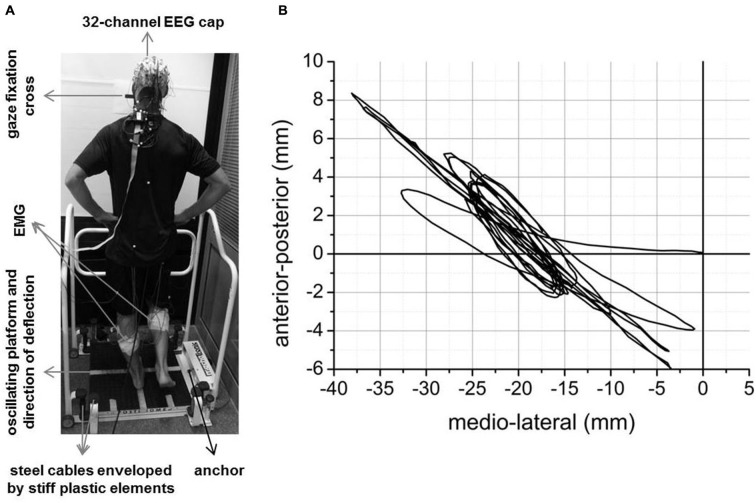
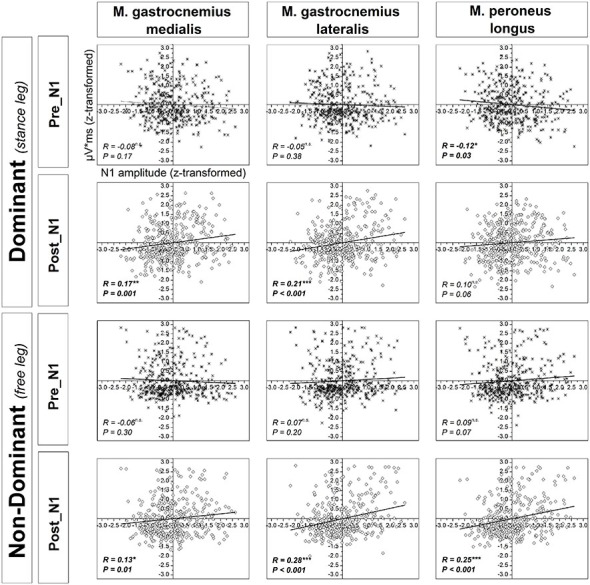
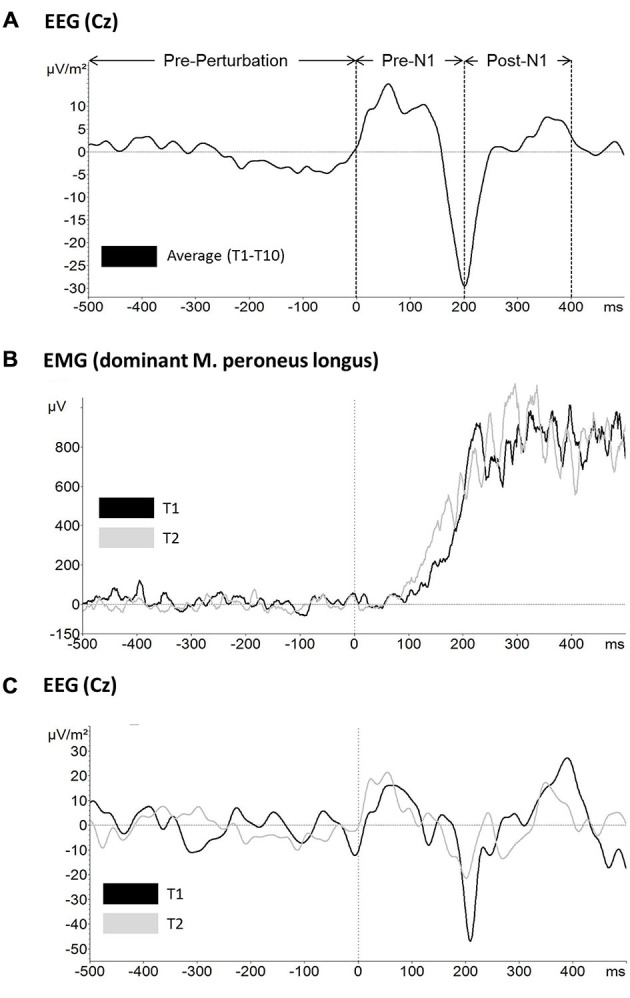
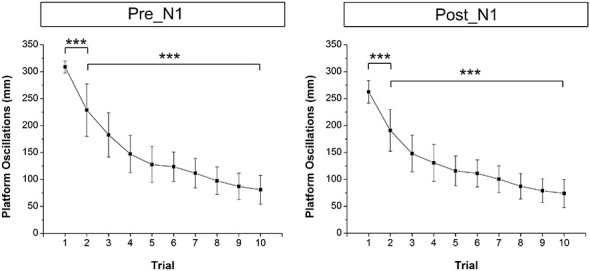
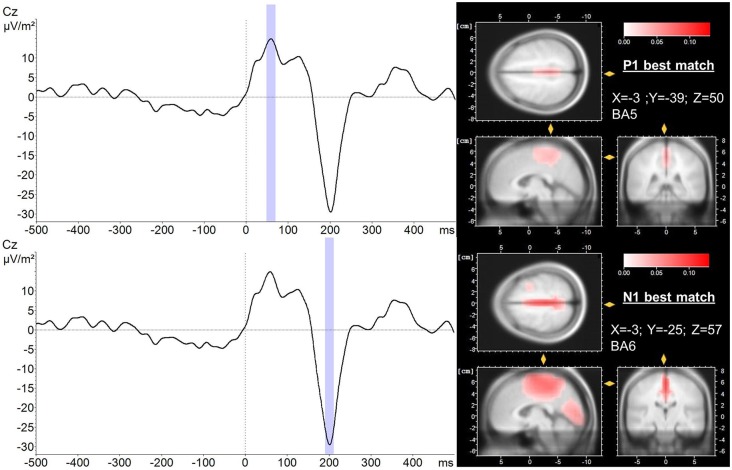
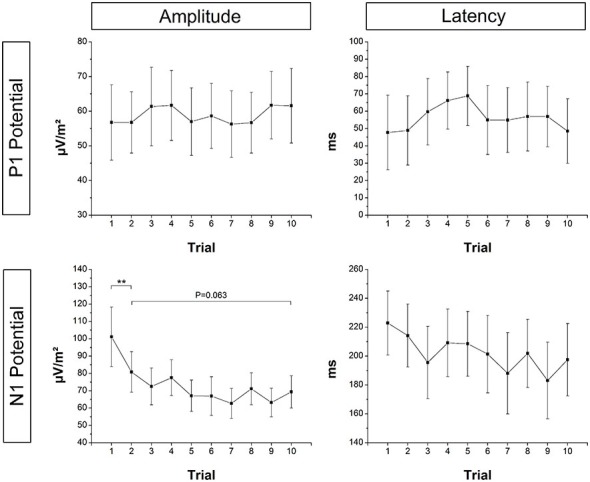
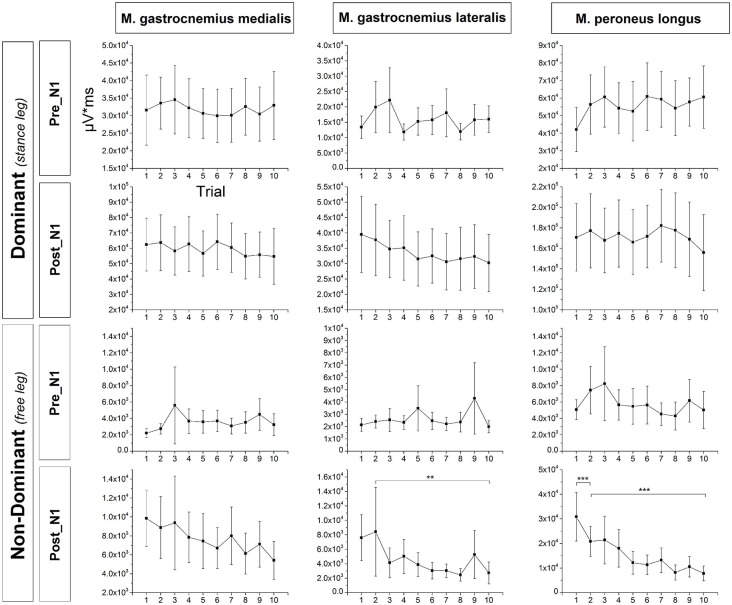
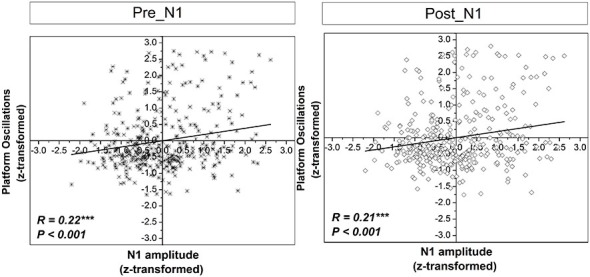
The compensation for a sudden balance perturbation, unpracticed and unpredictable in timing and magnitude is accompanied by pronounced postural instability that is suggested to be causal to falls. However, subsequent presentations of an identical perturbation are characterized by a marked decrease of the amplitude of postural reactions; a phenomenon called adaptation or habituation. This study aimed to identify cortical characteristics associated with adaptive behavior during repetitive balance perturbations based on single-trial analyses of the P1 and N1 perturbation-evoked potentials. Thirty-seven young men were exposed to ten transient balance perturbations while balancing on the dominant leg. Thirty two-channel electroencephalography (EEG), surface electromyography (EMG) of the ankle plantar flexor muscles and postural sway (i.e., Euclidean distance of the supporting platform) were recorded simultaneously. The P1 and N1 potentials were localized and the amplitude/latency was analyzed trial by trial. The best match sources for P1 and N1 potentials were located in the parietal (Brodmann area (BA) 5) and midline fronto-central cortex (BA 6), respectively. The amplitude and latency of the P1 potential remained unchanged over trials. In contrast, a significant adaptation of the N1 amplitude was observed. Similar adaptation effects were found with regard to postural sway and ankle plantarflexors EMG activity of the non-dominant (free) leg; i.e., an indicator for reduced muscular co-contraction and/or less temporary bipedal stance to regain stability. Significant but weak correlations were found between N1 amplitude and postural sway as well as EMG activity. These results highlight the important role of the midline fronto-central cortex for adaptive behavior associated with balance control.
对突然的平衡扰动进行的补偿,其时机和幅度未经练习且不可预测,会伴随着明显的姿势不稳定,这种不稳定被认为是跌倒的原因。然而,相同扰动的后续呈现表现为姿势反应幅度显著降低;这一现象称为适应或习惯化。本研究旨在基于对P1和N1扰动诱发电位的单次试验分析,确定与重复平衡扰动期间适应性行为相关的皮质特征。37名年轻男性在单腿站立平衡时接受了10次短暂的平衡扰动。同时记录32通道脑电图(EEG)、踝跖屈肌的表面肌电图(EMG)和姿势摆动(即支撑平台的欧几里得距离)。对P1和N1电位进行定位,并逐次分析其幅度/潜伏期。P1和N1电位的最佳匹配源分别位于顶叶(布罗德曼区(BA)5)和额中央中线皮质(BA 6)。P1电位的幅度和潜伏期在各次试验中保持不变。相比之下,观察到N1幅度有显著的适应性变化。在非优势(自由)腿的姿势摆动和踝跖屈肌EMG活动方面也发现了类似的适应效应;即肌肉共同收缩减少和/或暂时双足站立以恢复稳定性的指标。在N1幅度与姿势摆动以及EMG活动之间发现了显著但较弱的相关性。这些结果突出了额中央中线皮质在与平衡控制相关的适应性行为中的重要作用。