Rossi Giacomina, Tagliavini Fabrizio
Division of Neurology V and Neuropathology, Fondazione IRCCS Istituto Neurologico Carlo Besta Milano, Italy.
Front Aging Neurosci. 2015 Oct 14;7:192. doi: 10.3389/fnagi.2015.00192. eCollection 2015.
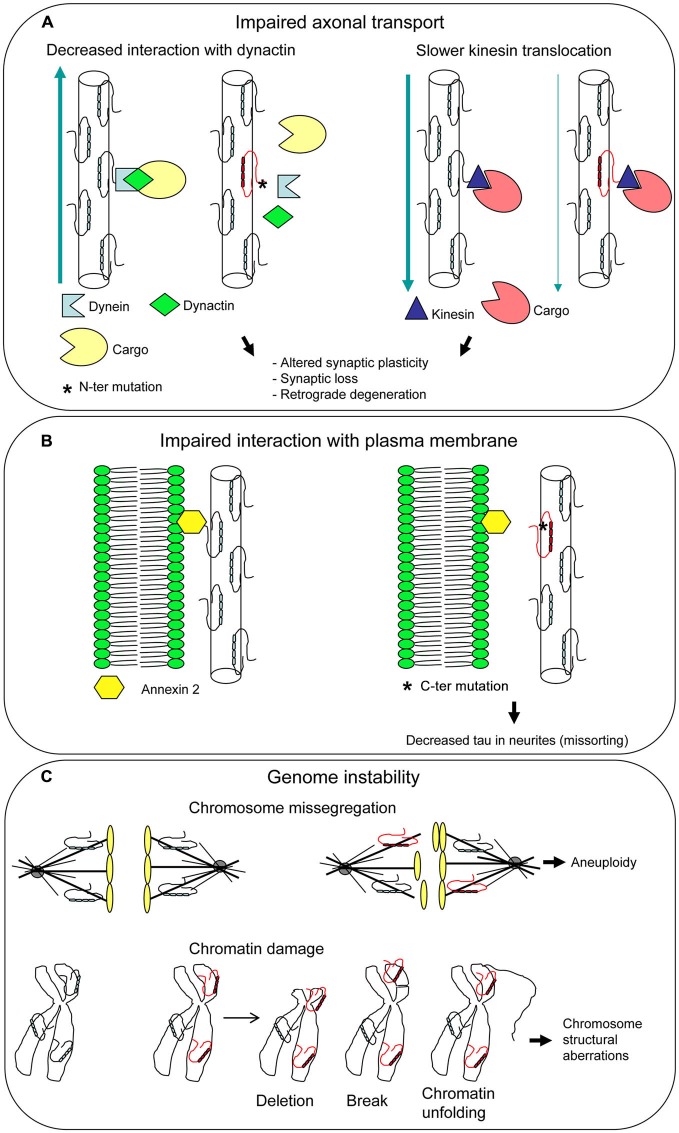
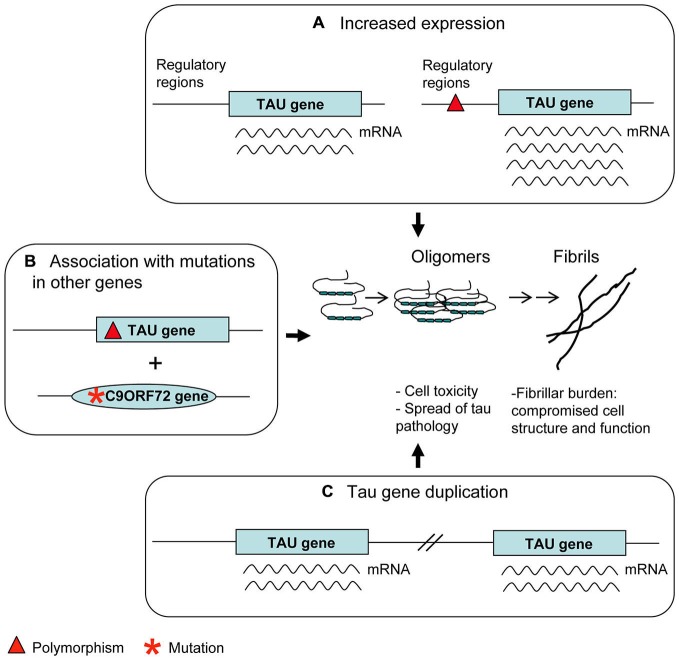
Frontotemporal lobar degeneration (FTLD) is a group of heterogeneous neurodegenerative diseases which includes tauopathies. In the central nervous system (CNS) tau is the major microtubule-associated protein (MAP) of neurons, promoting assembly and stabilization of microtubules (MTs) required for morphogenesis and axonal transport. Primary tauopathies are characterized by deposition of abnormal fibrils of tau in neuronal and glial cells, leading to neuronal death, brain atrophy and eventually dementia. In genetic tauopathies mutations of tau gene impair the ability of tau to bind to MTs, alter the normal ratio among tau isoforms and favor fibril formation. Recently, additional functions have been ascribed to tau and different pathogenetic mechanisms are then emerging. In fact, a role of tau in DNA protection and genome stability has been reported and chromosome aberrations have been found associated with tau mutations. Furthermore, newly structurally and functionally characterized mutations have suggested novel pathological features, such as a tendency to form oligomeric rather than fibrillar aggregates. Tau mutations affecting axonal transport and plasma membrane interaction have also been described. In this article, we will review the pathogenetic mechanisms underlying tau mutations, focusing in particular on the less common aspects, so far poorly investigated.
额颞叶变性(FTLD)是一组异质性神经退行性疾病,其中包括tau蛋白病。在中枢神经系统(CNS)中,tau是神经元主要的微管相关蛋白(MAP),可促进形态发生和轴突运输所需的微管(MT)的组装和稳定。原发性tau蛋白病的特征是tau的异常纤维在神经元和神经胶质细胞中沉积,导致神经元死亡、脑萎缩并最终发展为痴呆。在遗传性tau蛋白病中,tau基因突变会损害tau与MT结合的能力,改变tau异构体之间的正常比例,并促进纤维形成。最近,tau被赋予了更多功能,不同的致病机制也随之出现。事实上,已有报道称tau在DNA保护和基因组稳定性中发挥作用,并且发现染色体畸变与tau基因突变有关。此外,新发现的具有结构和功能特征的突变提示了新的病理特征,例如形成寡聚体而非纤维状聚集体的倾向。也有报道称tau基因突变会影响轴突运输和质膜相互作用。在本文中,我们将综述tau基因突变的致病机制,特别关注目前研究较少的罕见方面。