UK Dementia Research Institute at King's College London, London SE5 9RT, UK.
Department of Basic and Clinical Neuroscience, Institute of Psychiatry, Psychology and Neuroscience, King's College London, Maurice Wohl Clinical Neuroscience Institute, London SE5 9RT, UK.
Brain. 2024 Jul 5;147(7):2289-2307. doi: 10.1093/brain/awae074.
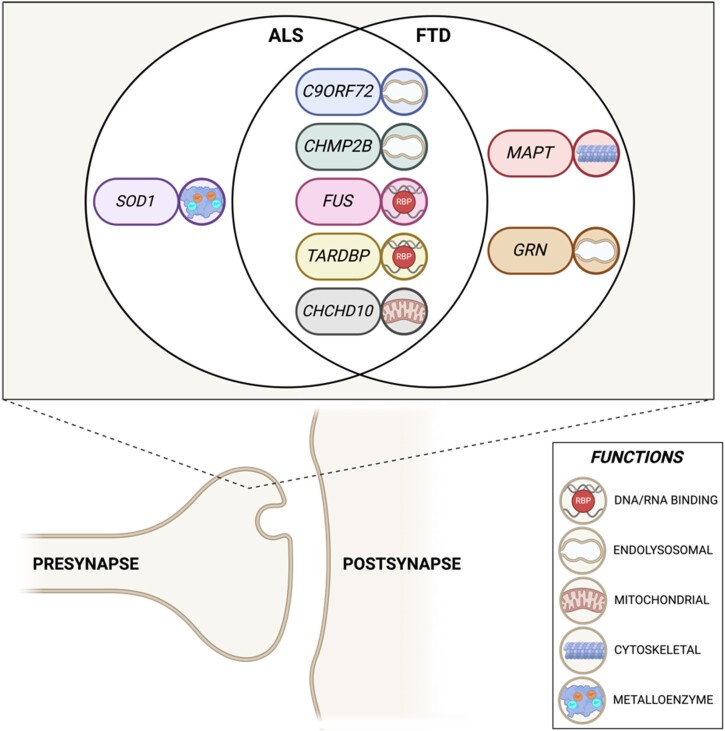
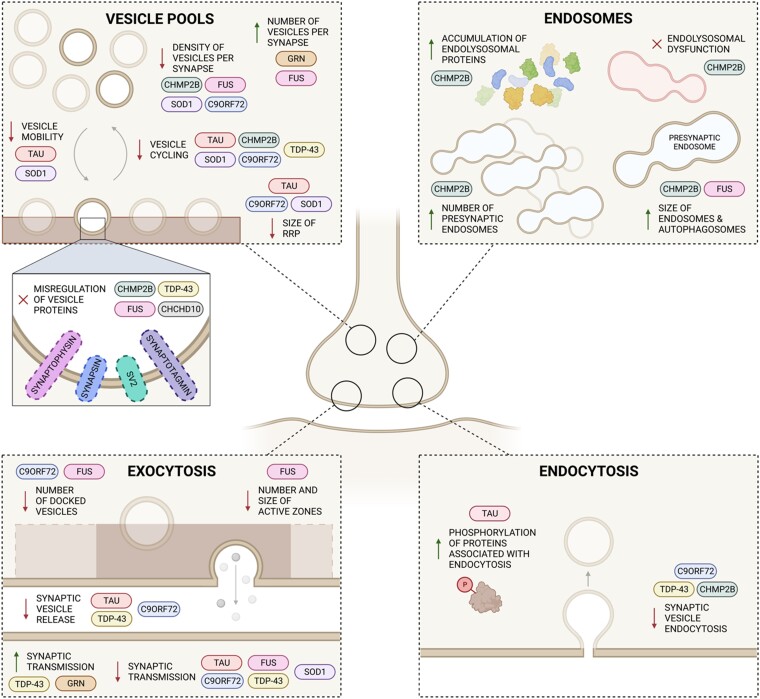
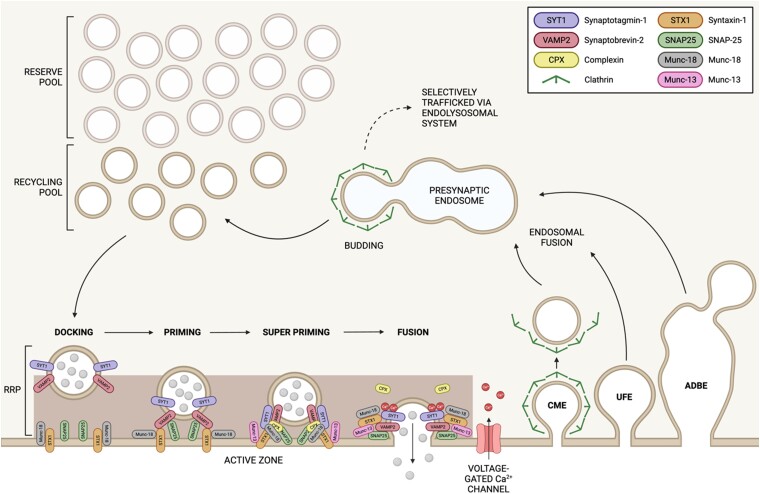
Frontotemporal dementia and amyotrophic lateral sclerosis are common forms of neurodegenerative disease that share overlapping genetics and pathologies. Crucially, no significantly disease-modifying treatments are available for either disease. Identifying the earliest changes that initiate neuronal dysfunction is important for designing effective intervention therapeutics. The genes mutated in genetic forms of frontotemporal dementia and amyotrophic lateral sclerosis have diverse cellular functions, and multiple disease mechanisms have been proposed for both. Identification of a convergent disease mechanism in frontotemporal dementia and amyotrophic lateral sclerosis would focus research for a targetable pathway, which could potentially effectively treat all forms of frontotemporal dementia and amyotrophic lateral sclerosis (both familial and sporadic). Synaptopathies are diseases resulting from physiological dysfunction of synapses, and define the earliest stages in multiple neuronal diseases, with synapse loss a key feature in dementia. At the presynapse, the process of synaptic vesicle recruitment, fusion and recycling is necessary for activity-dependent neurotransmitter release. The unique distal location of the presynaptic terminal means the tight spatio-temporal control of presynaptic homeostasis is dependent on efficient local protein translation and degradation. Recently, numerous publications have shown that mutations associated with frontotemporal dementia and amyotrophic lateral sclerosis present with synaptopathy characterized by presynaptic dysfunction. This review will describe the complex local signalling and membrane trafficking events that occur at the presynapse to facilitate neurotransmission and will summarize recent publications linking frontotemporal dementia/amyotrophic lateral sclerosis genetic mutations to presynaptic function. This evidence indicates that presynaptic synaptopathy is an early and convergent event in frontotemporal dementia and amyotrophic lateral sclerosis and illustrates the need for further research in this area, to identify potential therapeutic targets with the ability to impact this convergent pathomechanism.
额颞叶痴呆和肌萎缩性侧索硬化症是常见的神经退行性疾病,它们具有重叠的遗传学和病理学。至关重要的是,对于这两种疾病都没有有效的治疗方法。识别引发神经元功能障碍的最早变化对于设计有效的干预治疗方法非常重要。在遗传性额颞叶痴呆症和肌萎缩性侧索硬化症中突变的基因具有多种细胞功能,并且已经提出了多种疾病机制。在额颞叶痴呆症和肌萎缩性侧索硬化症中识别出一致的疾病机制将集中研究靶向途径,这可能有效地治疗所有形式的额颞叶痴呆症和肌萎缩性侧索硬化症(家族性和散发性)。突触病是由于突触的生理功能障碍引起的疾病,并定义了多种神经疾病的最早阶段,突触丧失是痴呆症的一个关键特征。在突触前,突触囊泡募集、融合和再循环的过程是活性依赖性神经递质释放所必需的。突触前末端独特的远端位置意味着突触前稳态的严格时空控制依赖于有效的局部蛋白质翻译和降解。最近,许多出版物表明,与额颞叶痴呆症和肌萎缩性侧索硬化症相关的突变表现出以突触前功能障碍为特征的突触病。本综述将描述发生在突触前以促进神经传递的复杂局部信号和膜运输事件,并总结最近将额颞叶痴呆症/肌萎缩性侧索硬化症基因突变与突触前功能联系起来的出版物。这些证据表明,突触前突触病是额颞叶痴呆症和肌萎缩性侧索硬化症的早期和一致事件,并说明了在该领域进一步研究的必要性,以确定具有影响这种趋同病理机制的能力的潜在治疗靶点。