Wang Jianyun, Mignon Arn, Snoeck Didier, Wiktor Virginie, Van Vliergerghe Sandra, Boon Nico, De Belie Nele
Magnel Laboratory for Concrete Research, Department of Structural Engineering, Ghent University Ghent, Belgium ; Laboratory of Microbial Ecology and Technology, Department of Biochemical and Microbial Technology, Ghent University Ghent, Belgium.
Magnel Laboratory for Concrete Research, Department of Structural Engineering, Ghent University Ghent, Belgium ; Polymer Chemistry and Biomaterials Group, Department of Organic Chemistry, Ghent University Ghent, Belgium.
Front Microbiol. 2015 Oct 13;6:1088. doi: 10.3389/fmicb.2015.01088. eCollection 2015.
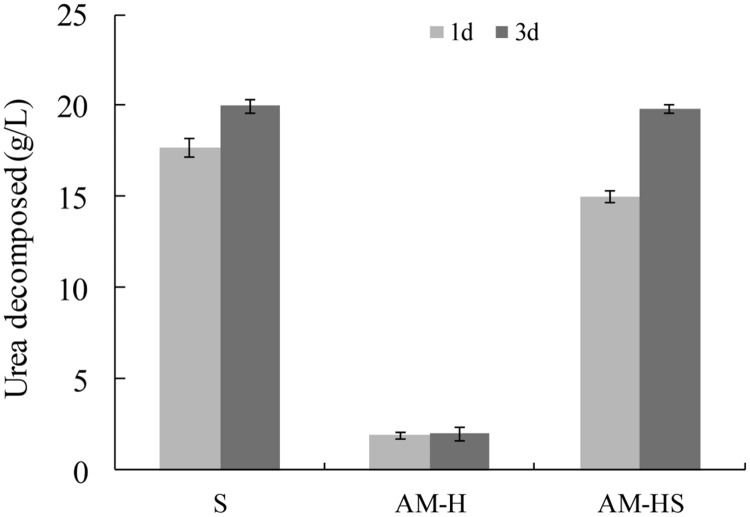
Self-healing concrete holds promising benefits to reduce the cost for concrete maintenance and repair as cracks are autonomously repaired without any human intervention. In this study, the application of a carbonate precipitating bacterium Bacillus sphaericus was explored. Regarding the harsh condition in concrete, B. sphaericus spores were first encapsulated into a modified-alginate based hydrogel (AM-H) which was proven to have a good compatibility with the bacteria and concrete regarding the influence on bacterial viability and concrete strength. Experimental results show that the spores were still viable after encapsulation. Encapsulated spores can precipitate a large amount of CaCO3 in/on the hydrogel matrix (around 70% by weight). Encapsulated B. sphaericus spores were added into mortar specimens and bacterial in situ activity was demonstrated by the oxygen consumption on the mimicked crack surface. While specimens with free spores added showed no oxygen consumption. This indicates the efficient protection of the hydrogel for spores in concrete. To conclude, the AM-H encapsulated carbonate precipitating bacteria have great potential to be used for crack self-healing in concrete applications.
自愈合混凝土有望降低混凝土维护和修复成本,因为裂缝可在无需任何人工干预的情况下自动修复。在本研究中,探索了碳酸盐沉淀细菌球形芽孢杆菌的应用。考虑到混凝土中的恶劣条件,首先将球形芽孢杆菌孢子封装到一种基于改性藻酸盐的水凝胶(AM-H)中,就对细菌活力和混凝土强度的影响而言,该水凝胶已被证明与细菌和混凝土具有良好的相容性。实验结果表明,孢子在封装后仍具有活力。封装后的孢子可在水凝胶基质中/上沉淀大量碳酸钙(约占重量的70%)。将封装的球形芽孢杆菌孢子添加到砂浆试件中,并通过模拟裂缝表面的耗氧量证明了细菌的原位活性。而添加游离孢子的试件则没有耗氧量。这表明水凝胶对混凝土中的孢子具有有效的保护作用。总之,AM-H封装的碳酸盐沉淀细菌在混凝土应用中用于裂缝自愈合具有巨大潜力。