Gkretsi Vasiliki, Stylianou Andreas, Papageorgis Panagiotis, Polydorou Christiana, Stylianopoulos Triantafyllos
Cancer Biophysics Laboratory, Department of Mechanical and Manufacturing Engineering, University of Cyprus , Nicosia , Cyprus.
Cancer Biophysics Laboratory, Department of Mechanical and Manufacturing Engineering, University of Cyprus , Nicosia , Cyprus ; Program in Biological Sciences, Department of Health Sciences, European University Cyprus , Nicosia , Cyprus.
Front Oncol. 2015 Oct 14;5:214. doi: 10.3389/fonc.2015.00214. eCollection 2015.
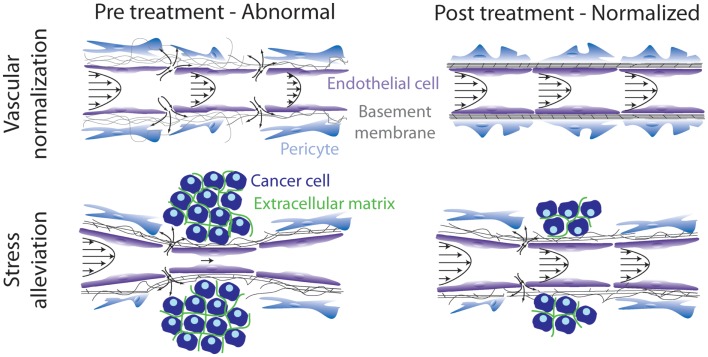
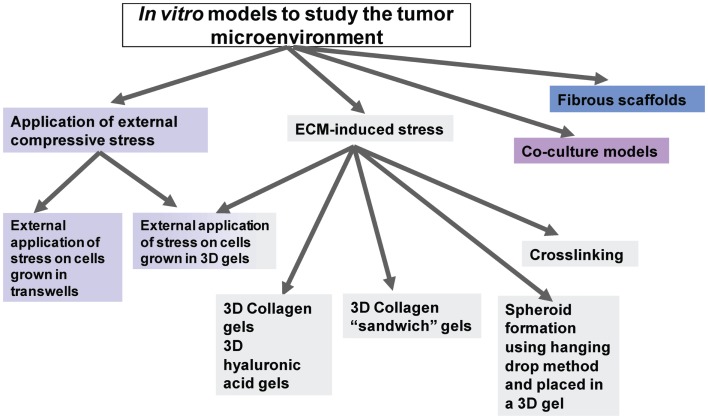
Solid tumor pathophysiology is characterized by an abnormal microenvironment that guides tumor progression and poses barriers to the efficacy of cancer therapies. Most common among tumor types are abnormalities in the structure of the tumor vasculature and stroma. Remodeling the tumor microenvironment with the aim to normalize any aberrant properties has the potential to improve therapy. In this review, we discuss structural abnormalities of the tumor microenvironment and summarize the therapeutic strategies that have been developed to normalize tumors as well as their potential to enhance therapy. Finally, we present different in vitro models that have been developed to analyze and better understand the effects of the tumor microenvironment on cancer cell behavior.
实体瘤的病理生理学特征是存在异常微环境,该微环境引导肿瘤进展,并对癌症治疗的疗效构成障碍。肿瘤类型中最常见的是肿瘤血管系统和基质结构异常。旨在使任何异常特性正常化的肿瘤微环境重塑有可能改善治疗效果。在本综述中,我们讨论肿瘤微环境的结构异常,并总结为使肿瘤正常化而开发的治疗策略及其增强治疗效果的潜力。最后,我们介绍了已开发的不同体外模型,以分析和更好地理解肿瘤微环境对癌细胞行为的影响。