Okada Mayumi, Ishimura Norihisa, Shimura Shino, Mikami Hironobu, Okimoto Eiko, Aimi Masahito, Uno Goichi, Oshima Naoki, Yuki Takafumi, Ishihara Shunji, Kinoshita Yoshikazu
Department of Gastroenterology and Hepatology, Shimane University School of Medicine, Izumo, Japan.
Endosc Int Open. 2015 Oct;3(5):E418-24. doi: 10.1055/s-0034-1392367. Epub 2015 Jun 24.
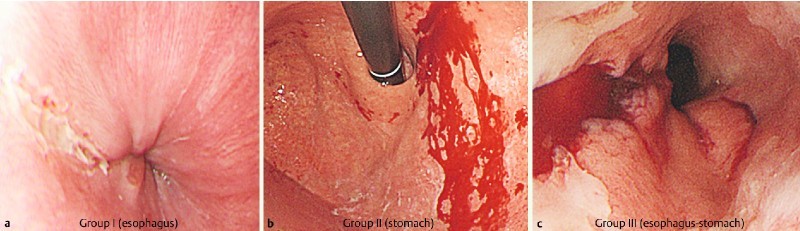
Mallory-Weiss tears (MWTs) are not only a common cause of acute nonvariceal gastrointestinal bleeding but also an iatrogenic adverse event related to endoscopic procedures. However, changes in the clinical characteristics and endoscopic features of MWTs over the past decade have not been reported. The aim of this study was to investigate recent trends in the etiology and endoscopic features of MWTs.
We retrospectively reviewed the medical records of patients with a diagnosis of MWT at our university hospital between August 2003 and September 2013. The information regarding etiology, clinical parameters, endoscopic findings, therapeutic interventions, and outcome was reviewed.
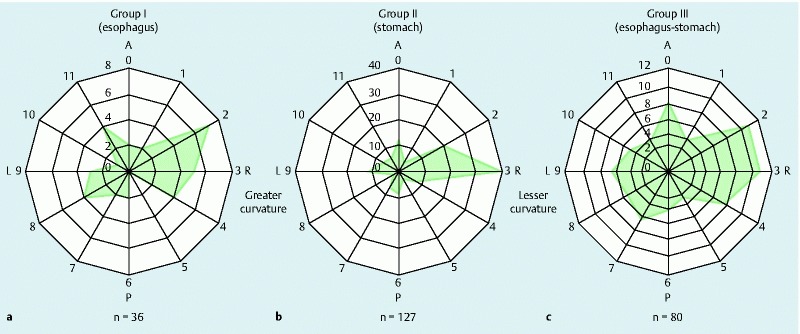
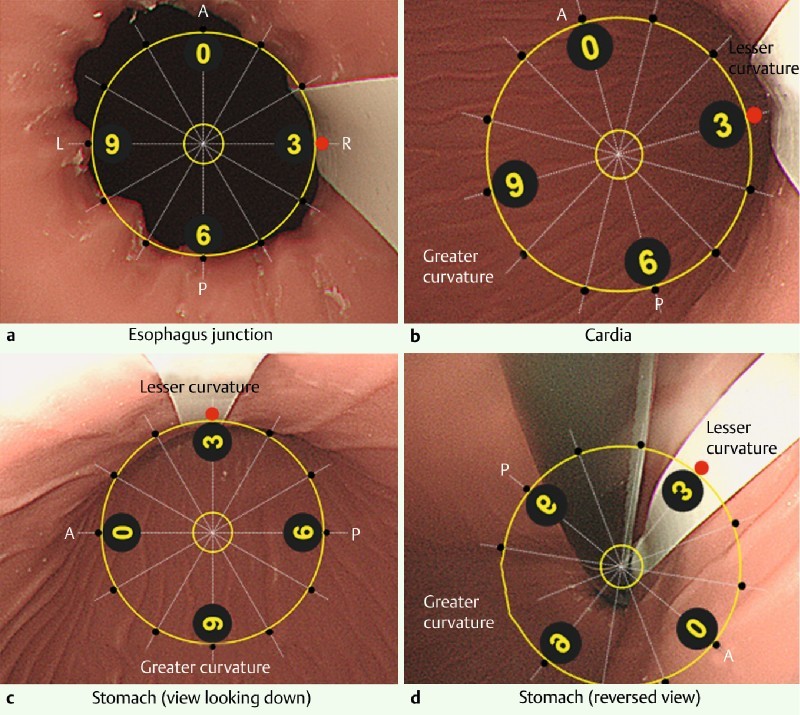
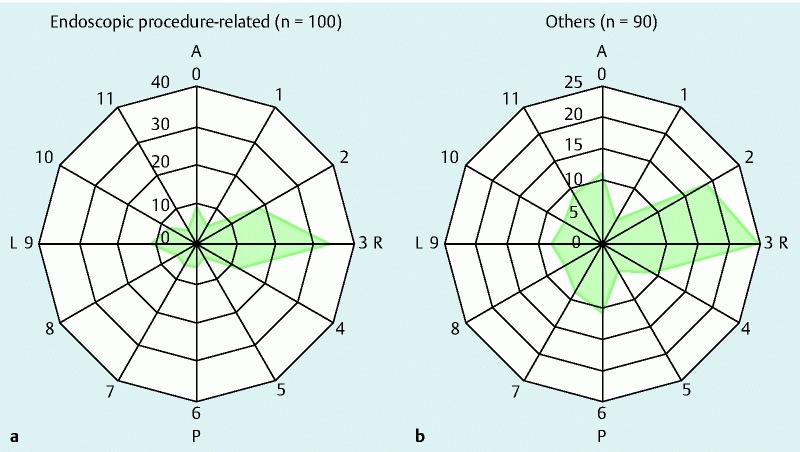
A total of 190 patients with MWTs were evaluated. More than half (n = 100) of the cases occurred during endoscopic procedures; cases related to alcohol consumption were less frequent (n = 13). MWTs were most frequently located in the lesser curvature of the stomach and right lateral wall (2 - to 4-o'clock position) of the esophagus, irrespective of the cause. The condition of more than 90 % of the patients (n = 179) was improved by conservative or endoscopic treatment, whereas 11 patients (5.8 %) required blood transfusion. Risk factors for blood transfusion were a longer laceration (odds ratio [OR] 2.3) and a location extending from the esophagus to the stomach (OR 5.3).
MWTs were frequently found on the right lateral wall (2 - to 4-o'clock position) of the esophagus aligned with the lesser curvature of the stomach, irrespective of etiology. Longer lacerations extending from the esophagus to the gastric cardia were associated with an elevated risk for bleeding and requirement for blood transfusion.
马洛里-魏斯撕裂(MWTs)不仅是急性非静脉曲张性胃肠道出血的常见原因,也是与内镜检查相关的医源性不良事件。然而,过去十年中MWTs的临床特征和内镜特征变化尚未见报道。本研究旨在调查MWTs病因及内镜特征的近期趋势。
我们回顾性分析了2003年8月至2013年9月在我校医院诊断为MWTs患者的病历。对病因、临床参数、内镜检查结果、治疗干预措施及预后等信息进行了分析。
共评估了190例MWTs患者。超过半数(n = 100)的病例发生在内镜检查过程中;与饮酒相关的病例较少(n = 13)。无论病因如何,MWTs最常位于胃小弯和食管右后壁(2至4点钟位置)。超过90%(n = 179)的患者病情通过保守或内镜治疗得到改善,而11例患者(5.8%)需要输血。输血的危险因素为撕裂伤较长(比值比[OR] 2.3)和损伤部位从食管延伸至胃(OR 5.3)。
无论病因如何,MWTs常位于食管右后壁(2至4点钟位置),与胃小弯相对。从食管延伸至贲门的较长撕裂伤与出血风险增加及输血需求相关。