Kreitler Jason, Schloss Carrie A, Soong Oliver, Hannah Lee, Davis Frank W
Western Geographic Science Center, U.S. Geological Survey, Boise, ID, United States of America.
Contractor to the Western Geographic Science Center, U.S. Geological Survey, Boise, ID, United States of America.
PLoS One. 2015 Nov 3;10(11):e0140226. doi: 10.1371/journal.pone.0140226. eCollection 2015.
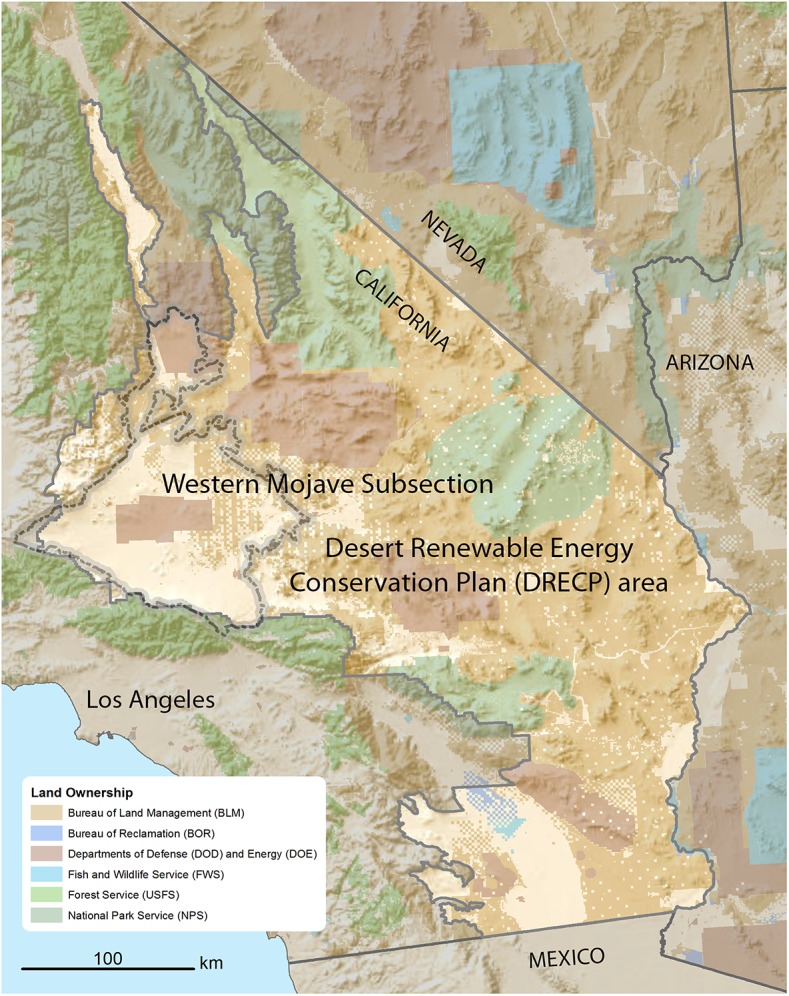
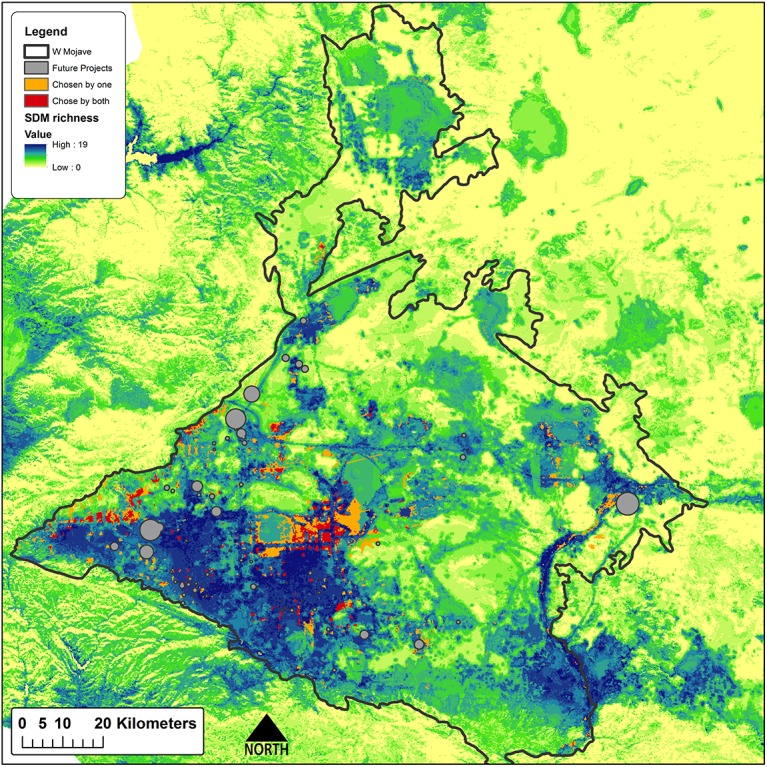
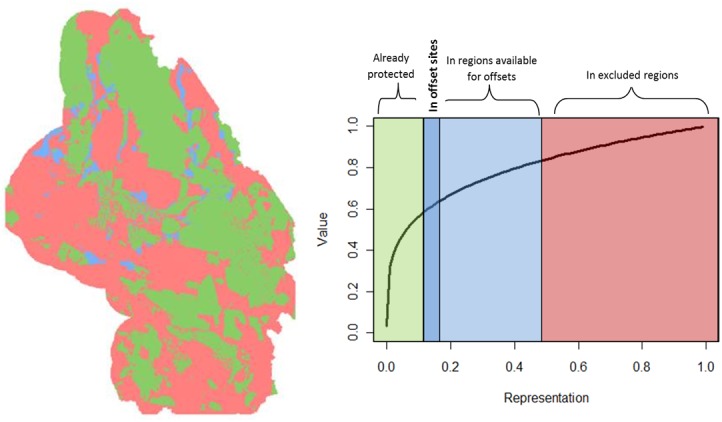
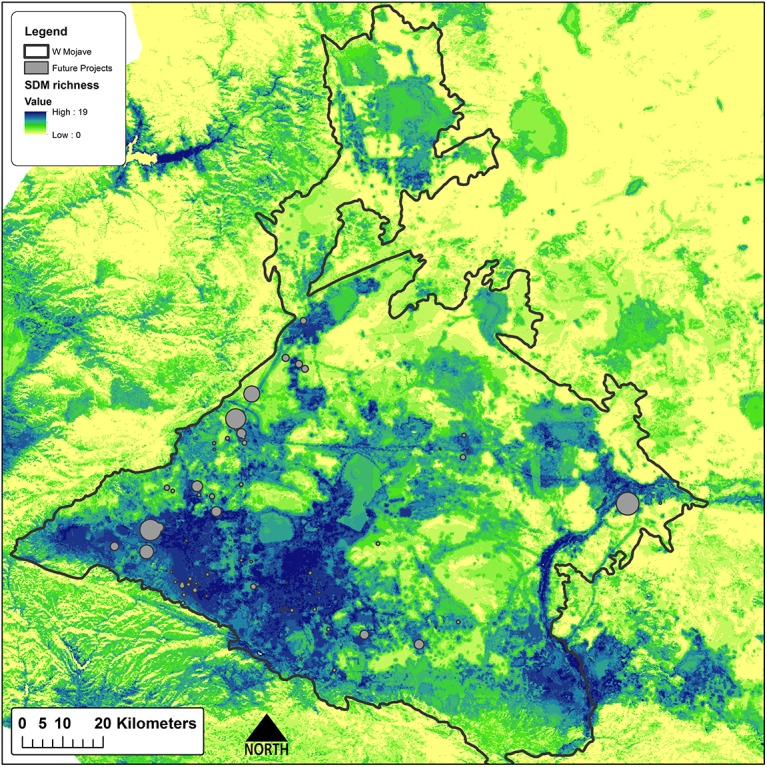
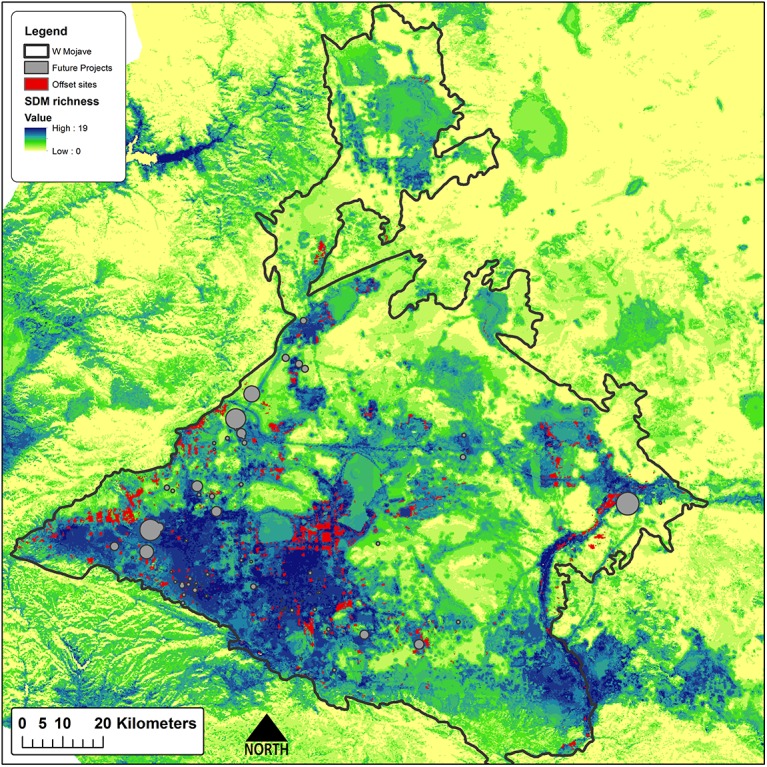
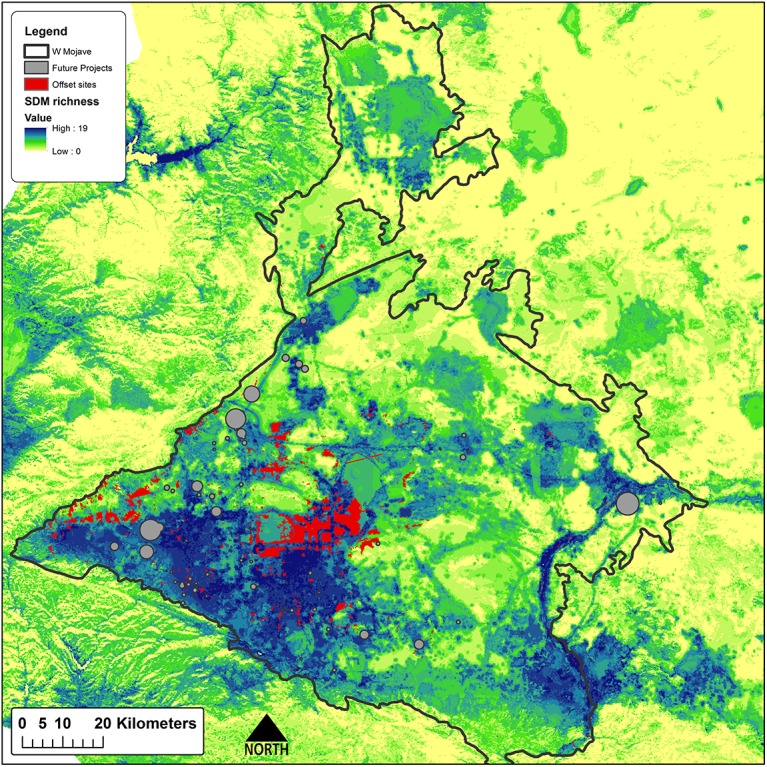
Balancing society's competing needs of development and conservation requires careful consideration of tradeoffs. Renewable energy development and biodiversity conservation are often considered beneficial environmental goals. The direct footprint and disturbance of renewable energy, however, can displace species' habitat and negatively impact populations and natural communities if sited without ecological consideration. Offsets have emerged as a potentially useful tool to mitigate residual impacts after trying to avoid, minimize, or restore affected sites. Yet the problem of efficiently designing a set of offset sites becomes increasingly complex where many species or many sites are involved. Spatial conservation prioritization tools are designed to handle this problem, but have seen little application to offset siting and analysis. To address this need we designed an offset siting support tool for the Desert Renewable Energy Conservation Plan (DRECP) of California, and present a case study of hypothetical impacts from solar development in the Western Mojave subsection. We compare two offset scenarios designed to mitigate a hypothetical 15,331 ha derived from proposed utility-scale solar energy development (USSED) projects. The first scenario prioritizes offsets based precisely on impacted features, while the second scenario offsets impacts to maximize biodiversity conservation gains in the region. The two methods only agree on 28% of their prioritized sites and differ in meeting species-specific offset goals. Differences between the two scenarios highlight the importance of clearly specifying choices and priorities for offset siting and mitigation in general. Similarly, the effects of background climate and land use change may lessen the durability or effectiveness of offsets if not considered. Our offset siting support tool was designed specifically for the DRECP area, but with minor code modification could work well in other offset analyses, and could provide continuing support for a potentially innovative mitigation solution to environmental impacts.
平衡社会在发展与保护方面相互竞争的需求需要仔细权衡取舍。可再生能源开发和生物多样性保护通常被视为有益的环境目标。然而,如果在选址时不考虑生态因素,可再生能源的直接占地和干扰可能会取代物种栖息地,并对种群和自然群落产生负面影响。在试图避免、最小化或恢复受影响场地后,补偿措施已成为减轻残留影响的一种潜在有用工具。然而,在涉及多个物种或多个场地的情况下,有效设计一组补偿场地的问题变得越来越复杂。空间保护优先级工具旨在解决这一问题,但在补偿选址和分析方面应用较少。为满足这一需求,我们为加利福尼亚州的沙漠可再生能源保护计划(DRECP)设计了一种补偿选址支持工具,并给出了一个关于莫哈韦西部子区域太阳能开发假设影响的案例研究。我们比较了两种补偿方案,旨在减轻拟议的公用事业规模太阳能能源开发(USSED)项目产生的假设15331公顷影响。第一种方案完全根据受影响特征对补偿进行优先级排序,而第二种方案则对影响进行补偿,以最大限度地提高该地区的生物多样性保护收益。这两种方法在其优先排序的场地中只有28%是一致的,并且在实现特定物种的补偿目标方面存在差异。两种方案之间的差异凸显了总体上明确规定补偿选址和缓解的选择及优先级的重要性。同样,如果不考虑背景气候和土地利用变化的影响,可能会降低补偿措施的持久性或有效性。我们的补偿选址支持工具是专门为DRECP区域设计的,但只需进行少量代码修改就能在其他补偿分析中很好地发挥作用,并可为一种潜在的创新环境影响缓解解决方案提供持续支持。