Klamath Center for Conservation Research, Orleans, CA, USA.
Wildlife Conservation Society Canada, Toronto, ON, Canada.
Glob Chang Biol. 2021 Aug;27(15):3395-3414. doi: 10.1111/gcb.15645. Epub 2021 May 10.
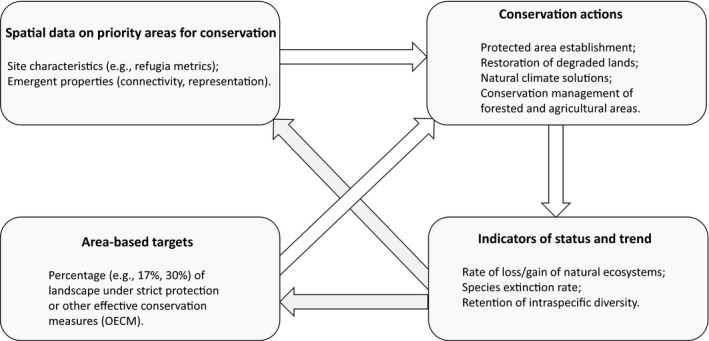
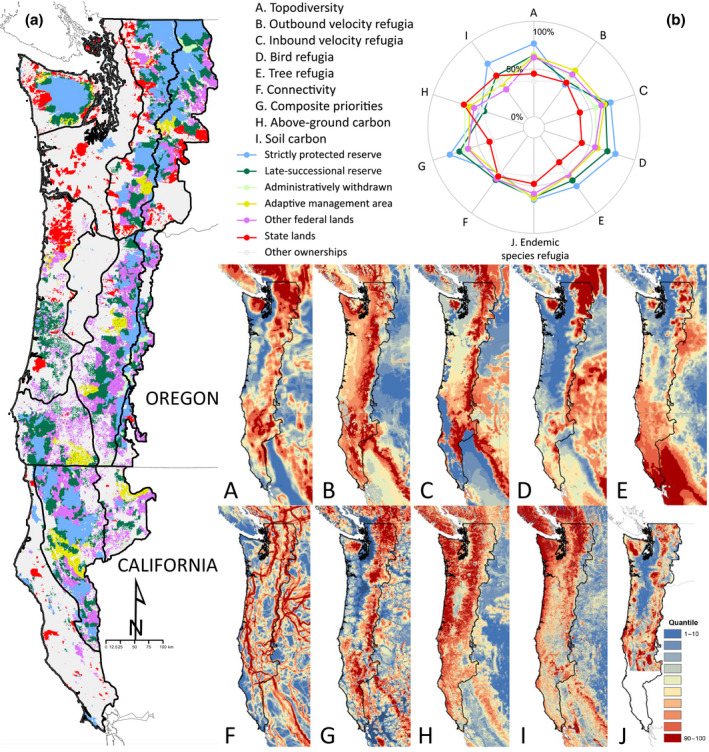
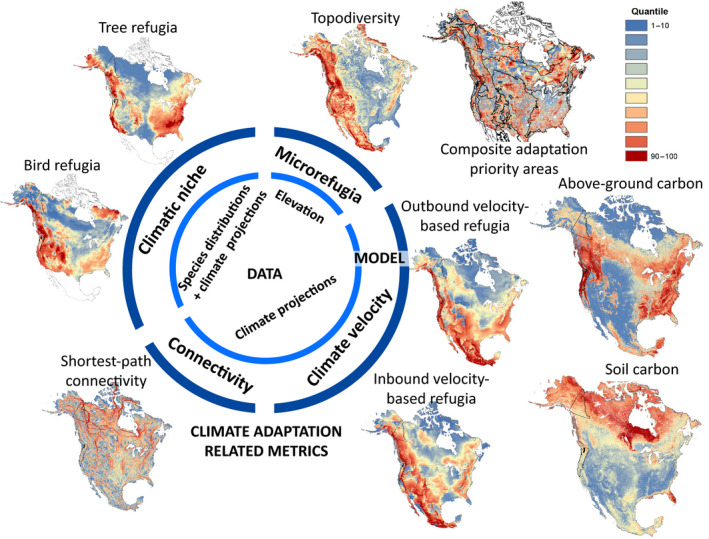
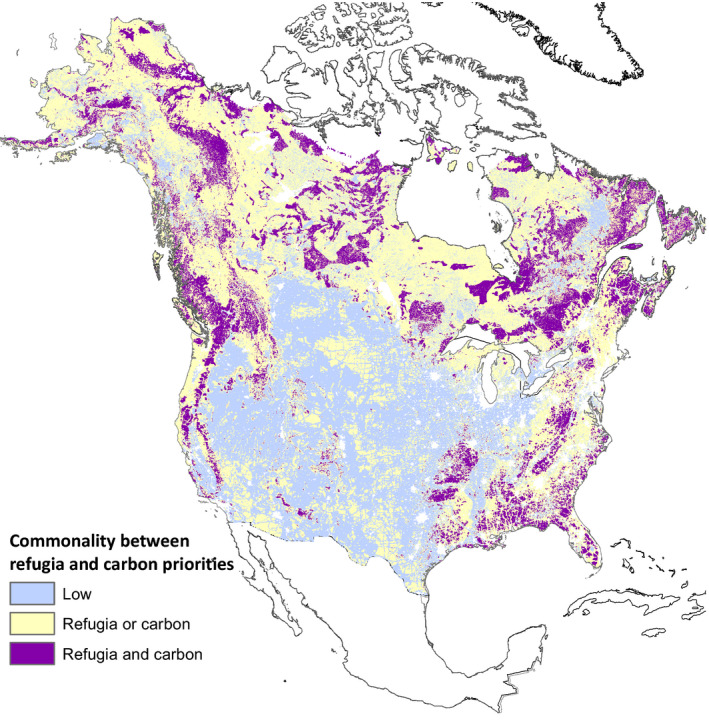
Global commitments to protected area expansion should prioritize opportunities to protect climate refugia and ecosystems which store high levels of irrecoverable carbon, as key components of an effective response to biodiversity loss and climate change. The United States and Canada are responsible for one-sixth of global greenhouse gas emissions but hold extensive natural ecosystems that store globally significant above- and below-ground carbon. Canada has initiated a process of protected area network expansion in concert with efforts at reconciliation with Indigenous Peoples, and acknowledged nature-based solutions as a key aspect of climate change mitigation. The US, although not a party to global biodiversity conventions, has recently committed to protecting 30% of its extent by 2030 and achieving the UNFCCC Paris Agreement's mitigation targets. The opportunities afforded by these dual biodiversity conservation and climate commitments require coordinated national and regional policies to ensure that new protected areas maximize biodiversity-focused adaptation and nature-based mitigation opportunities. We address how global commitments can best inform national policy initiatives which build on existing agency mandates for regional planning and species conservation. Previous analyses of global conservation priorities under climate change have been tenuously linked to policy contexts of individual nations and have lacked information on refugia due to limitations of globally available datasets. Comparison and synthesis of predictions from a range of recently developed refugia metrics allow such data to inform planning despite substantial uncertainty arising from contrasting model assumptions and inputs. A case study for endangered species planning for old-forest-associated species in the US Pacific Northwest demonstrates how regional planning can be nested hierarchically within national biodiversity-focused adaptation and nature-based mitigation strategies which integrate refugia, connectivity, and ecosystem carbon metrics to holistically evaluate the role of different land designations and where carbon mitigation and protection of biodiversity's resilience to climate change can be aligned.
全球在扩大保护区方面的承诺应优先考虑保护气候避难所和储存大量不可恢复碳的生态系统的机会,因为这是应对生物多样性丧失和气候变化的有效措施的关键组成部分。美国和加拿大的温室气体排放量占全球的六分之一,但拥有广阔的自然生态系统,储存着具有全球重要意义的地上和地下碳。加拿大已经启动了一个保护地网络扩张的进程,同时努力与原住民和解,并承认基于自然的解决方案是缓解气候变化的一个关键方面。美国虽然不是全球生物多样性公约的缔约方,但最近承诺到 2030 年保护其 30%的面积,并实现《联合国气候变化框架公约》巴黎协定的减排目标。这两个生物多样性保护和气候承诺提供的机会需要协调国家和区域政策,以确保新的保护区最大限度地实现以生物多样性为重点的适应和基于自然的缓解机会。我们探讨了全球承诺如何最好地为国家政策倡议提供信息,这些倡议是在现有的机构区域规划和物种保护任务的基础上进行的。以前对气候变化下全球保护重点的分析与个别国家的政策背景联系不够紧密,并且由于全球可用数据集的限制,缺乏有关避难所的信息。对最近开发的一系列避难所指标的预测进行比较和综合,使这些数据能够在存在模型假设和输入差异的情况下为规划提供信息。一个关于美国太平洋西北地区与老林相关物种濒危规划的案例研究表明,区域规划如何在国家生物多样性为重点的适应和基于自然的缓解战略中嵌套,这些战略整合了避难所、连通性和生态系统碳指标,以全面评估不同土地指定的作用,以及在哪里可以协调碳减排和保护生物多样性对气候变化的弹性。