Faria-Schützer Débora Bicudo, Surita Fernanda Garanhani de Castro, Alves Vera Lucia Pereira, Vieira Carla Maria, Turato Egberto Ribeiro
Department of Gynecology and Obstetrics, School of Medical Sciences, State University of Campinas, Campinas, São Paulo, Brazil; Clinical Qualitative Research Laboratory, School of Medical Sciences, State University of Campinas, Campinas, São Paulo, Brazil.
Clinical Qualitative Research Laboratory, School of Medical Sciences, State University of Campinas, Campinas, São Paulo, Brazil; Department of Medical Psychology and Psychiatry, School of Medical Science, State University of Campinas, Campinas, São Paulo, Brazil.
PLoS One. 2015 Nov 3;10(11):e0141879. doi: 10.1371/journal.pone.0141879. eCollection 2015.
As a result of the growth of the obese population, the number of obese women of fertile age has increased in the last few years. Obesity in pregnancy is related to greater levels of anxiety, depression and physical harm. However, pregnancy is an opportune moment for the intervention of health care professionals to address obesity. The objective of this study was to describe how obese pregnant women emotionally experience success in adequate weight control.
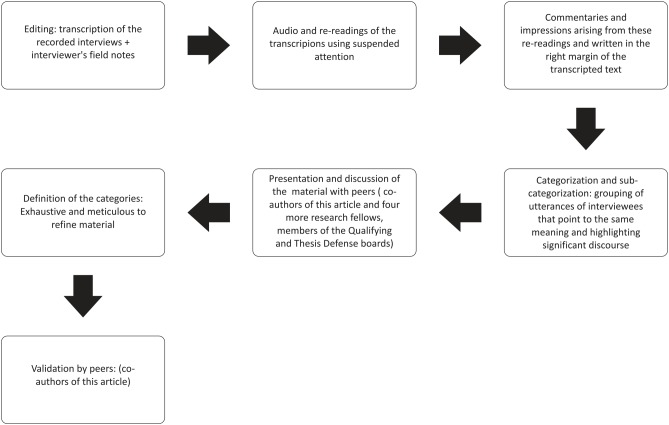
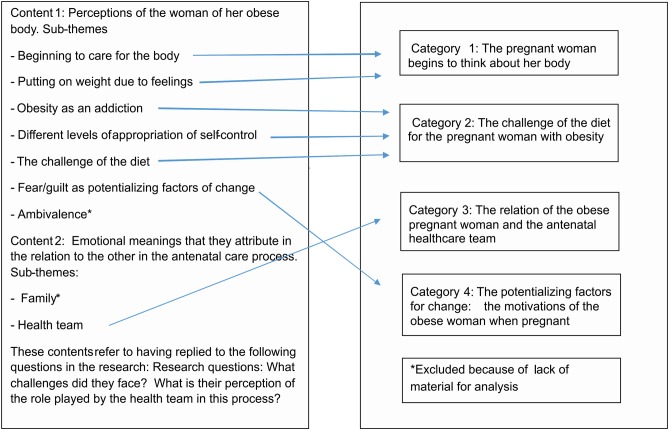
Using a qualitative design that seeks to understand content in the field of health, the sample of subjects was deliberated, with thirteen obese pregnant women selected to participate in an individual interview. Data was analysed by inductive content analysis and includes complete transcription of the interviews, re-readings using suspended attention, categorization in discussion topics and the qualitative and inductive analysis of the content. The analysis revealed four categories, three of which show the trajectory of body care that obese women experience during pregnancy: 1) The obese pregnant woman starts to think about her body;2) The challenge of the diet for the obese pregnant woman; 3) The relation of the obese pregnant woman with the team of antenatal professionals. The fourth category reveals the origin of the motivation for the change: 4) The potentializing factors for change: the motivation of the obese woman while pregnant.
During pregnancy, obese women are more in touch with themselves and with their emotional conflicts. Through the transformations of their bodies, women can start a more refined self-care process and experience of the body-mind unit. The fear for their own and their baby's life, due to the risks posed by obesity, appears to be a great potentializing factor for change. The relationship with the professionals of the health care team plays an important role in the motivational support of the obese pregnant woman.
由于肥胖人群的增长,近年来育龄肥胖女性的数量有所增加。孕期肥胖与更高水平的焦虑、抑郁和身体伤害有关。然而,孕期是医护人员干预肥胖问题的有利时机。本研究的目的是描述肥胖孕妇在体重得到适当控制时的情感体验。
采用旨在理解健康领域内容的定性设计,精心选取研究对象样本,挑选了13名肥胖孕妇参与个人访谈。通过归纳性内容分析对数据进行分析,包括访谈的完整转录、运用悬置注意力进行重读、按讨论主题进行分类以及对内容进行定性和归纳分析。分析揭示了四个类别,其中三个类别展示了肥胖女性在孕期所经历的身体护理轨迹:1)肥胖孕妇开始思考自己的身体;2)肥胖孕妇饮食方面的挑战;3)肥胖孕妇与产前专业团队的关系。第四种类别揭示了改变动机的来源:4)改变的潜在因素:肥胖女性孕期的动机。
在孕期,肥胖女性更能接触到自身及自身的情感冲突。通过身体的变化,女性可以开启更精细的自我护理过程以及身心统一的体验。由于肥胖带来的风险,对自身和胎儿生命的担忧似乎是一个巨大的改变潜在因素。与医护团队专业人员的关系在肥胖孕妇的动机支持方面发挥着重要作用。