Shell Scarlet S, Wang Jing, Lapierre Pascal, Mir Mushtaq, Chase Michael R, Pyle Margaret M, Gawande Richa, Ahmad Rushdy, Sarracino David A, Ioerger Thomas R, Fortune Sarah M, Derbyshire Keith M, Wade Joseph T, Gray Todd A
Department of Immunology and Infectious Diseases, Harvard School of Public Health, Boston, Massachusetts, United States of America.
Wadsworth Center, New York State Department of Health, Albany, New York, United States of America.
PLoS Genet. 2015 Nov 4;11(11):e1005641. doi: 10.1371/journal.pgen.1005641. eCollection 2015 Nov.
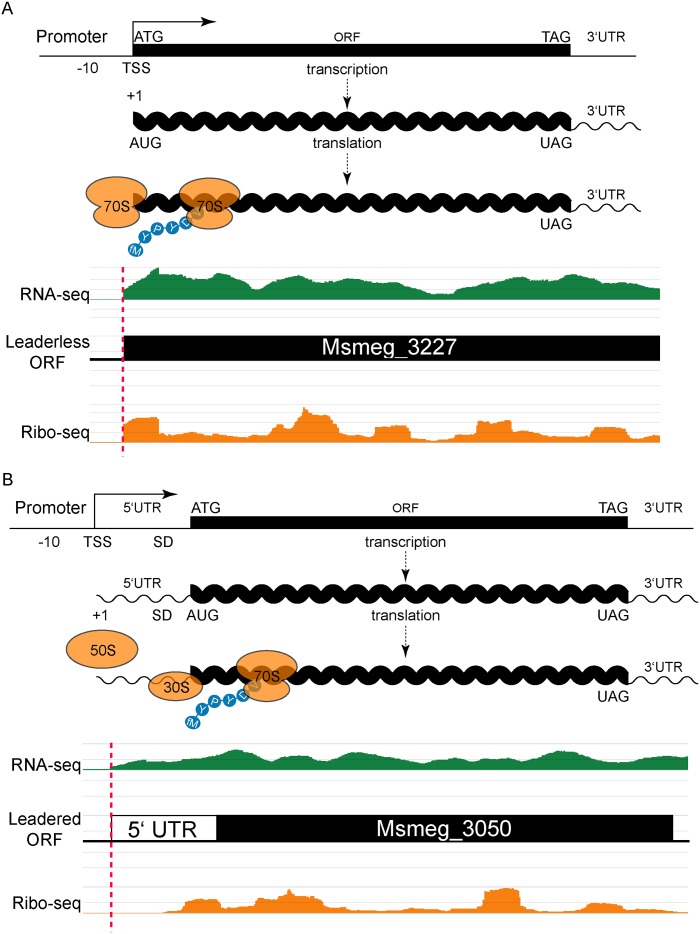
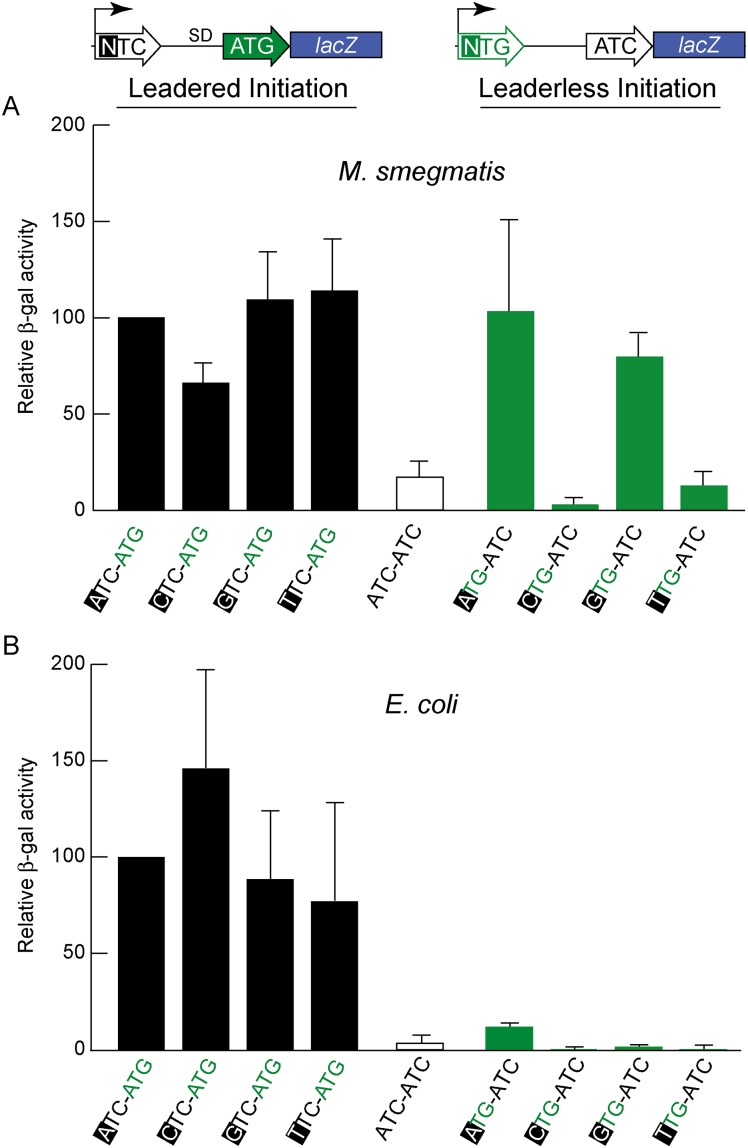
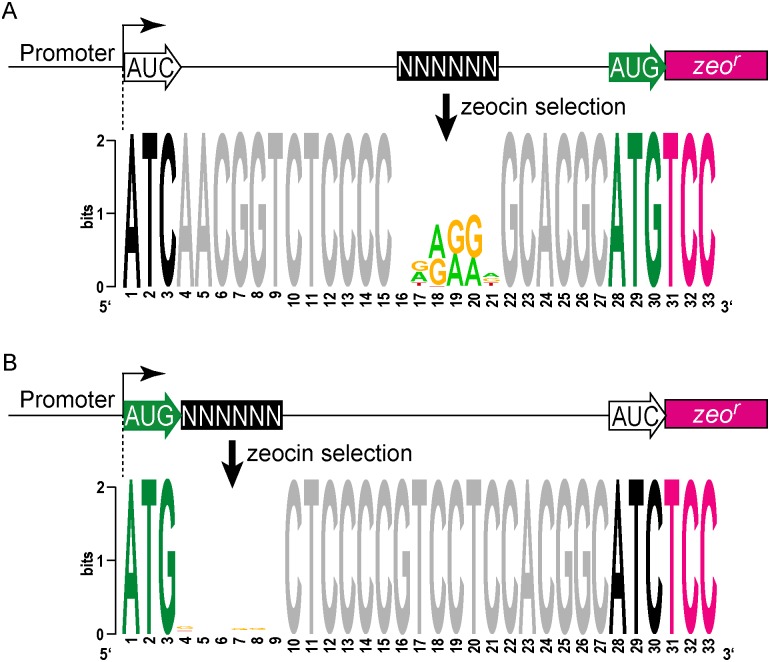
RNA-seq technologies have provided significant insight into the transcription networks of mycobacteria. However, such studies provide no definitive information on the translational landscape. Here, we use a combination of high-throughput transcriptome and proteome-profiling approaches to more rigorously understand protein expression in two mycobacterial species. RNA-seq and ribosome profiling in Mycobacterium smegmatis, and transcription start site (TSS) mapping and N-terminal peptide mass spectrometry in Mycobacterium tuberculosis, provide complementary, empirical datasets to examine the congruence of transcription and translation in the Mycobacterium genus. We find that nearly one-quarter of mycobacterial transcripts are leaderless, lacking a 5' untranslated region (UTR) and Shine-Dalgarno ribosome-binding site. Our data indicate that leaderless translation is a major feature of mycobacterial genomes and is comparably robust to leadered initiation. Using translational reporters to systematically probe the cis-sequence requirements of leaderless translation initiation in mycobacteria, we find that an ATG or GTG at the mRNA 5' end is both necessary and sufficient. This criterion, together with our ribosome occupancy data, suggests that mycobacteria encode hundreds of small, unannotated proteins at the 5' ends of transcripts. The conservation of small proteins in both mycobacterial species tested suggests that some play important roles in mycobacterial physiology. Our translational-reporter system further indicates that mycobacterial leadered translation initiation requires a Shine Dalgarno site in the 5' UTR and that ATG, GTG, TTG, and ATT codons can robustly initiate translation. Our combined approaches provide the first comprehensive view of mycobacterial gene structures and their non-canonical mechanisms of protein expression.
RNA测序技术为深入了解分枝杆菌的转录网络提供了重要线索。然而,此类研究并未提供关于翻译图谱的确切信息。在此,我们结合高通量转录组和蛋白质组分析方法,更严谨地了解两种分枝杆菌中的蛋白质表达情况。耻垢分枝杆菌的RNA测序和核糖体分析,以及结核分枝杆菌的转录起始位点(TSS)定位和N端肽质谱分析,提供了互补的实证数据集,以检验分枝杆菌属中转录和翻译的一致性。我们发现,近四分之一的分枝杆菌转录本无先导序列,缺乏5'非翻译区(UTR)和Shine-Dalgarno核糖体结合位点。我们的数据表明,无先导序列翻译是分枝杆菌基因组的一个主要特征,并且与有先导序列起始翻译同样强大。利用翻译报告基因系统地探究分枝杆菌中无先导序列翻译起始的顺式序列要求,我们发现mRNA 5'端的ATG或GTG既必要又充分。这一标准,连同我们的核糖体占有率数据,表明分枝杆菌在转录本的5'端编码数百种未注释的小蛋白。在测试的两种分枝杆菌中,小蛋白的保守性表明其中一些在分枝杆菌生理学中发挥重要作用。我们的翻译报告基因系统进一步表明,分枝杆菌有先导序列的翻译起始需要5'UTR中的Shine Dalgarno位点,并且ATG、GTG、TTG和ATT密码子能够有力地起始翻译。我们的综合方法首次全面展示了分枝杆菌的基因结构及其非经典的蛋白质表达机制。