Nathanielsz Peter W, Yan Jian, Green Ralph, Nijland Mark, Miller Joshua W, Wu Guoyao, McDonald Thomas J, Caudill Marie A
Center for Pregnancy and Newborn Research, Department OB/GYN, University of Texas Health Science Center San Antonio, San Antonio, Texas Texas Center for Pregnancy and Life Course Health, Southwest National Primate Research Institute Texas Biomedical Research Institute, San Antonio, Texas
Division of Nutritional Sciences, Savage Hall, Ithaca, New York.
Physiol Rep. 2015 Nov;3(11). doi: 10.14814/phy2.12564.
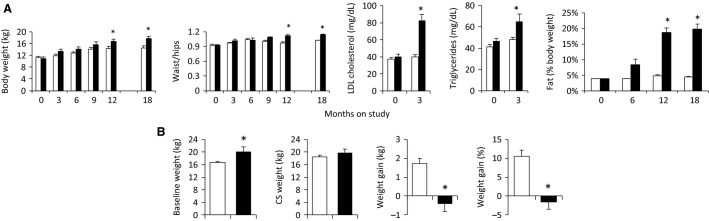
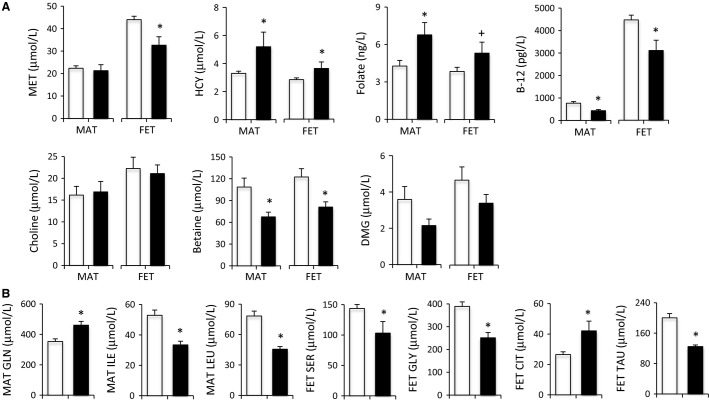
Maternal intake of dietary methyl-micronutrients (e.g. folate, choline, betaine and vitamin B-12) during pregnancy is essential for normal maternal and fetal methionine metabolism, and is critical for important metabolic processes including those involved in developmental programming. Maternal obesity and nutrient excess during pregnancy influence developmental programming potentially predisposing adult offspring to a variety of chronic health problems. In the present study, we hypothesized that maternal obesity would dysregulate the maternal and fetal methionine cycle. To test this hypothesis, we developed a nulliparous baboon obesity model fed a high fat, high energy diet (HF-HED) prior to and during gestation, and examined methionine cycle biomarkers (e.g., circulating concentrations of homocysteine, methionine, choline, betaine, key amino acids, folate, and vitamin B-12). Animals were group housed allowing full physical activity and social interaction. Maternal prepregnancy percent body fat was 5% in controls and 19% in HF-HED mothers, while fetal weight was 16% lower in offspring of HF-HED mothers at term. Maternal and fetal homocysteine were higher, while maternal and fetal vitamin B-12 and betaine were lower in the HF-HED group. Elevations in circulating maternal folate were evident in the HF-HED group indicating impaired folate metabolism (methyl-trap) as a consequence of maternal vitamin B-12 depletion. Finally, fetal methionine, glycine, serine, and taurine were lower in the HF-HED fetuses. These data show that maternal obesity disturbs the methionine cycle in primate pregnancy, providing a mechanism for the epigenetic changes observed among obese pregnant women and suggesting diagnostic and therapeutic opportunities in human pregnancies complicated by obesity.
孕期母亲摄入膳食甲基微量营养素(如叶酸、胆碱、甜菜碱和维生素B-12)对于母体和胎儿正常的蛋氨酸代谢至关重要,对于包括那些参与发育编程的重要代谢过程也至关重要。孕期母亲肥胖和营养过剩会影响发育编程,可能使成年后代易患各种慢性健康问题。在本研究中,我们假设母亲肥胖会使母体和胎儿的蛋氨酸循环失调。为了验证这一假设,我们建立了一个未生育的狒狒肥胖模型,在妊娠前和妊娠期间喂食高脂肪、高能量饮食(HF-HED),并检测蛋氨酸循环生物标志物(如循环中同型半胱氨酸、蛋氨酸、胆碱、甜菜碱、关键氨基酸、叶酸和维生素B-12的浓度)。动物群居饲养,允许充分的身体活动和社交互动。对照组母亲孕前体脂百分比为5%,HF-HED组母亲为19%,而HF-HED组母亲足月后代的胎儿体重低16%。HF-HED组母体和胎儿的同型半胱氨酸较高,而母体和胎儿的维生素B-12和甜菜碱较低。HF-HED组母体循环叶酸升高,表明由于母体维生素B-12缺乏导致叶酸代谢受损(甲基陷阱)。最后,HF-HED组胎儿的蛋氨酸、甘氨酸、丝氨酸和牛磺酸较低。这些数据表明,母亲肥胖会扰乱灵长类动物孕期的蛋氨酸循环,为肥胖孕妇中观察到的表观遗传变化提供了一种机制,并提示了肥胖合并妊娠的人类诊断和治疗机会。