Shim Ji Suk, Lee Jin Sook, Lee Jeong Yol, Choi Yeon Jo, Shin Sang Wan, Ryu Jae Jun
Department of Prosthodontics, Ansan Hospital, Korea University, Gyeonggi-do, Republic of Korea.
Department of Prosthodontics, Anam Hospital, Korea University, Seoul, Republic of Korea.
J Appl Oral Sci. 2015 Oct;23(5):515-22. doi: 10.1590/1678-775720150081.
This study investigated the marginal and internal adaptation of individual dental crowns fabricated using a CAD/CAM system (Sirona's BlueCam), also evaluating the effect of the software version used, and the specific parameter settings in the adaptation of crowns.
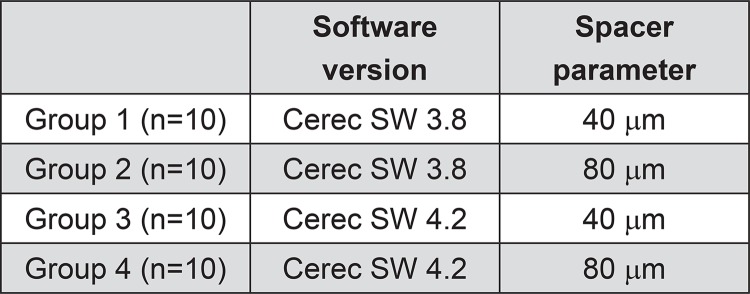
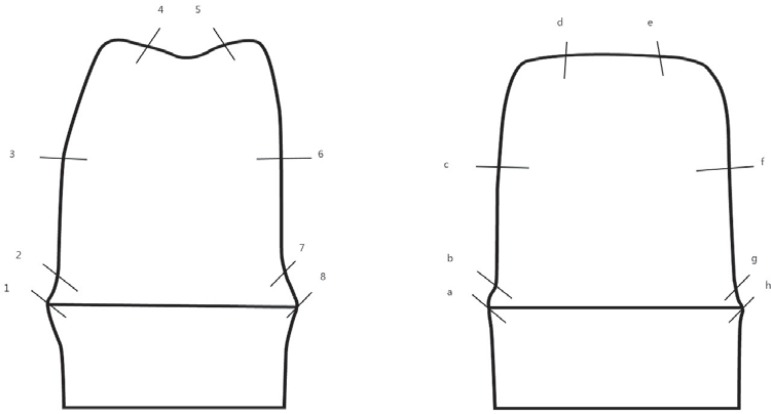
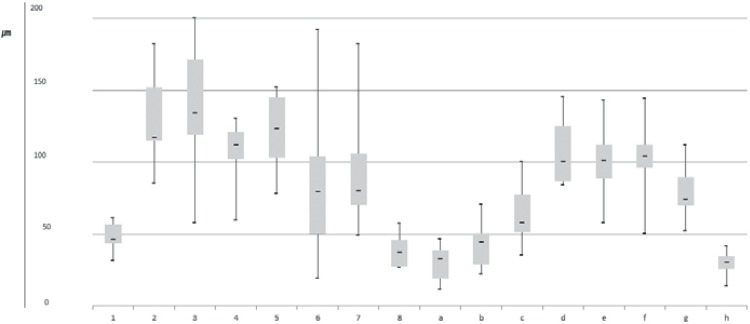
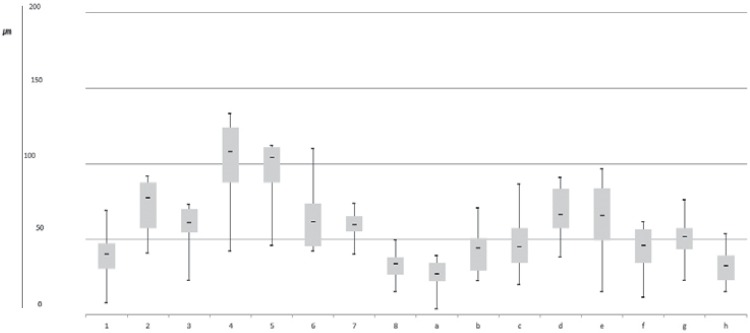
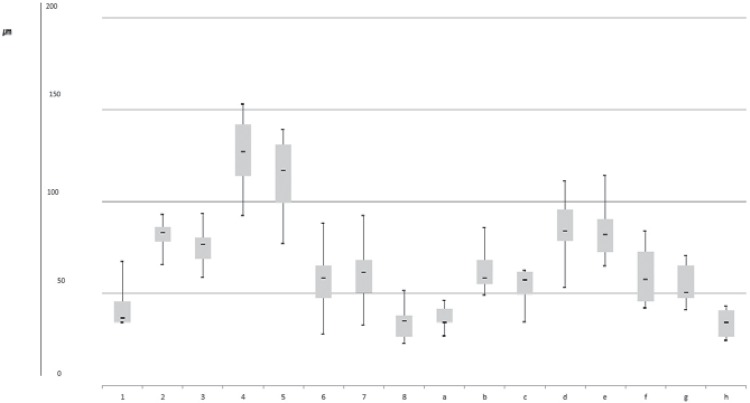
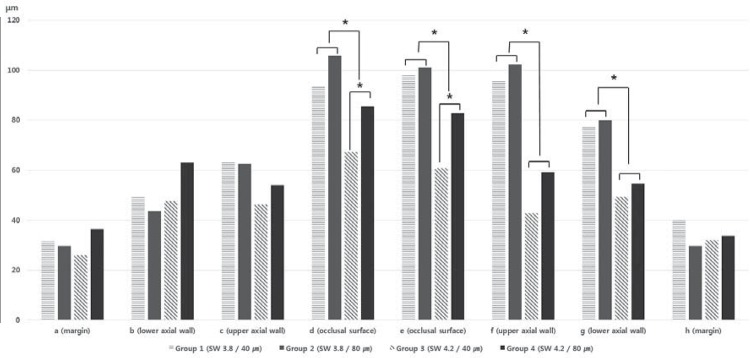
Forty digital impressions of a master model previously prepared were acquired using an intraoral scanner and divided into four groups based on the software version and on the spacer settings used. The versions 3.8 and 4.2 of the software were used, and the spacer parameter was set at either 40 μm or 80 μm. The marginal and internal fit of the crowns were measured using the replica technique, which uses a low viscosity silicone material that simulates the thickness of the cement layer. The data were analyzed using a Friedman two-way analysis of variance (ANOVA) and paired t-tests with significance level set at p<0.05.
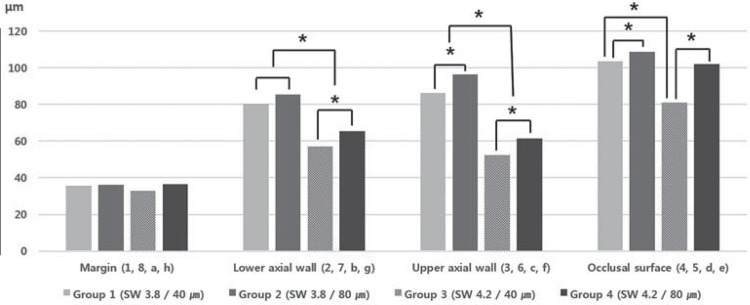
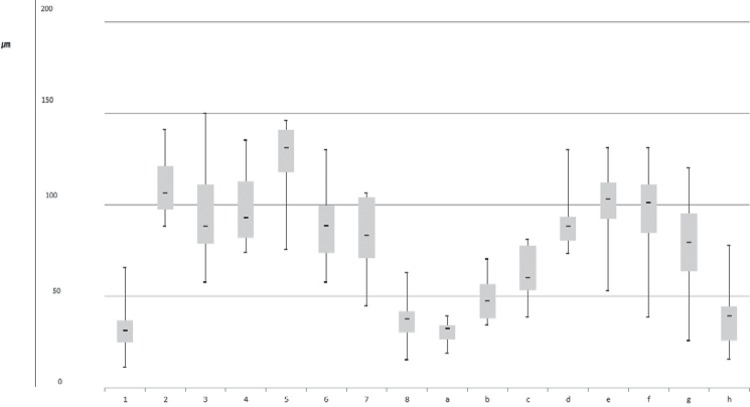
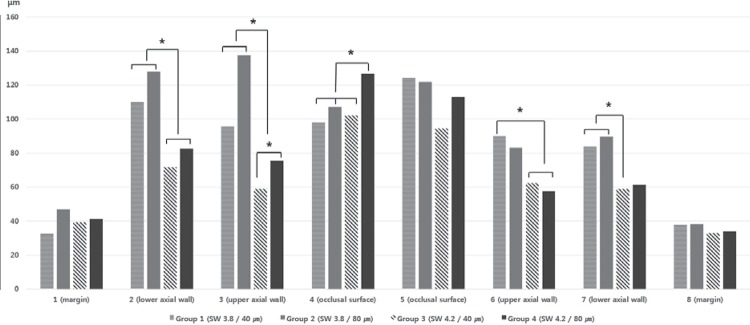
The two-way ANOVA analysis showed the software version (p<0.05) and the spacer parameter (p<0.05) significantly affected the crown adaptation. The crowns designed with the version 4.2 of the software showed a better fit than those designed with the version 3.8, particularly in the axial wall and in the inner margin. The spacer parameter was more accurately represented in the version 4.2 of the software than in the version 3.8. In addition, the use of the version 4.2 of the software combined with the spacer parameter set at 80 μm showed the least variation. On the other hand, the outer margin was not affected by the variables.
Compared to the version 3.8 of the software, the version 4.2 can be recommended for the fabrication of well-fitting crown restorations, and for the appropriate regulation of the spacer parameter.
本研究调查了使用计算机辅助设计/计算机辅助制造(CAD/CAM)系统(西诺德的BlueCam)制作的单个牙冠的边缘适应性和内部适应性,同时评估了所用软件版本以及牙冠适应性中特定参数设置的影响。
使用口内扫描仪获取先前制备的主模型的40个数字印模,并根据软件版本和所用的间隔器设置分为四组。使用软件的3.8版和4.2版,间隔器参数设置为40μm或80μm。使用复制技术测量牙冠的边缘适应性和内部适合性,该技术使用模拟粘结剂层厚度的低粘度硅酮材料。使用Friedman双向方差分析(ANOVA)和配对t检验分析数据,显著性水平设定为p<0.05。
双向ANOVA分析显示软件版本(p<0.05)和间隔器参数(p<0.05)对牙冠适应性有显著影响。使用软件4.2版设计的牙冠比使用3.8版设计的牙冠适应性更好,特别是在轴壁和内边缘。软件4.2版比3.8版更准确地体现了间隔器参数。此外,使用软件4.2版并将间隔器参数设置为80μm时变化最小。另一方面,外边缘不受这些变量的影响。
与软件3.8版相比,推荐使用4.2版来制作适应性良好的牙冠修复体,并适当调节间隔器参数。