Villalpando Diva M, Navarro Rocío, Del Campo Lara, Largo Carlota, Muñoz David, Tabernero María, Baeza Ramiro, Otero Cristina, García Hugo S, Ferrer Mercedes
Departamento de Fisiología, Facultad de Medicina, Universidad Autónoma de Madrid, Madrid, Spain.
Área Cardiovascular, Instituto de Investigación Hospital Universitario La Paz (IdiPAZ), Madrid, Spain.
PLoS One. 2015 Nov 5;10(11):e0142039. doi: 10.1371/journal.pone.0142039. eCollection 2015.
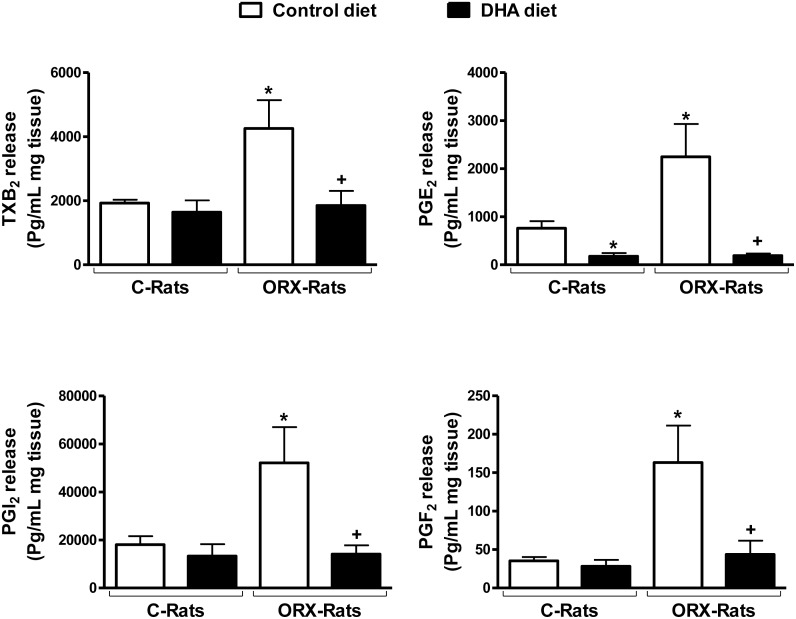
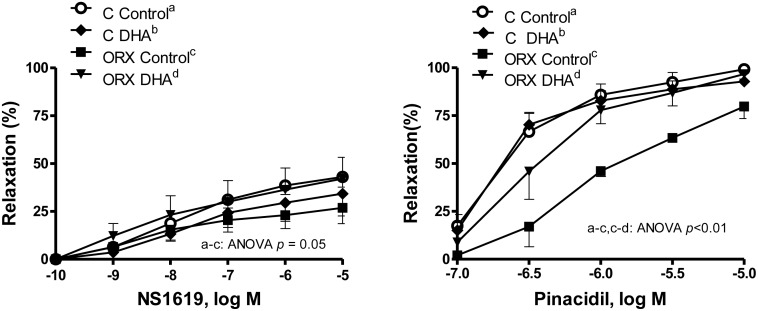
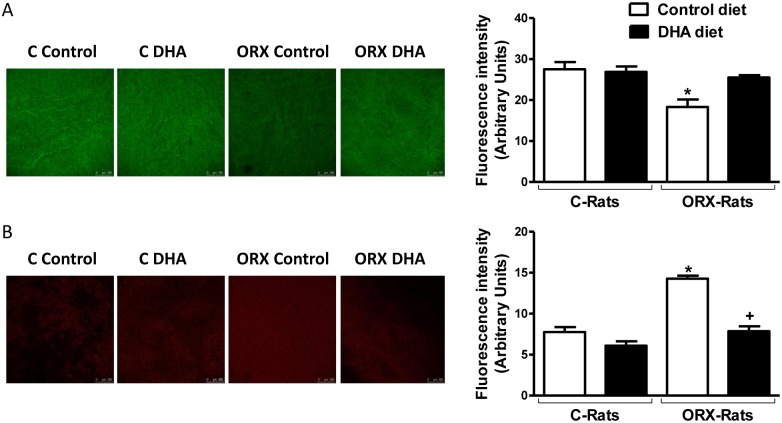
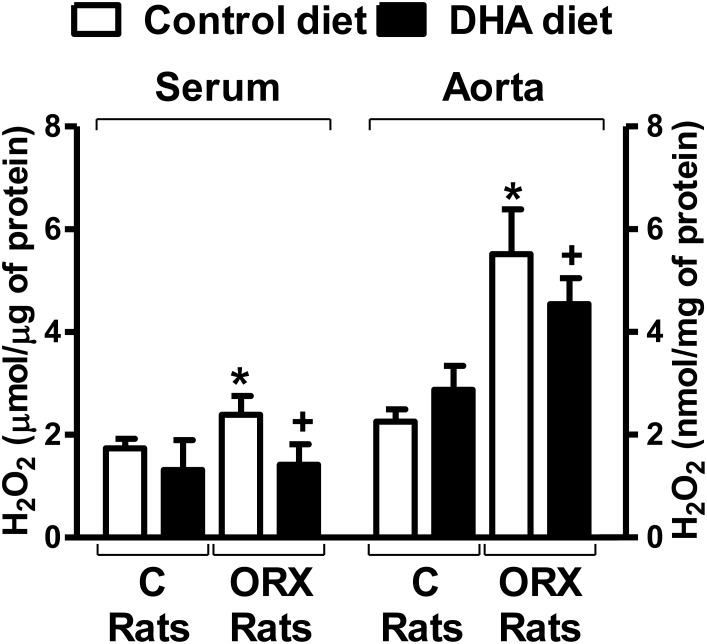
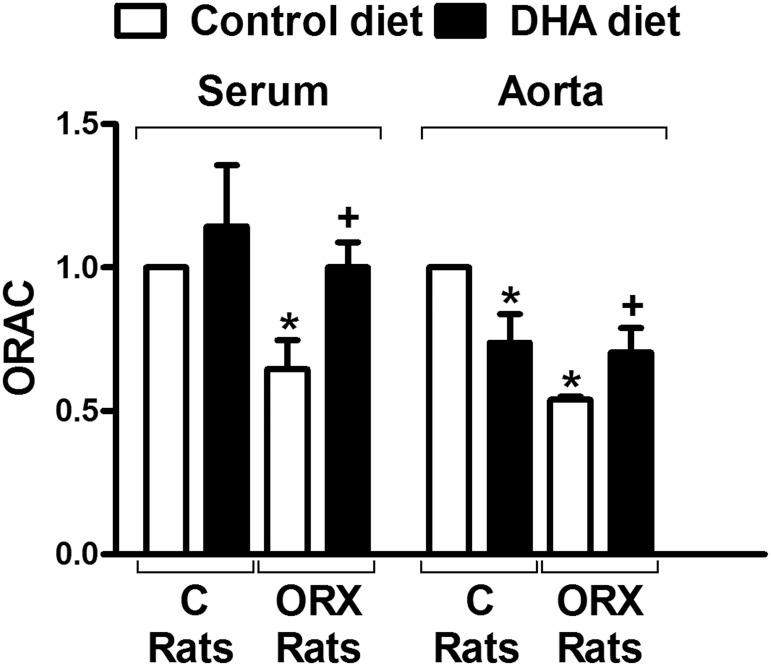
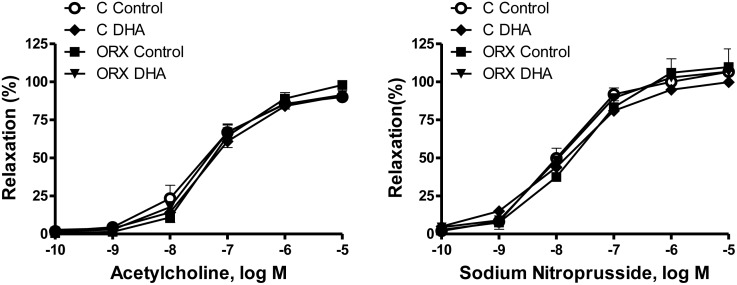
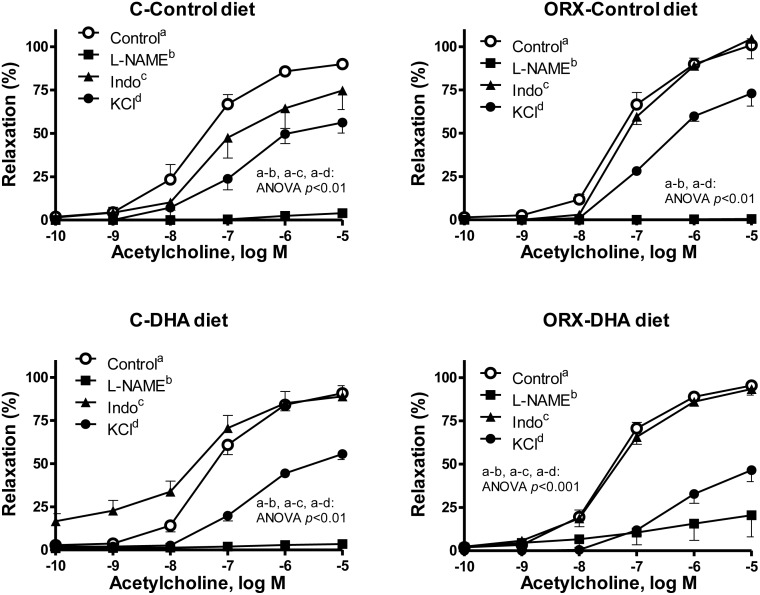
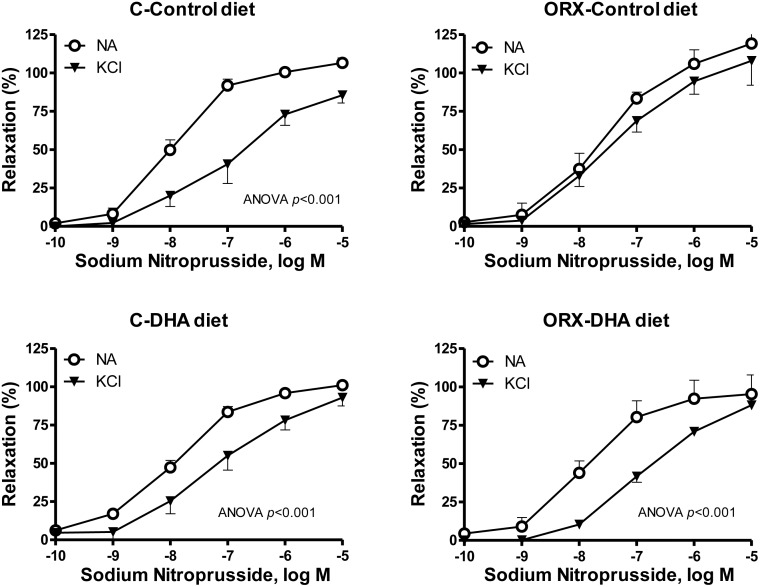
Benefits of n-3 polyunsaturated fatty acids (PUFAs) against cardiovascular diseases have been reported. Vascular tone regulation is largely mediated by endothelial factors whose release is modulated by sex hormones. Since the incidence of cardiovascular pathologies has been correlated with decreased levels of sex hormones, the aim of this study was to analyze whether a diet supplemented with the specific PUFA docosahexaenoic acid (DHA) could prevent vascular changes induced by an impaired gonadal function. For this purpose, control and orchidectomized rats were fed with a standard diet supplemented with 5% (w/w) sunflower oil or with 3% (w/w) sunflower oil plus 2% (w/w) DHA. The lipid profile, the blood pressure, the production of prostanoids and nitric oxide (NO), and the redox status of biological samples from control and orchidectomized rats, fed control or DHA-supplemented diet, were analyzed. The vasodilator response and the contribution of NO, prostanoids and hyperpolarizing mechanisms were also studied. The results showed that orchidectomy negatively affected the lipid profile, increased the production of prostanoids and reactive oxygen species (ROS), and decreased NO production and the antioxidant capacity, as well as the participation of hyperpolarizing mechanisms in the vasodilator responses. The DHA-supplemented diet of the orchidectomized rats decreased the release of prostanoids and ROS, while increasing NO production and the antioxidant capacity, and it also improved the lipid profile. Additionally, it restored the participation of hyperpolarizing mechanisms by activating potassium. Since the modifications induced by the DHA-supplemented diet were observed in the orchidectomized, but not in the healthy group, DHA seems to exert cardioprotective effects in physiopathological situations in which vascular dysfunction exists.
已有报道称n-3多不饱和脂肪酸(PUFA)对心血管疾病有益。血管张力调节很大程度上由内皮因子介导,而内皮因子的释放受性激素调节。由于心血管疾病的发病率与性激素水平降低相关,本研究的目的是分析补充特定PUFA二十二碳六烯酸(DHA)的饮食是否能预防性腺功能受损引起的血管变化。为此,给对照大鼠和去势大鼠喂食补充了5%(w/w)向日葵油的标准饮食,或补充了3%(w/w)向日葵油加2%(w/w)DHA的标准饮食。分析了喂食对照饮食或DHA补充饮食的对照大鼠和去势大鼠的血脂谱、血压、前列腺素和一氧化氮(NO)的产生以及生物样品的氧化还原状态。还研究了血管舒张反应以及NO、前列腺素和超极化机制的作用。结果表明,去势对血脂谱有负面影响,增加了前列腺素和活性氧(ROS)的产生,降低了NO的产生和抗氧化能力,以及超极化机制在血管舒张反应中的作用。去势大鼠的DHA补充饮食减少了前列腺素和ROS的释放,同时增加了NO的产生和抗氧化能力,还改善了血脂谱。此外,它通过激活钾恢复了超极化机制的作用。由于在去势组而非健康组中观察到了DHA补充饮食引起的变化,DHA似乎在存在血管功能障碍的生理病理情况下发挥心脏保护作用。