Boas Raquel de Melo Santos Vilas, Madeira Ivana Andrade, Lopes Alexia Abuhid, Paiva Edson Barreto, Rodrigues André Soares
Titular Members of Colégio Brasileiro de Radiologia e Diagnóstico por Imagem (CBR), MDs, Radiologists at Clínica Axial Medicina Diagnóstica, Belo Horizonte, MG, Brazil.
Titular Member of Colégio Brasileiro de Radiologia e Diagnóstico por Imagem (CBR), MD, Radiologist, Specialist in Musculoskeletal System Imaging at Clínica Axial Medicina Diagnóstica, Belo Horizonte, MG, Brazil.
Radiol Bras. 2015 Sep-Oct;48(5):314-8. doi: 10.1590/0100-3984.2013.0005.
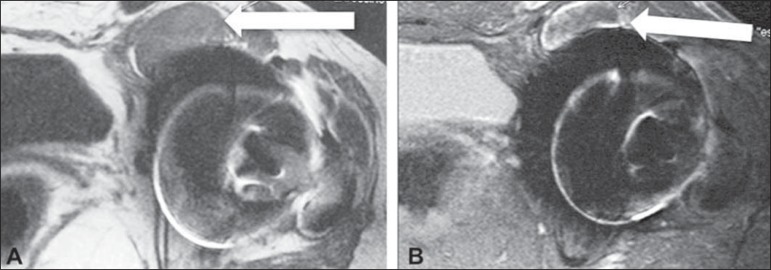
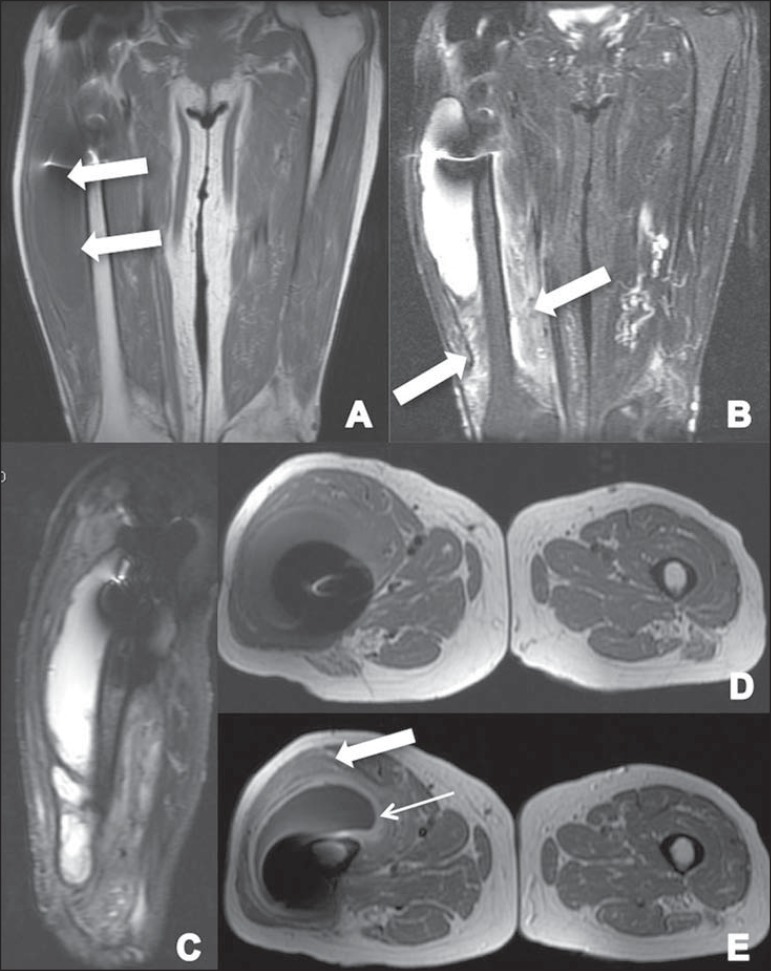
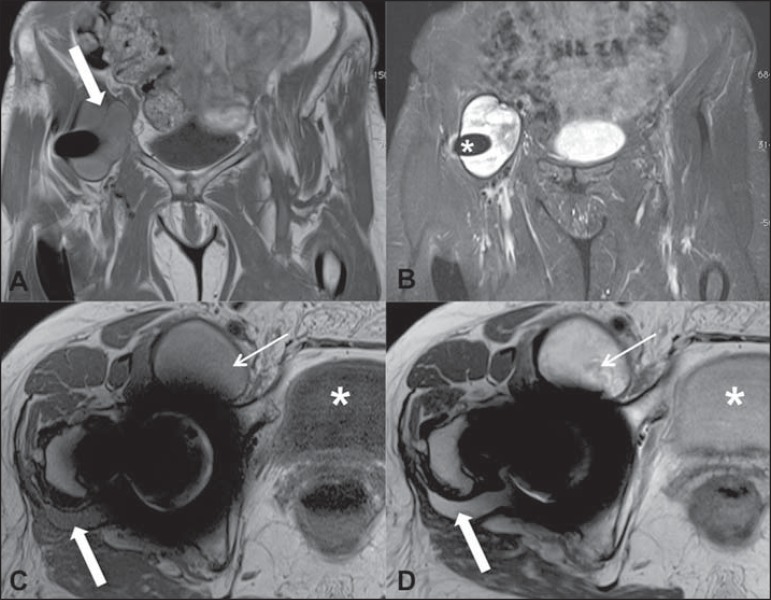
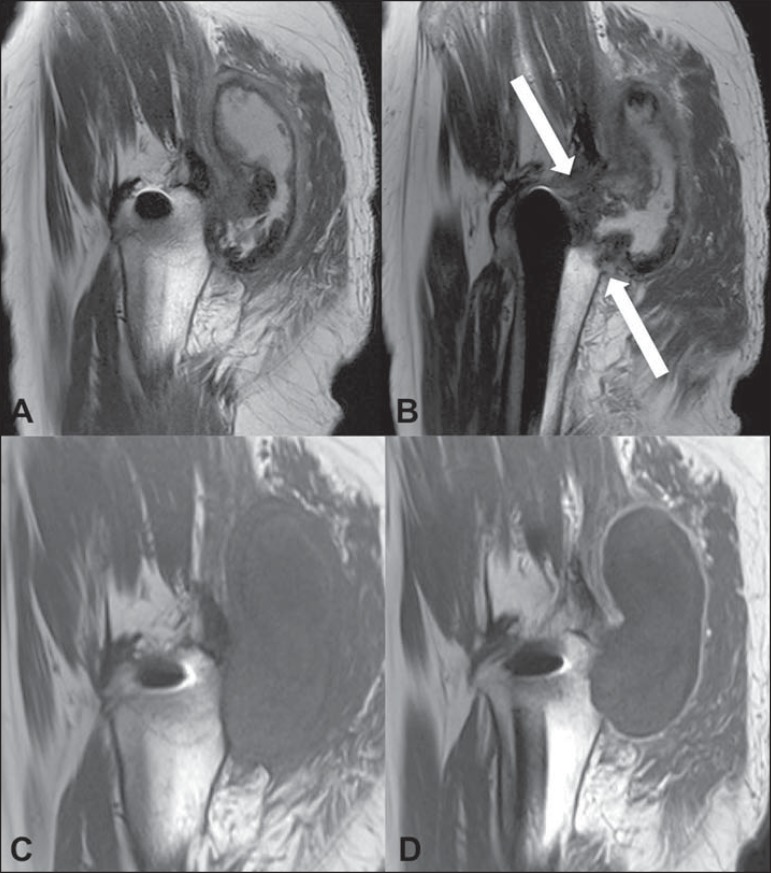
Soft tissue complications following hip arthroplasty may occur either in cases of total hip arthroplasty or in hip resurfacing, a technique that has become popular in cases involving young patients. Both orthopedic and radiological literatures are now calling attention to these symptomatic periprosthetic soft tissue masses called inflammatory pseudotumors or aseptic lymphocytic vasculites-associated lesions. Pseudotumors are associated with pain, instability, neuropathy, and premature loosening of prosthetic components, frequently requiring early and difficult reoperation. Magnetic resonance imaging plays a relevant role in the evaluation of soft tissue changes in the painful hip after arthroplasty, ranging from early periprosthetic fluid collections to necrosis and more extensive tissue damage.
髋关节置换术后的软组织并发症可能发生在全髋关节置换病例中,也可能发生在髋关节表面置换术中,后者是一种在年轻患者病例中已变得流行的技术。目前,骨科和放射学文献都在关注这些被称为炎性假瘤或无菌性淋巴细胞性血管炎相关病变的有症状的假体周围软组织肿块。假瘤与疼痛、不稳定、神经病变以及假体部件过早松动有关,常常需要早期且困难的再次手术。磁共振成像在评估置换术后疼痛髋关节的软组织变化方面发挥着重要作用,范围从早期的假体周围积液到坏死以及更广泛的组织损伤。