Uskoković Vuk
Advanced Materials and Nanobiotechnology Laboratory, Department of Bioengineering, University of Illinois, Chicago, IL, USA.
Adv Exp Med Biol. 2015;881:237-54. doi: 10.1007/978-3-319-22345-2_13.
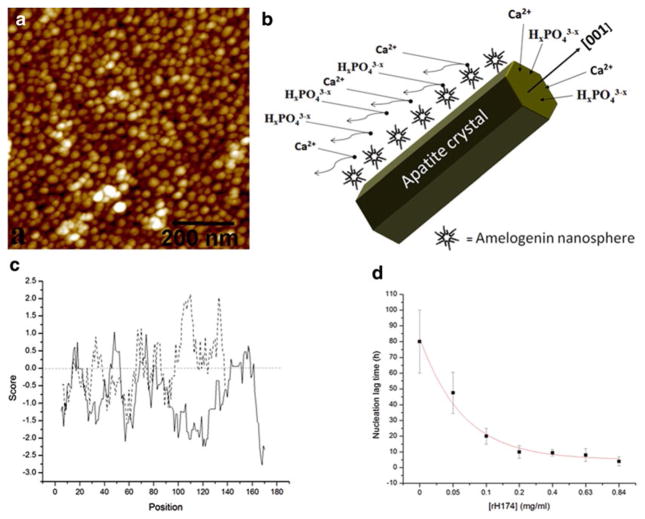
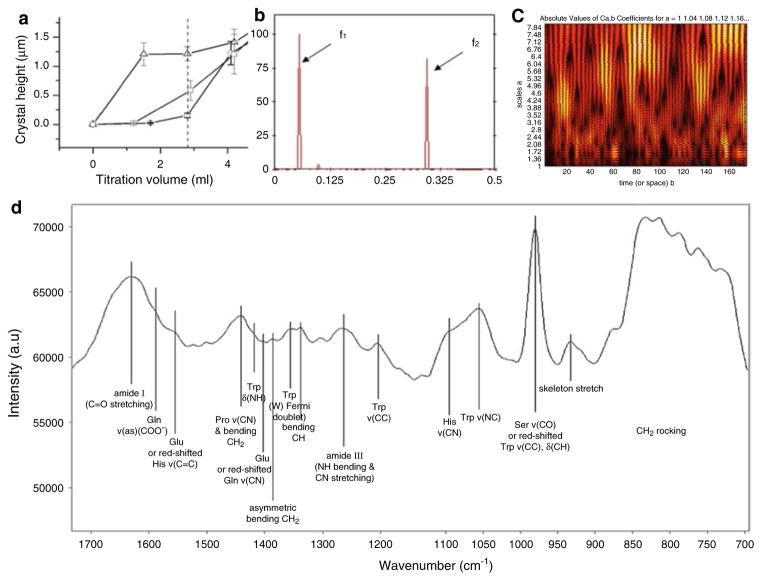
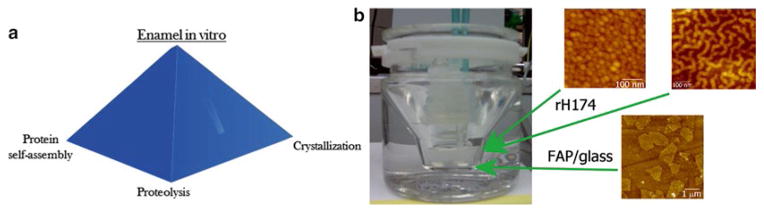
In this chapter the basic premises, the recent findings and the future challenges in the use of amelogenin for enamel tissue engineering are being discoursed on. Results emerging from the experiments performed to assess the fundamental physicochemical mechanisms of the interaction of amelogenin, the main protein of the enamel matrix, and the growing crystals of apatite, are mentioned, alongside a moderately comprehensive literature review of the subject at hand. The clinical importance of understanding this protein/mineral interaction at the nanoscale are highlighted as well as the potential for tooth enamel to act as an excellent model system for studying some of the essential aspects of biomineralization processes in general. The dominant paradigm stating that amelogenin directs the uniaxial growth of apatite crystals in enamel by slowing down the growth of (hk0) faces on which it adheres is being questioned based on the results demonstrating the ability of amelogenin to promote the nucleation and crystal growth of apatite under constant titration conditions designed to mimic those present in the developing enamel matrix. The role of numerous minor components of the enamel matrix is being highlighted as essential and impossible to compensate for by utilizing its more abundant ingredients only. It is concluded that the three major aspects of amelogenesis outlined hereby--(1) the assembly of amelogenin and other enamel matrix proteins, (2) the proteolytic activity, and (3) crystallization--need to be in precise synergy with each other in order for the grounds for the proper imitation of amelogenesis in the lab to be created.
在本章中,我们将探讨牙釉蛋白用于牙釉质组织工程的基本前提、最新研究成果以及未来面临的挑战。文中提到了为评估牙釉蛋白(牙釉质基质的主要蛋白质)与磷灰石生长晶体相互作用的基本物理化学机制而进行的实验结果,同时还对相关主题进行了较为全面的文献综述。强调了在纳米尺度上理解这种蛋白质/矿物质相互作用的临床重要性,以及牙釉质作为研究生物矿化过程一些基本方面的优秀模型系统的潜力。基于在模拟发育中的牙釉质基质条件下进行的恒定量滴定实验结果,表明牙釉蛋白能够促进磷灰石的成核和晶体生长,对认为牙釉蛋白通过减缓其附着的(hk0)面的生长来指导牙釉质中磷灰石晶体单轴生长的主流范式提出了质疑。强调了牙釉质基质中众多次要成分的作用至关重要,仅利用其含量较多的成分无法弥补。得出的结论是,由此概述的牙釉质形成的三个主要方面——(1)牙釉蛋白和其他牙釉质基质蛋白的组装,(2)蛋白水解活性,以及(3)结晶——需要相互精确协同作用,以便为在实验室中正确模拟牙釉质形成创造条件。