Clarke Stephen E, Longtin André, Maler Leonard
Department of Cellular and Molecular Medicine, University of Ottawa, Ottawa, Ontario, Canada K1N 8M5.
Department of Physics, University of Ottawa, Ottawa, Ontario, Canada K1N 6N5.
Nat Commun. 2015 Nov 9;6:8764. doi: 10.1038/ncomms9764.
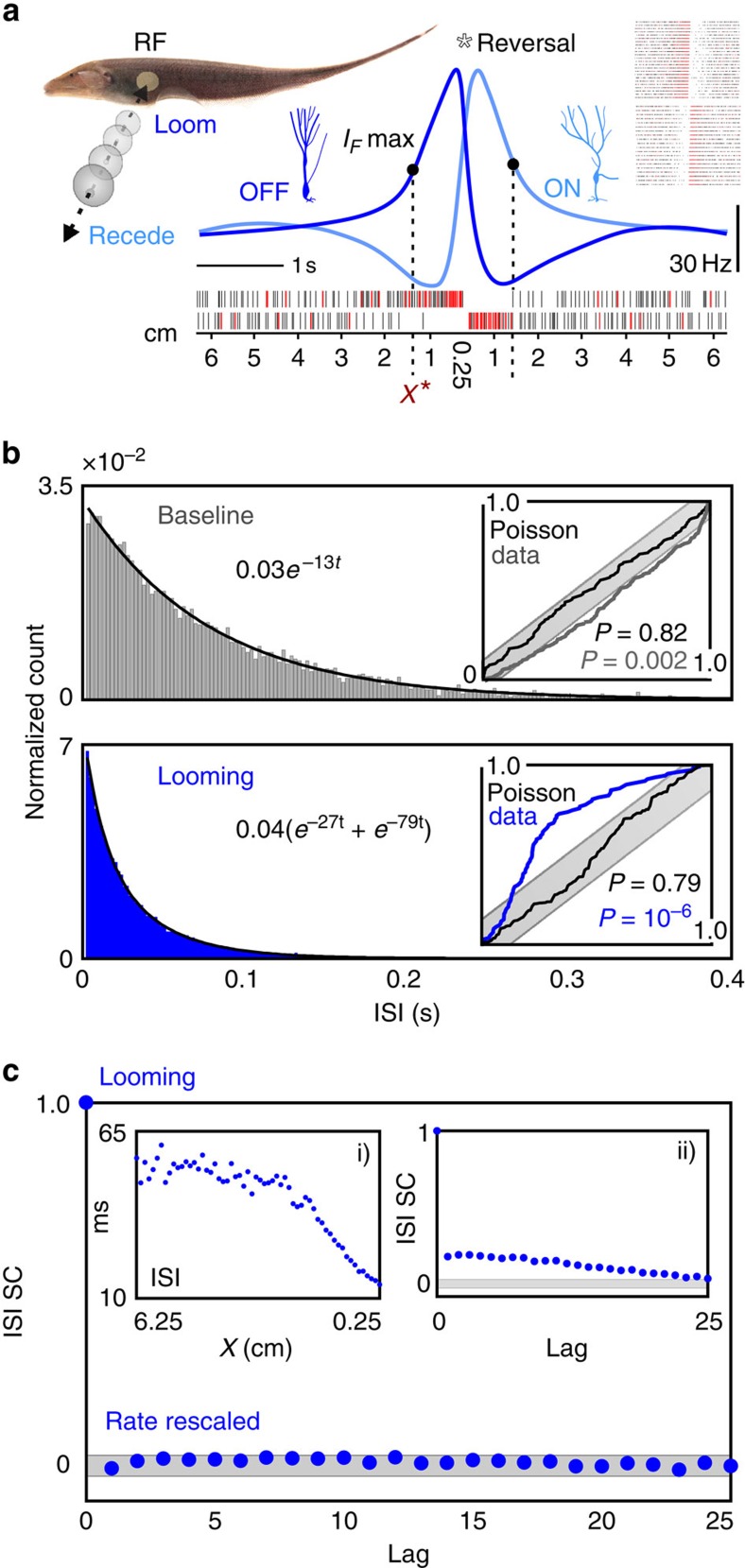
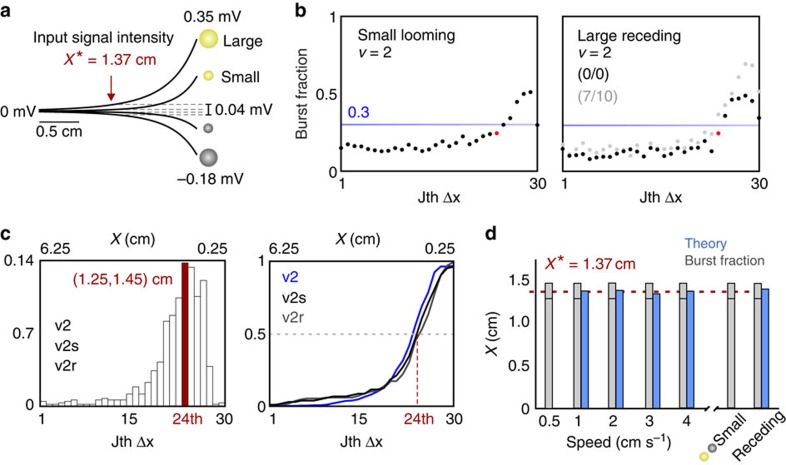
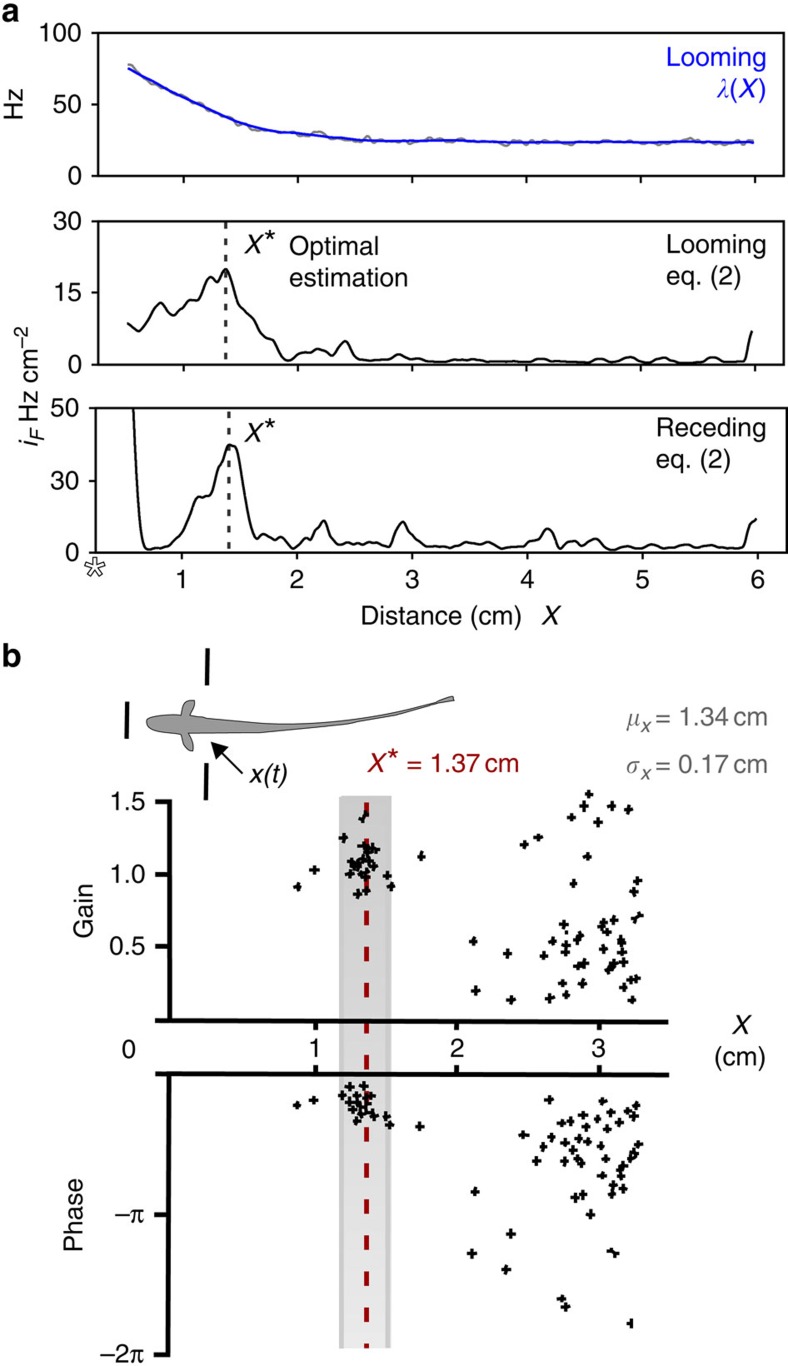
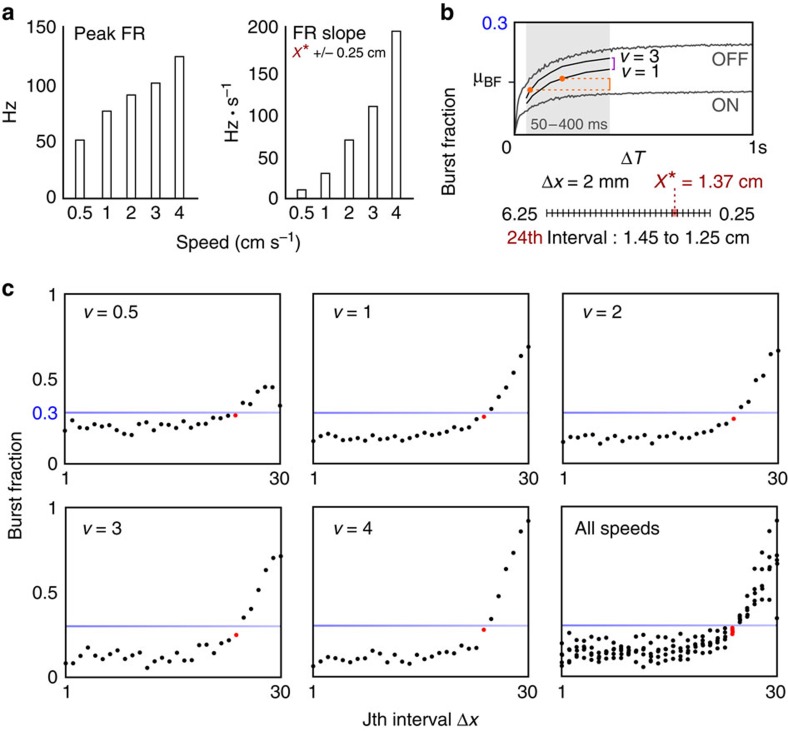
Coordinated sensory and motor system activity leads to efficient localization behaviours; but what neural dynamics enable object tracking and what are the underlying coding principles? Here we show that optimized distance estimation from motion-sensitive neurons underlies object tracking performance in weakly electric fish. First, a relationship is presented for determining the distance that maximizes the Fisher information of a neuron's response to object motion. When applied to our data, the theory correctly predicts the distance chosen by an electric fish engaged in a tracking behaviour, which is associated with a bifurcation between tonic and burst modes of spiking. Although object distance, size and velocity alter the neural response, the location of the Fisher information maximum remains invariant, demonstrating that the circuitry must actively adapt to maintain 'focus' during relative motion.
协调的感觉和运动系统活动会产生高效的定位行为;但何种神经动力学能够实现物体追踪,其潜在的编码原则又是什么?在这里,我们表明,弱电鱼的物体追踪性能基于对运动敏感神经元的优化距离估计。首先,给出了一种关系,用于确定使神经元对物体运动的响应的费希尔信息最大化的距离。将该理论应用于我们的数据时,它能正确预测进行追踪行为的电鱼所选择的距离,这与尖峰发放的紧张性和爆发性模式之间的分岔有关。尽管物体距离、大小和速度会改变神经反应,但费希尔信息最大值的位置保持不变,这表明该神经回路在相对运动过程中必须积极适应以维持“聚焦”。