Hein Noely, Bergara Gabriel Heiser, Moura Nathalie Bianchini Vieira, Cardoso Débora Morais, Hirose Maki, Ferronato Angela Espósito, Pastorino Antônio Carlos, Lo Denise Swei, Gilio Alfredo Elias
Pediatrics Division - Hospital Universitário - University of São Paulo, São Paulo/SP - Brazil .
Child Institute - Hospital das Clínicas - University of São Paulo, São Paulo/SP - Brazil .
Autops Case Rep. 2015 Sep 30;5(3):33-6. doi: 10.4322/acr.2015.016. eCollection 2015 Jul-Sep.
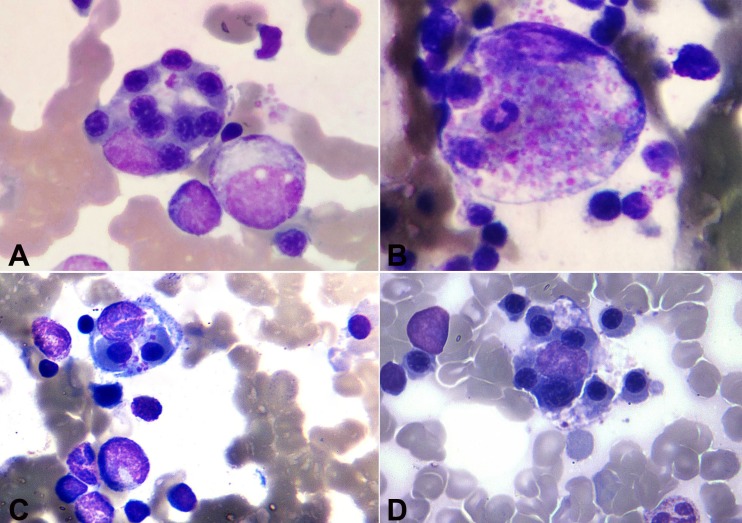
Dengue is endemic in more than 100 countries in Southeast Asia, the Americas, the western Pacific, Africa and the eastern Mediterranean regions. The virus is transmitted by Aedes mosquitoes. Dengue disease is the most prevalent arthropod-borne viral disease in humans and is a global and national public health concern in several countries. A seasonal pattern of dengue disease is consistently observed. The highest incidences usually correspond to the period of highest rainfall and humidity, providing suitable conditions for Aedes aegypti breeding and survival. In Brazil for instance it is from January to June. Dengue may cause marked changes in bone marrow that result in hypocellularity and, consequently, thrombocytopenia and leucopenia, along with an increase in hematocrit, which is secondary to capillary leakage. However, those abnormalities are usually self-limited, and do not warrant further investigations, such as a marrow biopsy or a myelogram. The occurrence of persistent reactive hemophagocytosis is uncommon and usually leads to serious adverse outcomes. The authors report the case of an 8-year old girl complaining of high-grade fever, malaise, headache, abdominal pain and a cutaneous rash. Laboratory examination revealed atypical lymphocytosis on peripheral blood count, hyperbilirrunemia, abnormal liver enzymes and clotting tests. Serology was positive for dengue. Because of the persistence of fever and laboratory examinations were consistent with hemophagocytic lymphohistiocytosis (HLH) a bone marrow aspiration was performed, which confirmed the presence of hemophagocytosis. Hence we report a rare presentation of dengue accompanied by self-limited HLH that hopefully evolve to favorable outcome.
登革热在东南亚、美洲、西太平洋、非洲和东地中海地区的100多个国家呈地方性流行。该病毒由伊蚊传播。登革热疾病是人类中最普遍的节肢动物传播病毒性疾病,在多个国家都是全球和国家公共卫生关注的问题。登革热疾病的季节性模式一直存在。最高发病率通常对应降雨量和湿度最高的时期,为埃及伊蚊的繁殖和生存提供了适宜条件。例如在巴西,发病期是从1月到6月。登革热可能导致骨髓发生显著变化,导致细胞减少,进而引起血小板减少和白细胞减少,同时由于毛细血管渗漏导致血细胞比容增加。然而,这些异常通常是自限性的,无需进一步检查,如骨髓活检或脊髓造影。持续性反应性噬血细胞增多症并不常见,通常会导致严重不良后果。作者报告了一名8岁女孩的病例,她主诉高热、不适、头痛、腹痛和皮疹。实验室检查显示外周血细胞计数出现非典型淋巴细胞增多、高胆红素血症、肝酶异常和凝血试验异常。血清学检测登革热呈阳性。由于持续发热且实验室检查结果与噬血细胞性淋巴组织细胞增生症(HLH)相符,遂进行了骨髓穿刺,证实存在噬血细胞现象。因此,我们报告了一例罕见的伴有自限性HLH的登革热病例,有望取得良好预后。