Hurtado de Mendoza Tatiana, Liu Fei, Verma Inder M
Laboratory of Genetics, The Salk Institute for Biological Studies, La Jolla, California, United States of America.
PLoS One. 2015 Nov 13;10(11):e0142161. doi: 10.1371/journal.pone.0142161. eCollection 2015.
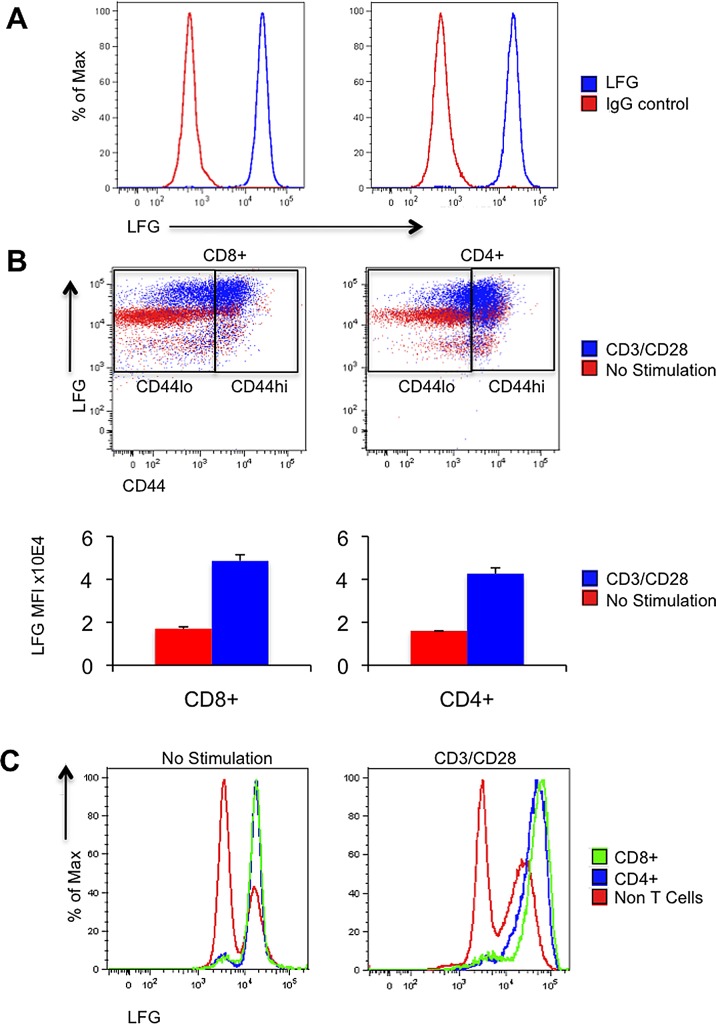
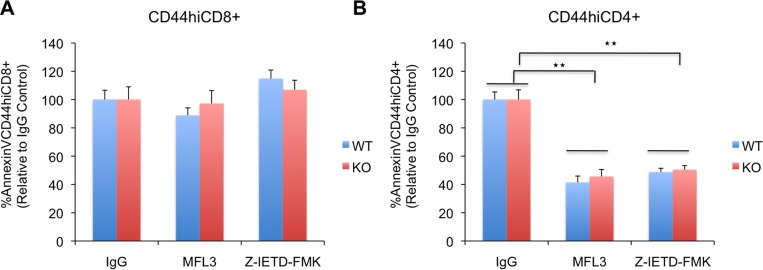
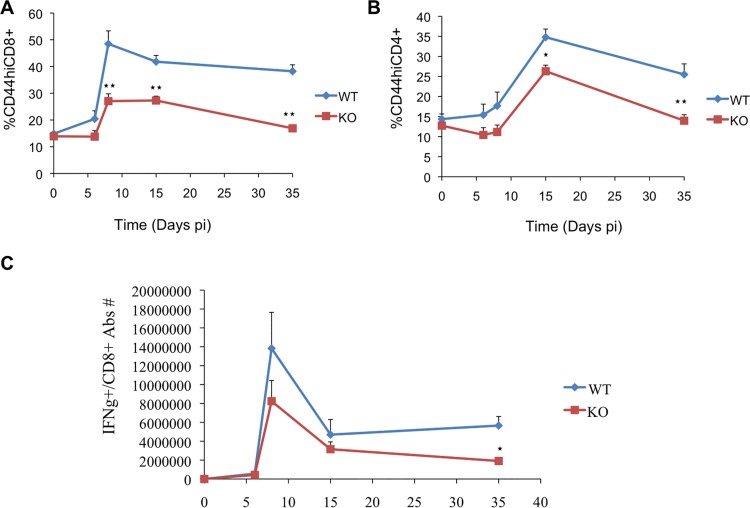
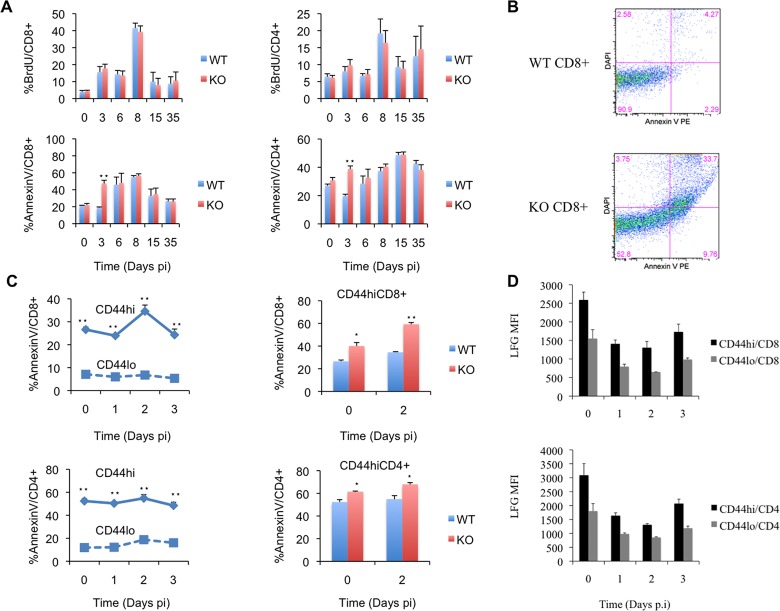
Anti-apoptotic protein Lifeguard (LFG) is upregulated on T cells upon in vitro activation. To investigate its role in T cell immunity we infected wild type and LFG knockout bone marrow chimaeras mice with LCMV. We observed a decreased number of LFG KO activated CD8 and CD4 T cells throughout the infection and a marked decrease in LFG KO LCMV specific memory T cells. WT and KO T cells proliferated at the same rate, however, LFG KO CD44(hi) T cells showed increased cell death during the initial phase of the immune response. LFG KO and WT T cells were equally sensitive to the FAS antibody Jo-2 in ex vivo cultures, and blocking extrinsic pathways of cell death in vivo with Fas L or caspase 8 inhibitors did not rescue the increased apoptosis in LFG KO T cells. Our data suggest that LFG plays a role in T cell survival during the initial phase of anti-viral immune response by protecting pre-existing memory T cells and possibly newly activated T cells resulting in a diminished immune response and a decreased number of LCMV specific memory T cells.
抗凋亡蛋白救生员(LFG)在体外激活后在T细胞上上调。为了研究其在T细胞免疫中的作用,我们用淋巴细胞脉络丛脑膜炎病毒(LCMV)感染野生型和LFG基因敲除的骨髓嵌合小鼠。我们观察到在整个感染过程中,LFG基因敲除的活化CD8和CD4 T细胞数量减少,且LFG基因敲除的LCMV特异性记忆T细胞显著减少。野生型和基因敲除型T细胞以相同的速率增殖,然而,LFG基因敲除的CD44(高)T细胞在免疫反应的初始阶段显示出细胞死亡增加。在体外培养中,LFG基因敲除型和野生型T细胞对FAS抗体Jo-2同样敏感,并且在体内用Fas L或半胱天冬酶8抑制剂阻断细胞死亡的外在途径并不能挽救LFG基因敲除型T细胞中增加的细胞凋亡。我们的数据表明,LFG在抗病毒免疫反应的初始阶段通过保护预先存在的记忆T细胞以及可能新激活的T细胞,在T细胞存活中发挥作用,从而导致免疫反应减弱和LCMV特异性记忆T细胞数量减少。