Heath Claire J, del Mar Cendra Maria, Watson Alastair, Auger Jean-Philippe, Pandey Anish, Tighe Paddy, Christodoulides Myron
Neisseria Research Group, Molecular Microbiology, Clinical and Experimental Sciences, Sir Henry Wellcome laboratories, University of Southampton Faculty of Medicine, Southampton General Hospital, Southampton, United Kingdom.
Department of Pathology and Microbiology, Faculty of Veterinary Medicine, University of Montreal, Saint-Hyacinthe, QC, Canada.
PLoS One. 2015 Nov 13;10(11):e0142773. doi: 10.1371/journal.pone.0142773. eCollection 2015.
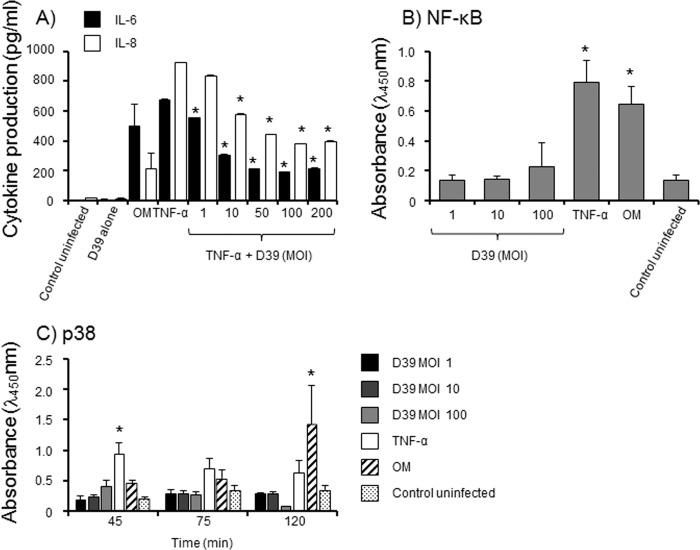
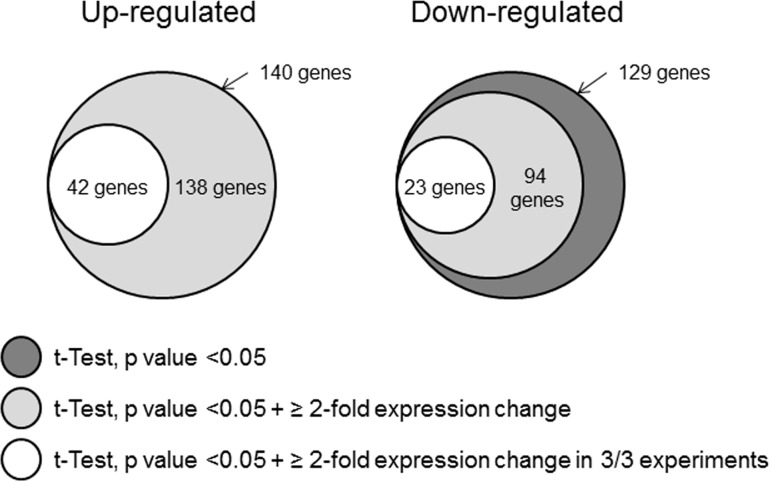
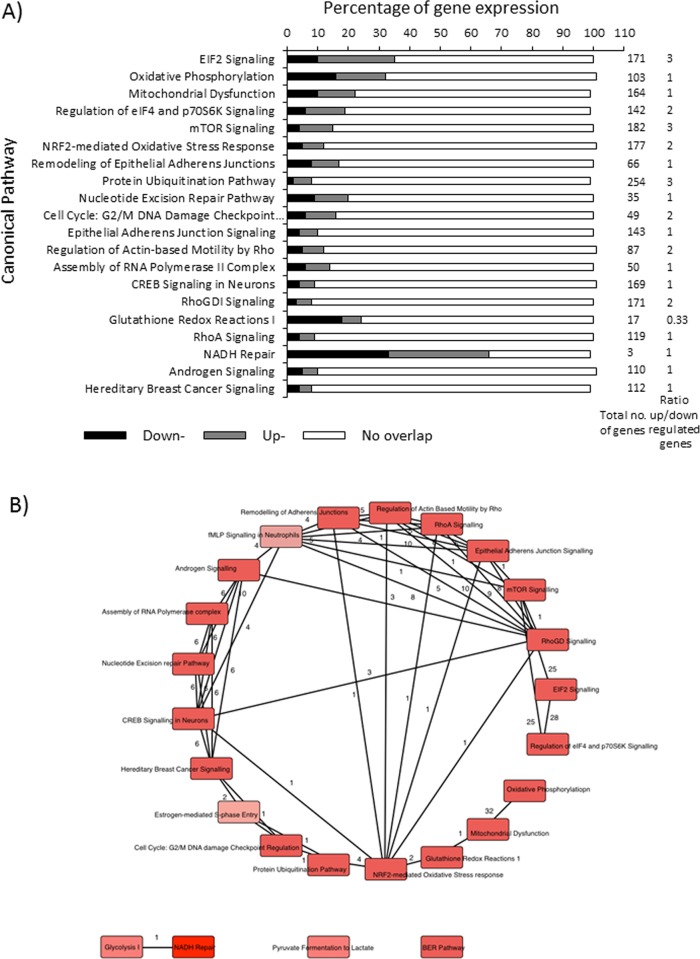
Streptococcus pneumoniae (Spn) is a major causative organism of empyema, an inflammatory condition occurring in the pleural sac. In this study, we used human and Spn cDNA microarrays to characterize the transcriptional responses occurring during initial contact between Spn and a human pleural mesothelial cell line (PMC) in vitro. Using stringent filtering criteria, 42 and 23 Spn genes were up-and down-regulated respectively. In particular, genes encoding factors potentially involved in metabolic processes and Spn adherence to eukaryotic cells were up-regulated e.g. glnQ, glnA, aliA, psaB, lytB and nox. After Spn initial contact, 870 human genes were differentially regulated and the largest numbers of significant gene expression changes were found in canonical pathways for eukaryotic initiation factor 2 signaling (60 genes out of 171), oxidative phosphorylation (32/103), mitochondrial dysfunction (37/164), eIF4 and p70S6K signaling (28/142), mTOR signaling (27/182), NRF2-mediated oxidative stress response (20/177), epithelial adherens junction remodeling (11/66) and ubiquitination (22/254). The cellular response appeared to be directed towards host cell survival and defense. Spn did not activate NF-kB or phosphorylate p38 MAPK or induce cytokine production from PMC. Moreover, Spn infection of TNF-α pre-stimulated PMC inhibited production of IL-6 and IL-8 secretion by >50% (p<0.01). In summary, this descriptive study provides datasets and a platform for examining further the molecular mechanisms underlying the pathogenesis of empyema.
肺炎链球菌(Spn)是脓胸的主要致病原,脓胸是一种发生在胸膜腔的炎症性疾病。在本研究中,我们使用人类和Spn cDNA微阵列来表征Spn与人类胸膜间皮细胞系(PMC)在体外初次接触期间发生的转录反应。使用严格的筛选标准,分别有42个和23个Spn基因上调和下调。特别是,编码可能参与代谢过程以及Spn黏附真核细胞的因子的基因被上调,例如glnQ、glnA、aliA、psaB、lytB和nox。Spn初次接触后,870个人类基因受到差异调节,在真核起始因子2信号传导(171个基因中有60个)、氧化磷酸化(103个中有32个)、线粒体功能障碍(164个中有37个)、eIF4和p70S6K信号传导(142个中有28个)、mTOR信号传导(182个中有27个)、NRF2介导的氧化应激反应(177个中有20个)、上皮黏附连接重塑(66个中有11个)和泛素化(254个中有22个)的经典途径中发现了最大数量的显著基因表达变化。细胞反应似乎是针对宿主细胞的存活和防御。Spn未激活NF-κB或磷酸化p38 MAPK,也未诱导PMC产生细胞因子。此外,TNF-α预刺激的PMC感染Spn可使IL-6和IL-8分泌减少>50%(p<0.01)。总之,这项描述性研究提供了数据集和一个平台,用于进一步研究脓胸发病机制的分子机制。