Zhu Yong-Tong, Pang Shi-Yu, Lei Cheng-Yong, Luo Yang, Chu Qing-Jun, Tan Wan-Long
Department of Urology, Nanfang Hospital, Southern Medical University, Guangzhou, China.
Center for Reproductive Medicine, Department of Obstetrics and Gynecology, Nanfang Hospital, Southern Medical University, Guangzhou, China.
Stem Cell Res Ther. 2015 Nov 14;6:224. doi: 10.1186/s13287-015-0211-1.
In previous study the streptavidin interleukin-2 (SA-IL-2)-modified MB49 vaccine was effective against bladder cancer in a mouse model. However, a small portion of tumors regrew because the vaccine could not eliminate MB49 bladder cancer stem cells (MCSCs). Accordingly, we developed a SA-IL-2-modified MCSCs vaccine and evaluated its antitumor effects.
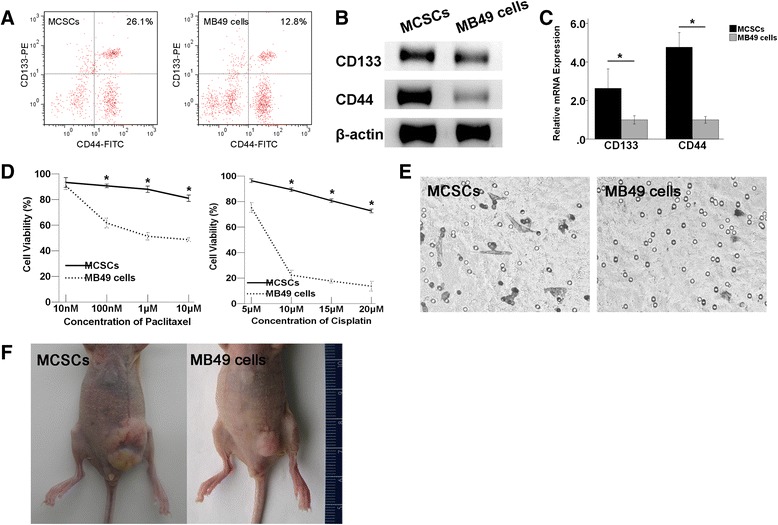
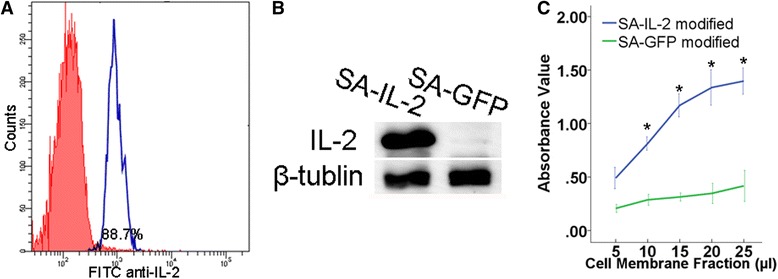
MCSCs were isolated and identified in cancer stem cells (CSCs) characters, with high expression of CSCs markers, higher resistance to chemotherapy, greater migration in vitro, and stronger tumorigenicity in vivo. The SA-IL-2 MCSCs vaccine was prepared and its bioactivity was evaluated. The protective, therapeutic, specific and memory immune response in animal experiments were designed to identify whether the vaccine elicited antitumor immunity and acted against metastatic bladder cancer.
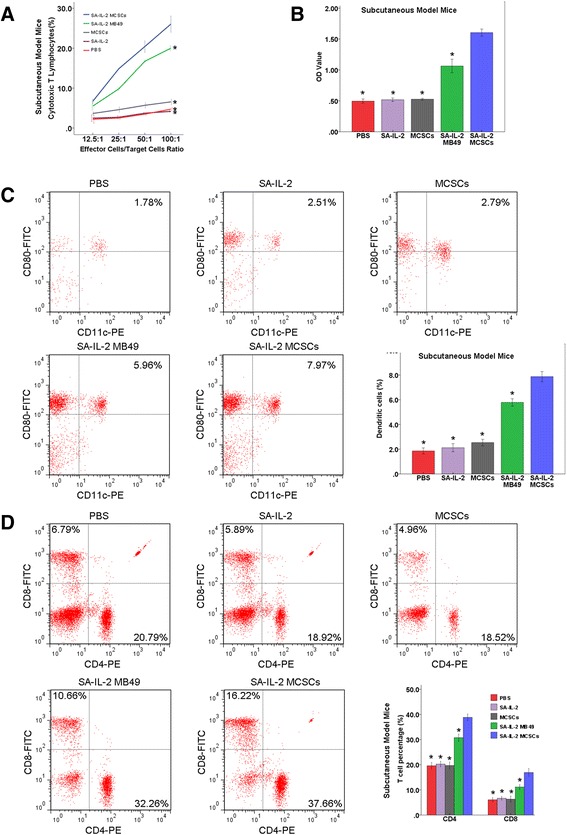
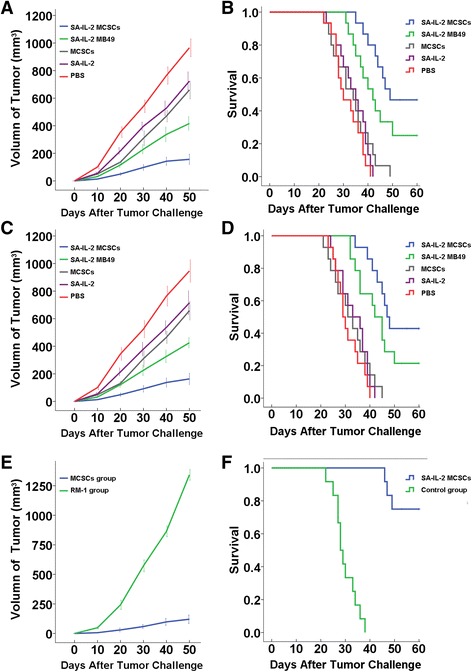
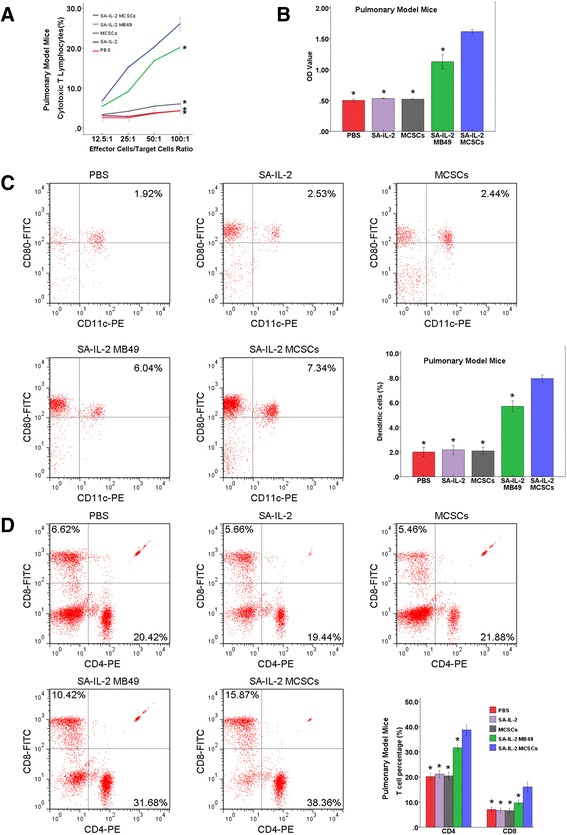
MCSCs had higher level of CD133 and CD44, less susceptibility to chemotherapy, more pronounced migration and greater tumorigenic ability. The successfully prepared SA-IL-2 MCSCs vaccine inhibited the tumor volume and prolonged mice survival in animal experiments. The expression of IgG, the population of dendritic cells, CD8(+) and CD4(+) T cells were highest in the experimental group than in the four control groups.
The SA-IL-2 MCSCs vaccine induced an antitumor immune response and was used to eliminate MCSCs to prevent tumor regrowth.
在先前的研究中,链霉亲和素白细胞介素-2(SA-IL-2)修饰的MB49疫苗在小鼠模型中对膀胱癌有效。然而,一小部分肿瘤复发,因为该疫苗无法消除MB49膀胱癌症干细胞(MCSCs)。因此,我们开发了一种SA-IL-2修饰的MCSCs疫苗并评估了其抗肿瘤作用。
分离MCSCs并鉴定其癌症干细胞(CSCs)特征,具有CSCs标志物的高表达、对化疗的更高抗性、在体外更强的迁移能力以及在体内更强的致瘤性。制备SA-IL-2 MCSCs疫苗并评估其生物活性。在动物实验中设计保护性、治疗性、特异性和记忆性免疫反应,以确定该疫苗是否引发抗肿瘤免疫并对抗转移性膀胱癌。
MCSCs具有更高水平的CD133和CD44,对化疗的敏感性较低,迁移更明显,致瘤能力更强。成功制备的SA-IL-2 MCSCs疫苗在动物实验中抑制了肿瘤体积并延长了小鼠存活时间。实验组中IgG的表达、树突状细胞、CD8(+)和CD4(+) T细胞的数量均高于四个对照组。
SA-IL-2 MCSCs疫苗诱导了抗肿瘤免疫反应,并用于消除MCSCs以防止肿瘤复发。