Rahimi Heidar, Dastmalchi Saei Habib, Ahmadi Malahat
Department of Microbiology, Faculty of Veterinary Medicine, Urmia University, Urmia, IR Iran.
Jundishapur J Microbiol. 2015 Oct 12;8(10):e22413. doi: 10.5812/jjm.22413. eCollection 2015 Oct.
Staphylococcus aureus is a significant pathogen that can colonize the nares of different animals, causing a wide range of infections in various hosts.
We intended to determine the prevalence of S. aureus in the nasal cavity of healthy ruminants and also to investigate the presence of antibiotic resistance genes.
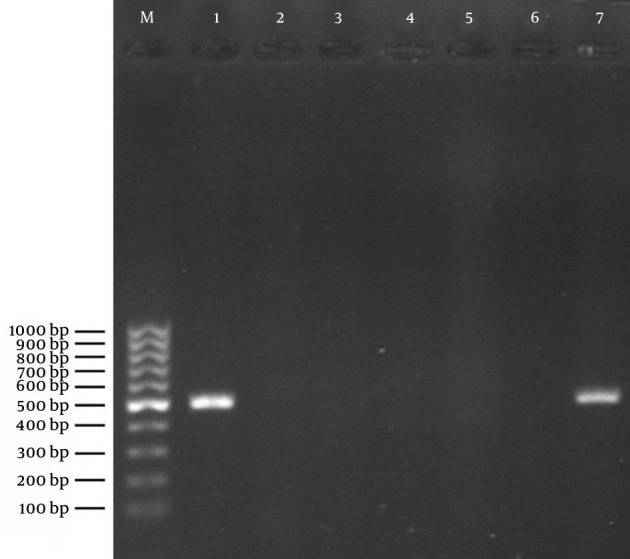
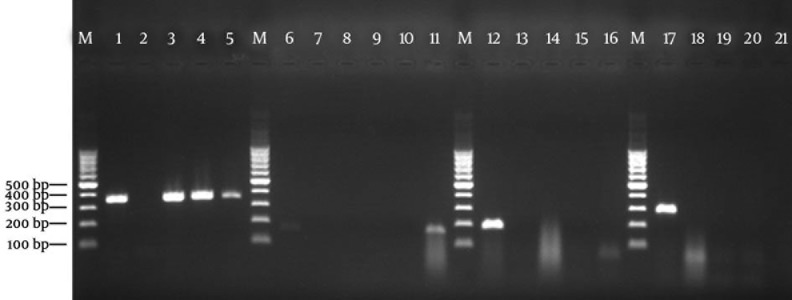
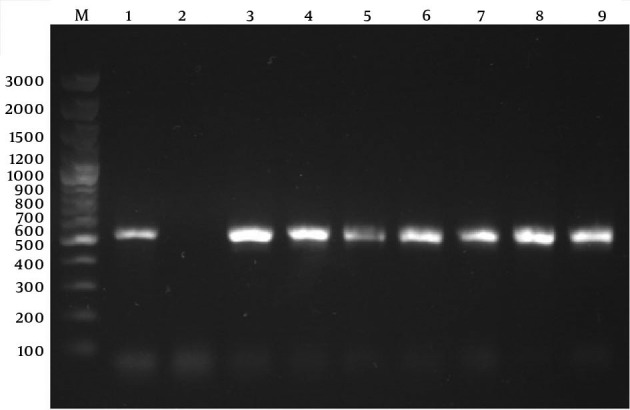
In the present study, healthy cattle (n = 79), sheep (n = 78) and goats (n = 44) were screened for nasal carriage of S. aureus by the Polymerase Chain Reaction (PCR). Staphylococcus aureus isolates were further assessed for the presence of blaZ (encoding penicillin resistance), mecA (encoding methicillin resistance), tetK and tetM (encoding tetracycline resistance), and ermA and ermC (encoding macrolide-lincosamide-streptogramin B resistance) genes.
The proportion of S. aureus-positive nasal swabs from cattle, sheep and goats were four (5.06%), 11 (14.1%) and 11 isolates (25%), respectively. The blaZ gene was detected in 20 out of 26 S. aureus isolates (76.9%), including four cattle (100%), nine sheep (81.8%) and seven goats (63.6%). Two of the four cattle isolates possessing the blaZ gene also had the tetK gene. Of the nine sheep isolates harboring the blaZ gene, one possessed the mecA and tetK genes together. Of the seven goat isolates with blaZ gene, one harbored the tetM gene. None of the S. aureus isolates were positive for the ermA and ermC genes.
In contrast to cattle, S. aureus is frequently present in the nose of sheep and goats, which may represent the primary reservoir of S. aureus in small ruminant flocks. This study also showed that nasal isolates of S. aureus from healthy ruminants might be a potential reservoir of antimicrobial-resistance.
金黄色葡萄球菌是一种重要的病原体,可定植于不同动物的鼻腔,在各种宿主中引起广泛感染。
我们旨在确定健康反刍动物鼻腔中金黄色葡萄球菌的流行率,并调查抗生素抗性基因的存在情况。
在本研究中,通过聚合酶链反应(PCR)对健康牛(n = 79)、绵羊(n = 78)和山羊(n = 44)进行鼻腔携带金黄色葡萄球菌的筛查。对金黄色葡萄球菌分离株进一步评估blaZ(编码青霉素抗性)、mecA(编码甲氧西林抗性)、tetK和tetM(编码四环素抗性)以及ermA和ermC(编码大环内酯 - 林可酰胺 - 链阳霉素B抗性)基因的存在情况。
来自牛、绵羊和山羊的金黄色葡萄球菌阳性鼻拭子比例分别为4株(5.06%)、11株(14.1%)和11株分离株(25%)。在26株金黄色葡萄球菌分离株中有20株检测到blaZ基因(76.9%),包括4头奶牛(100%)、9只绵羊(81.8%)和7只山羊(63.6%)。4头携带blaZ基因的奶牛分离株中有2株也具有tetK基因。在9株携带blaZ基因的绵羊分离株中,1株同时具有mecA和tetK基因。在7株携带blaZ基因的山羊分离株中,1株具有tetM基因。所有金黄色葡萄球菌分离株中ermA和ermC基因均为阴性。
与牛相比,金黄色葡萄球菌在绵羊和山羊的鼻腔中频繁存在,这可能是小反刍动物群体中金黄色葡萄球菌的主要储存宿主。本研究还表明,来自健康反刍动物的鼻腔金黄色葡萄球菌分离株可能是抗菌药物抗性的潜在储存宿主。