Luo Xiaoting, Li Rongrong, Yan Liang-Jun
Department of Pharmaceutical Sciences, UNT System College of Pharmacy, University of North Texas Health Science Center, 3500 Camp Bowie Boulevard, Fort Worth, TX 76107, USA ; Department of Biochemistry and Molecular Biology, Gannan Medical University, Ganzhou, Jiangxi 341000, China.
Department of Pharmaceutical Sciences, UNT System College of Pharmacy, University of North Texas Health Science Center, 3500 Camp Bowie Boulevard, Fort Worth, TX 76107, USA.
J Diabetes Res. 2015;2015:512618. doi: 10.1155/2015/512618. Epub 2015 Oct 19.
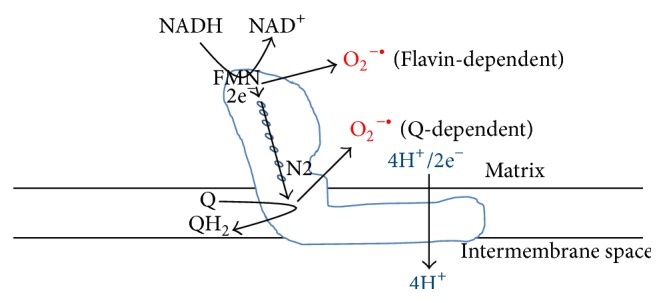
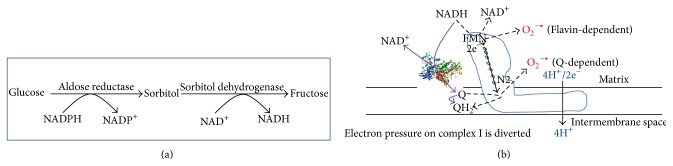
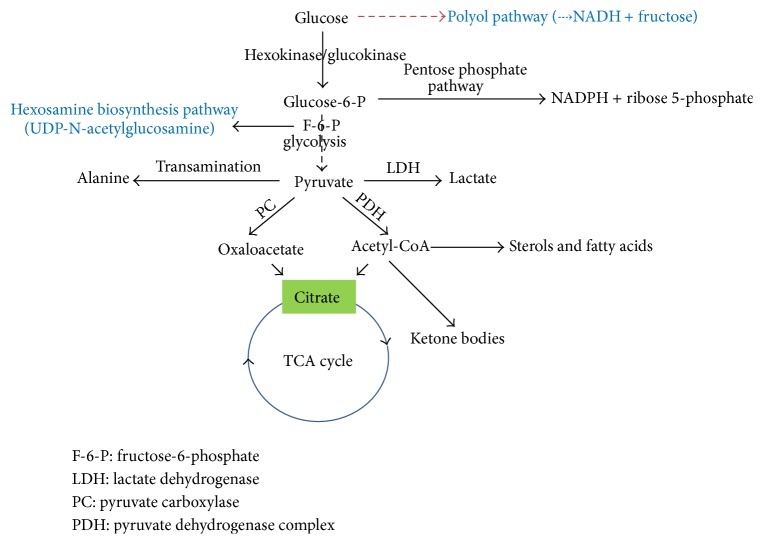
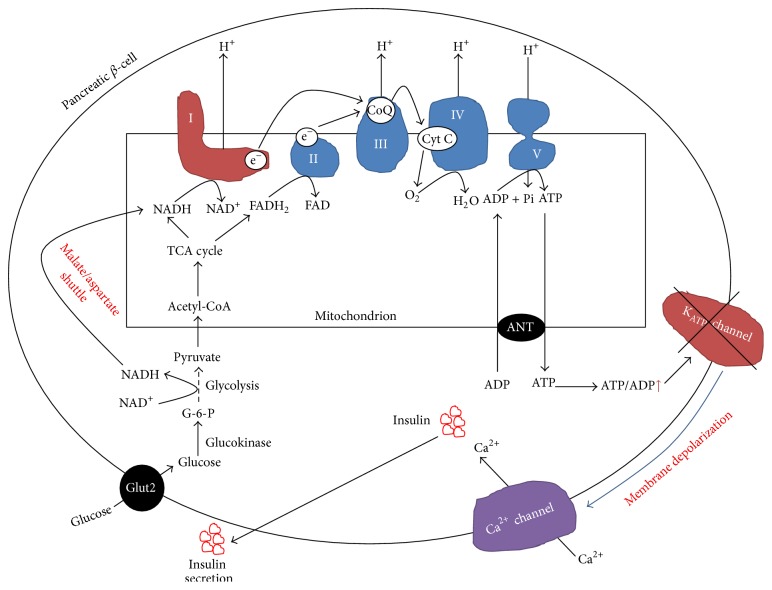
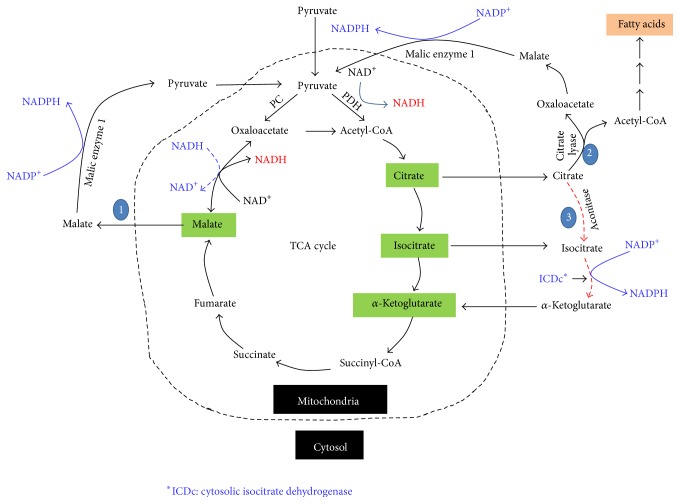
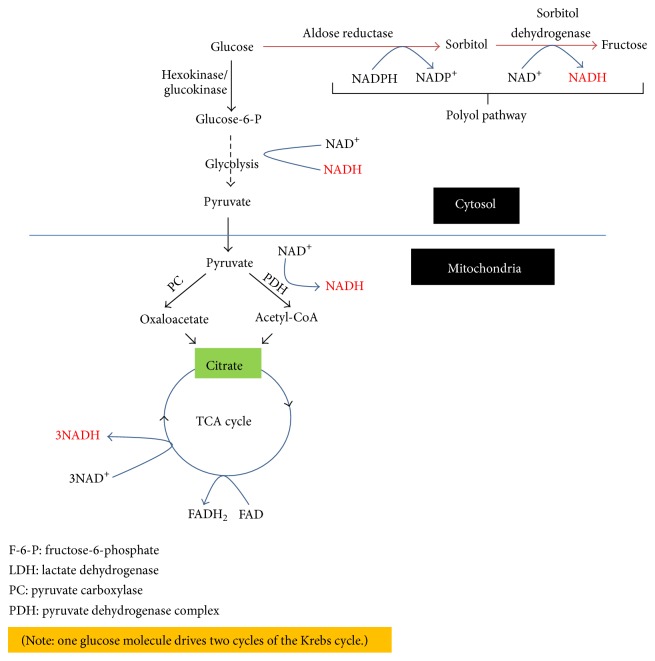
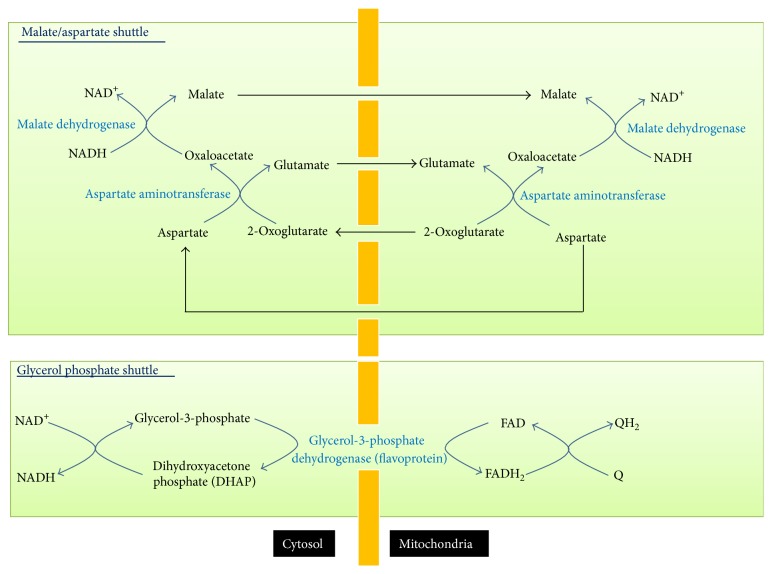
Pancreatic β cells not only use glucose as an energy source, but also sense blood glucose levels for insulin secretion. While pyruvate and NADH metabolic pathways are known to be involved in regulating insulin secretion in response to glucose stimulation, the roles of many other components along the metabolic pathways remain poorly understood. Such is the case for mitochondrial complex I (NADH/ubiquinone oxidoreductase). It is known that normal complex I function is absolutely required for episodic insulin secretion after a meal, but the role of complex I in β cells in the diabetic pancreas remains to be investigated. In this paper, we review the roles of pyruvate, NADH, and complex I in insulin secretion and hypothesize that complex I plays a crucial role in the pathogenesis of β cell dysfunction in the diabetic pancreas. This hypothesis is based on the establishment that chronic hyperglycemia overloads complex I with NADH leading to enhanced complex I production of reactive oxygen species. As nearly all metabolic pathways are impaired in diabetes, understanding how complex I in the β cells copes with elevated levels of NADH in the diabetic pancreas may provide potential therapeutic strategies for diabetes.
胰腺β细胞不仅将葡萄糖用作能量来源,还能感知血糖水平以分泌胰岛素。虽然已知丙酮酸和NADH代谢途径参与调节对葡萄糖刺激的胰岛素分泌,但代谢途径中许多其他成分的作用仍知之甚少。线粒体复合物I(NADH/泛醌氧化还原酶)就是这样的情况。已知正常的复合物I功能对于餐后间歇性胰岛素分泌是绝对必需的,但复合物I在糖尿病胰腺β细胞中的作用仍有待研究。在本文中,我们综述了丙酮酸、NADH和复合物I在胰岛素分泌中的作用,并假设复合物I在糖尿病胰腺β细胞功能障碍的发病机制中起关键作用。这一假设基于以下事实:慢性高血糖使复合物I因NADH过载,导致复合物I产生活性氧增加。由于几乎所有代谢途径在糖尿病中都会受损,了解β细胞中的复合物I如何应对糖尿病胰腺中升高的NADH水平,可能为糖尿病提供潜在的治疗策略。