Yan Liang-Jun
Department of Pharmaceutical Sciences, UNT System College of Pharmacy, University of North Texas Health Science Center, 3500 Camp Bowie Boulevard, RES-314E, Fort Worth, TX 76107, USA.
J Diabetes Res. 2014;2014:137919. doi: 10.1155/2014/137919. Epub 2014 Jun 16.
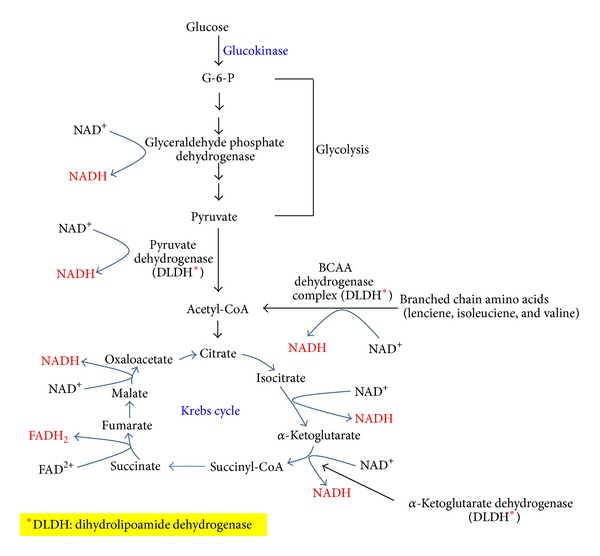
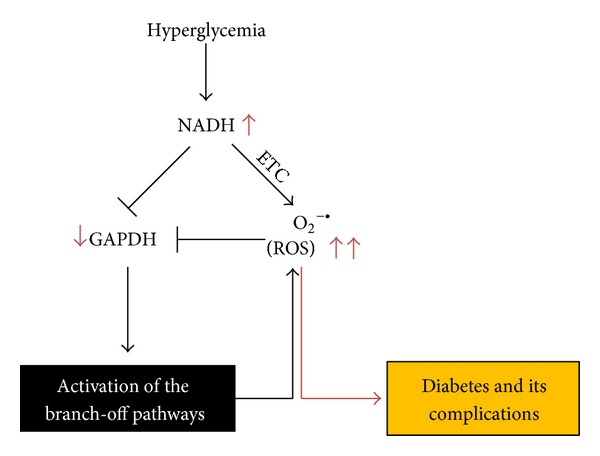
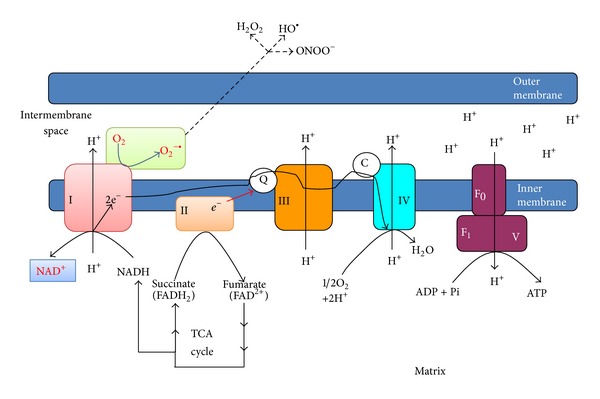
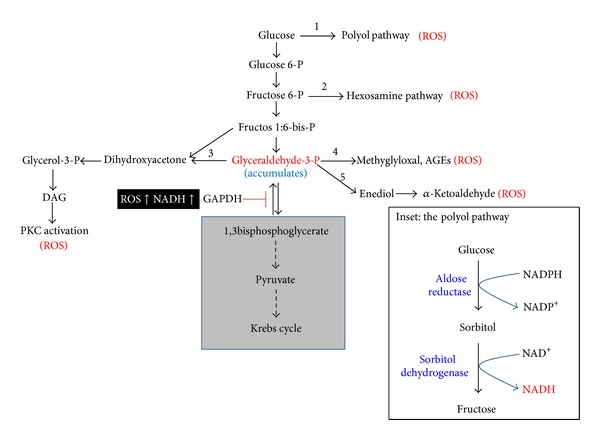
Chronic overnutrition creates chronic hyperglycemia that can gradually induce insulin resistance and insulin secretion impairment. These disorders, if not intervened, will eventually be followed by appearance of frank diabetes. The mechanisms of this chronic pathogenic process are complex but have been suggested to involve production of reactive oxygen species (ROS) and oxidative stress. In this review, I highlight evidence that reductive stress imposed by overflux of NADH through the mitochondrial electron transport chain is the source of oxidative stress, which is based on establishments that more NADH recycling by mitochondrial complex I leads to more electron leakage and thus more ROS production. The elevated levels of both NADH and ROS can inhibit and inactivate glyceraldehyde 3-phosphate dehydrogenase (GAPDH), respectively, resulting in blockage of the glycolytic pathway and accumulation of glycerol 3-phospate and its prior metabolites along the pathway. This accumulation then initiates all those alternative glucose metabolic pathways such as the polyol pathway and the advanced glycation pathways that otherwise are minor and insignificant under euglycemic conditions. Importantly, all these alternative pathways lead to ROS production, thus aggravating cellular oxidative stress. Therefore, reductive stress followed by oxidative stress comprises a major mechanism of hyperglycemia-induced metabolic syndrome.
慢性营养过剩会导致慢性高血糖,进而逐渐引发胰岛素抵抗和胰岛素分泌受损。如果不进行干预,这些病症最终会发展为明显的糖尿病。这一慢性致病过程的机制较为复杂,但有研究表明其与活性氧(ROS)的产生和氧化应激有关。在这篇综述中,我强调了这样的证据:通过线粒体电子传递链的NADH过量产生的还原应激是氧化应激的来源,这是基于这样的认识,即线粒体复合物I更多地回收NADH会导致更多的电子泄漏,从而产生更多的ROS。NADH和ROS水平的升高分别会抑制甘油醛-3-磷酸脱氢酶(GAPDH)并使其失活,导致糖酵解途径受阻,以及3-磷酸甘油及其沿该途径的前体代谢产物的积累。这种积累随后会引发所有这些替代性葡萄糖代谢途径,如多元醇途径和晚期糖基化途径,而这些途径在血糖正常的情况下原本是次要且不显著的。重要的是,所有这些替代途径都会导致ROS的产生,从而加剧细胞氧化应激。因此,还原应激继之以氧化应激构成了高血糖诱导的代谢综合征的主要机制。